






For Bilkhis Sait, “overload”, “changeover” and “low voltage” are everyday terminology. A resident of Marshalls Road in Egmore for the last three decades, Bilkhis notes unscheduled power cuts have become a daily feature in her locality.
“Sometimes, the outage lasts a few hours. At times power goes off in all the three phases,” says Bilkhis.
Tamil Nadu Power Distribution Corporation Limited (TNPDCL) technicians do attend to complaints raised through the helpline number. “They replace the cable and power is restored but the same issue resurfaces. We have not got a long-term solution,” says the French language trainer who wants the transformer in the neighbourhood upgraded.
Residents of Tarapore Avenue in Harrington Road find themselves dealing with the same issue. And they seek the same solution: replacement of the existing transformer. Their latest representation is a little over a month old. For now, the department has provided thicker wires so the frequent power outages have almost reduced.
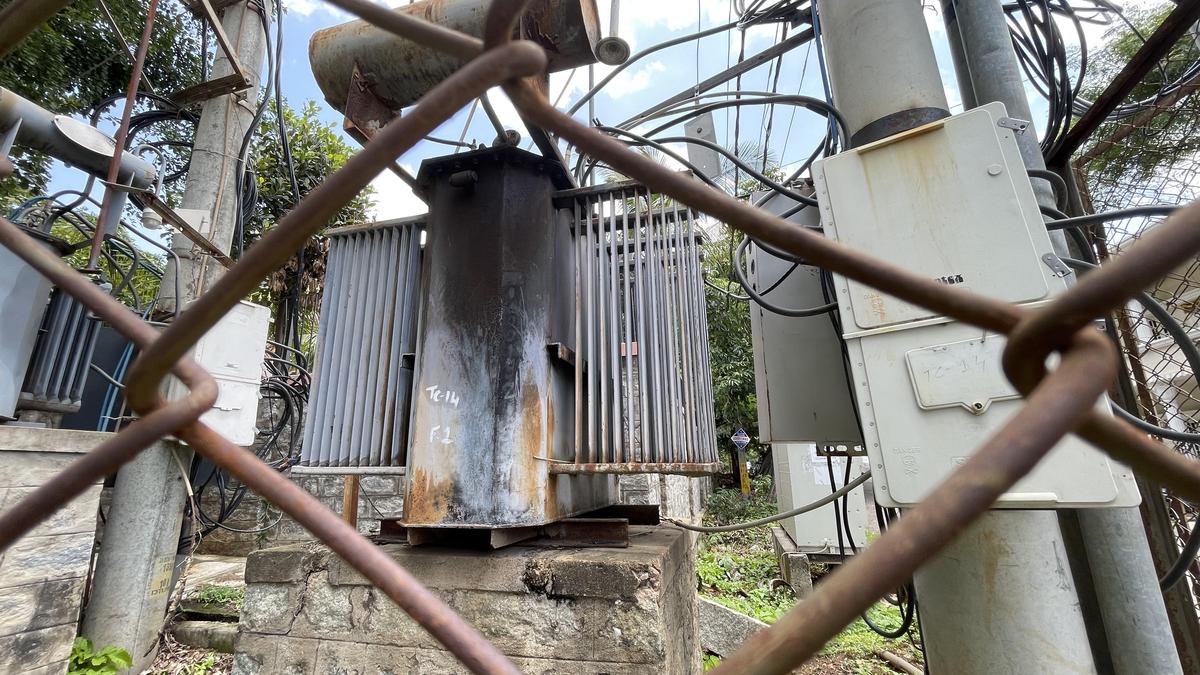
With independent houses giving way to apartment complexes and commercial buildings in many areas, the rusty transformer is not able to take the load anymore. Increasing power demands from houses and offices using heavy electrical appliances, and climate change are adding to the stress on the neighbourhood distribution transformers.
So, how is TNPDCL addressing the increasing electricity demand and growing renewable energy penetration?
Upgrading the load capacity of an existing transformer, adding new transformers and bifurcating the load supply are some common measures initiated by the electricity department, taken after many assessments and calculations.
In Chennai’s residential areas, distribution transformers generally have a load capacity of 100 kVA, 250 kVA and 500 kVA, depending on the number of people the utility is catering to. But rising load is one of the major reasons for transformers failing.
Excess load?
According to officials, transformers have an average lifespan of 20 years but this could vary depending on how well they are maintained. Factors such as natural calamities, manufacturing defects, ageing, short circuits and other unexpected reasons would require these electrical equipments to be replaced more often. Many defunct transformers have to be replaced because of overload and lighting.
TNPDCL is expected to assess areas where complaints are common and initiate improvement measures. A consumer may not know the capacity of the transformer or the distribution network, so the executive engineer for the area should be first informed about such power-related complaints. The engineer has to justify the electricity needs and suggest whether it can do with an upgrade or a new utility transformer is required.
Help at hand
Raise a complaint on Minnagam (9498794987) mentioning the frequency of power cuts or other load-related complaints.
Write to the respective distribution region in your area seeking a review of the power load. Their contact numbers and mail IDs are on the website https://www.tnpdcl.org/en/ tnpdcl/ reach-us/ contact-information
“As the load pattern is different in the morning and evening, the transformer load is measured by our field staff based on a set of parameters. When the transformer reaches more than 80% load then we decide on an upgrade or a new set up, which is done through a measuring tool. Electricity feeders are also remotely monitored by the control centre,” says a senior engineer.
TNPDCL field staff prepares and submits an estimate of areas needing a new transformer, almost every month, to submit it to the head office for approval. The time to process a tender is usually three to four months.
Getting ROW clearance
A senior official says one of the biggest hurdles they face is getting right of way (ROW) clearance or permission to instal an electricity transformer in an area.

“Nobody wants a transformer in front of their house or the stay resting on their premises, so this delays the process. We scout for a public space as maintenance work can be taken up easily at such spots,” says the official.
The Superintendent Engineer has the power to sanction a transformer. “If a transformer is badly needed in an area then in two-three months time it is sanctioned,” says the official.
The “citizen charter” also insists that if the work involves placing or shifting a transformer structure then 90 days is the timeline followed as per the standards of performance for electricity distribution.
CSTEP: energy efficiency measures needed
Meeting the growing electricity demand of households requires more than just upgrading distribution transformers. Distribution companies (DISCOMs) that supply electricity to consumers in a state need to adopt a holistic approach that combines demand-side management, energy efficiency, timely infrastructure augmentation, and better asset management.
Here are suggestions by Rishu Garg, senior policy specialist working in the Energy and Power sector at CSTEP.
Demand–response programmes: DISCOMs can encourage households to shift flexible electricity consumption, such as operating washing machines and water heaters, away from peak-demand hours through suitable incentives. This can help flatten peak demand, ease pressure on local distribution networks, and defer the need for some infrastructure upgrades. A study by the Center for Study of Science, Technology and Policy (CSTEP) on demand flexibility in Tamil Nadu estimates that these measures could shift or save around 156 gigawatt-hour (GWh) of electricity a year and provide an estimated benefit of ₹ 313 crore annually by reducing power purchase costs, transmission losses, and the need for new capacity.
Promote energy-efficient appliances: wider adoption of energy-efficient air conditioners, refrigerators, water heaters, and other household appliances can reduce overall electricity consumption and limit the growth of peak demand. Targeted incentives, consumer awareness, and easier access to efficient appliances can help accelerate adoption. CSTEP studies have estimated that energy efficiency measures in the residential, agricultural, and commercial sectors can deliver energy savings of around 10%–15%.
Strengthen distribution infrastructure and expedite transformer upgrades: DISCOMs should make effective use of schemes such as the Revamped Distribution Sector Scheme (RDSS) to augment distribution infrastructure in areas experiencing rapid growth in household demand. Equally important are streamlined approval processes, clear timelines, and proactive identification of overloaded distribution transformers to ensure that capacity upgrades are completed before they become critical. However, this should be done after conducting feasibility studies based on load growth.
Adopt distribution asset lifecycle management systems: DISCOMs should invest in digital systems to monitor transformer loading, asset health, maintenance requirements, and failure risks. Such systems can enable predictive and preventive maintenance, reduce transformer failures, and improve the reliability of electricity supply.
Published – October 10, 2026 11:09 pm IST