





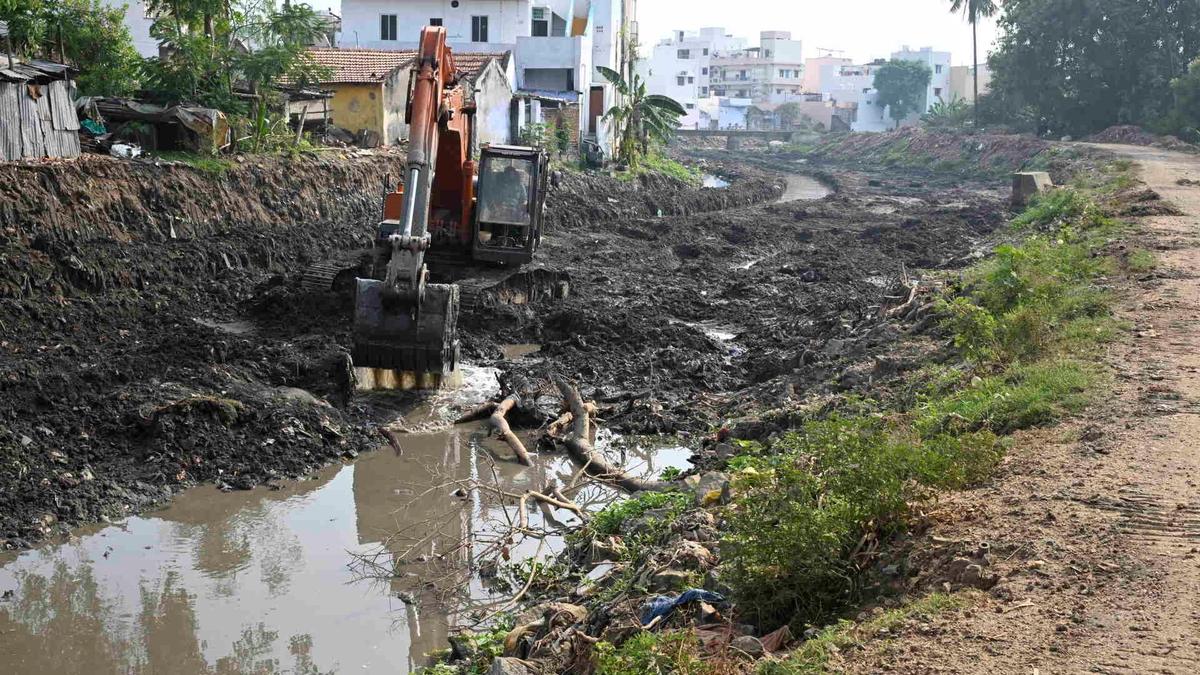

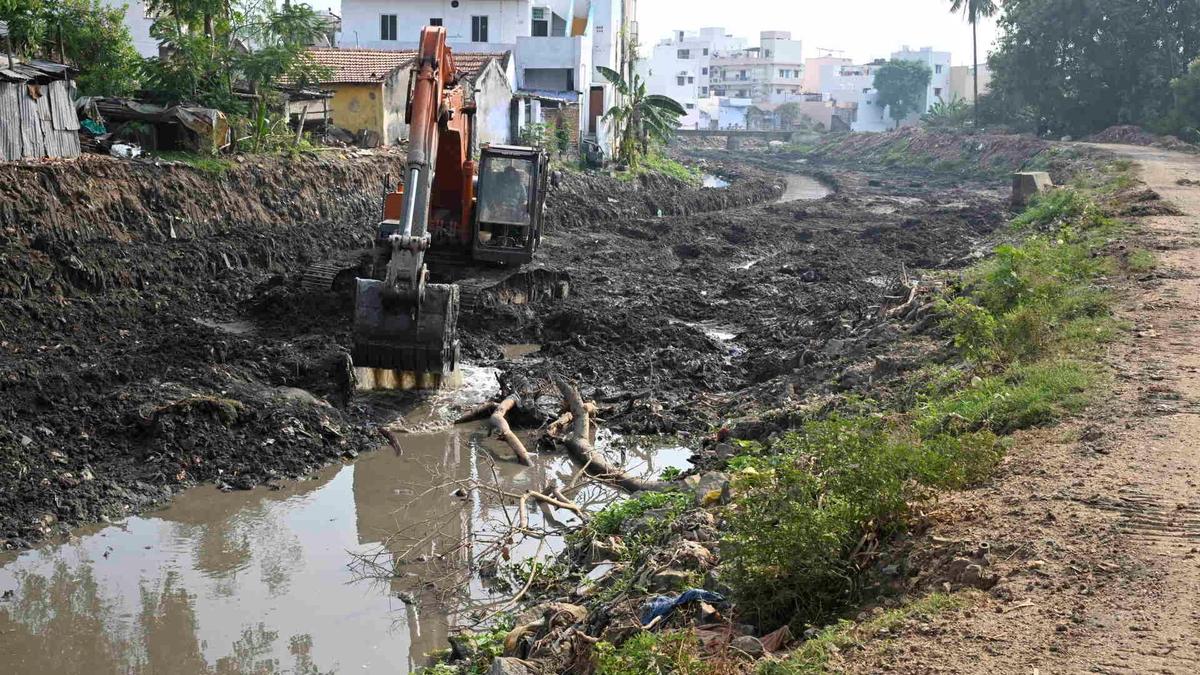
Development work is in progress at the Kalingarayan Channel in Erode in Tamil Nadu on Wednesday.
| Photo Credit: GOVARTHAN M.
Farmers’ organisations in Erode have urged the State government to take immediate steps to protect the historic Kalingarayan Channel from pollution and ensure uninterrupted water supply for irrigation during the 2026–27 agricultural season.
The 91.10-km-long canal, built in 1283 by Kongu chieftain Kalingarayan, irrigates 15,743 acres in Erode, Modakkurichi and Kodumudi taluks, supporting thousands of farmers. Currently, development works are being carried out in the channel between mile 12/3/348 and 15/4.5/195.
A consultative meeting of farmers dependent on the channel was held recently at Solangapalayam under the aegis of the Kalingarayan Farmers and Workers Welfare Association. Participants discussed preparatory works to be undertaken before the scheduled release of water into the channel on June 16. They also placed several demands before the government for the preservation of the channel.
Among the key demands was a call to prevent untreated sewage from the Erode Corporation and effluents discharged by leather and dyeing units from entering the water body. All industrial waste should be released only after treatment at purification plants and stringent action should be taken against violators. The government should establish additional treatment plants and restore non-functional purification facilities.
Referring to the Geographical Indication (GI) status granted to Erode turmeric in 2019, the participants said contamination of the channel water by chemical waste had led to a decline in curcumin content, affecting exports. They appealed for urgent intervention to address the issue.
The meeting also demanded annual desilting of the canal and long-term maintenance measures to ensure smooth water flow.
It was resolved that the channel should be desilted in coordination with the Water Resources Department and voluntary organisations. Farmers also sought permanent measures to remove weeds, water hyacinths and invasive creepers that obstruct water flow, particularly in tail-end regions.
The participants expressed concern over the possibility of drought conditions arising from the anticipated El Nino climatic changes and called for advance planning to mitigate the impact.
The organisations opposed any proposal to demolish the aqueduct situated at the 13.7th mile of the channel at Konavaikal. Instead, they urged the government to renovate the structure using modern technology and seek recognition for it as a heritage monument through the Archaeological Survey of India and UNESCO.
The participants also requested that, in accordance with the long-standing practice and Government Order (G.O.) Ms. No. 2647, Public Works Department, dated November 2, 1966, water be released continuously into the canal for 320 days every year, from June 16 to April 30.
A resolution was also passed seeking to name the new Erode Solar Bus Terminus after Kalingarayan, whom the association described as a pioneer of river-linking initiatives.
Published – May 13, 2026 06:51 pm IST