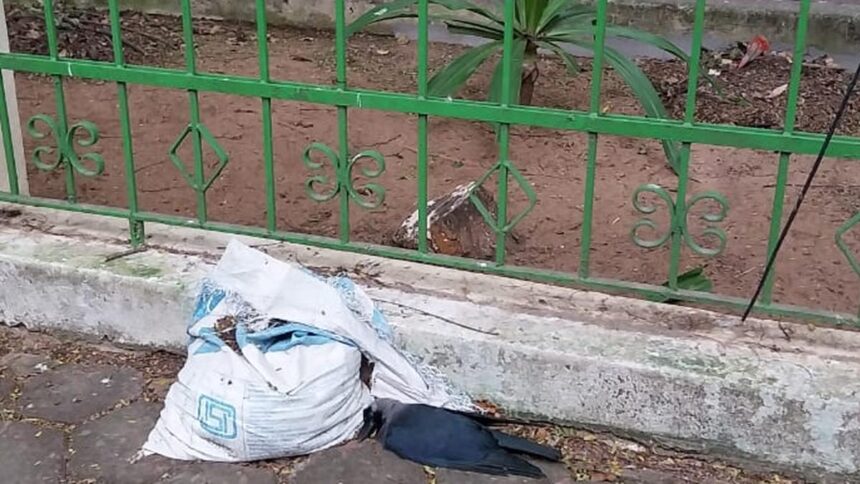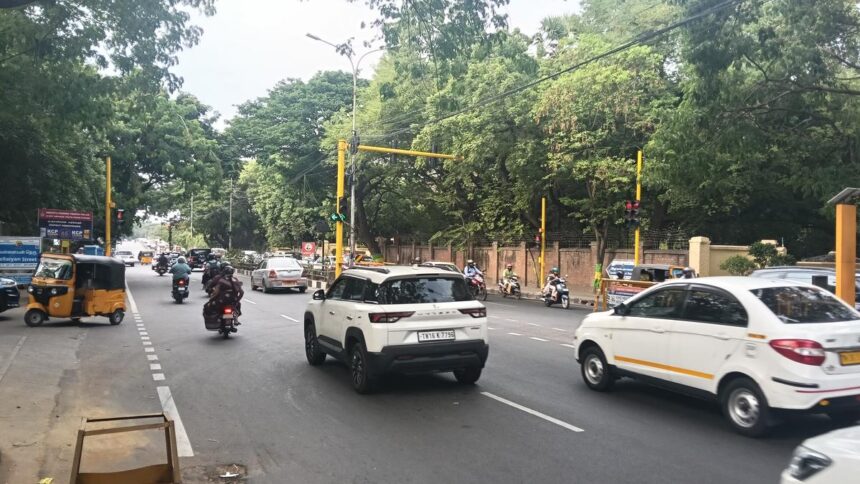





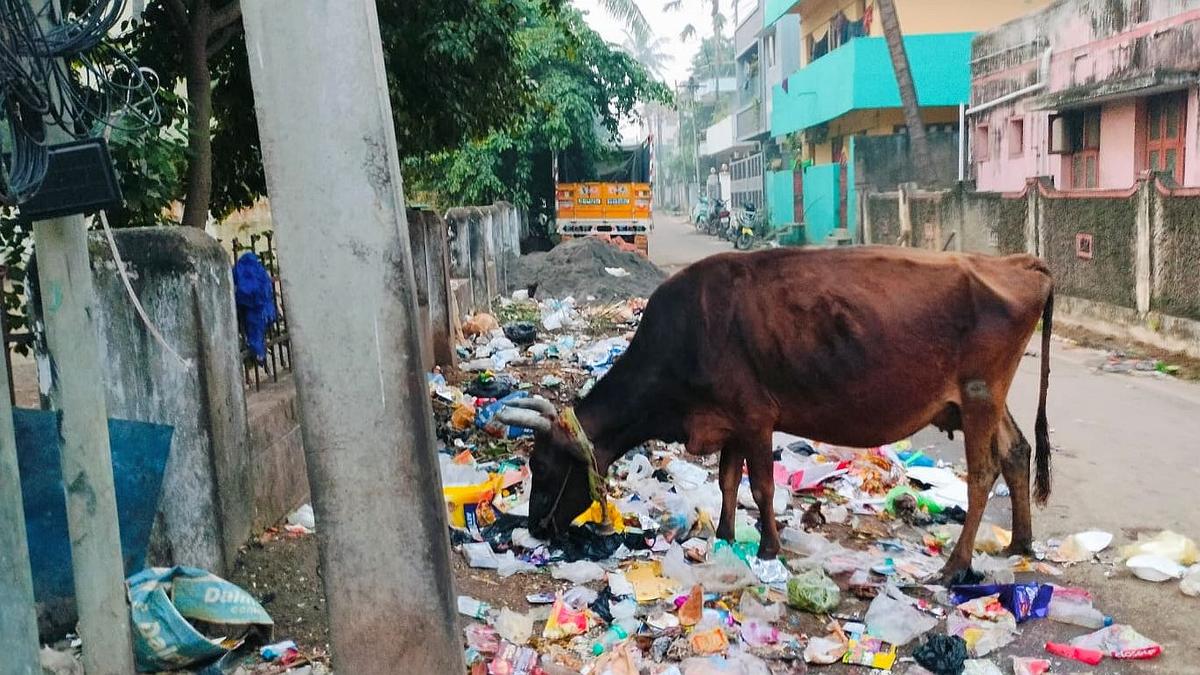


Garbage dumped along the main road in Gandhi Nagar 2nd Extension in Chromepet. Photo: Special Arrangement
Residents of Gandhi Nagar 2nd Extension in Chromepet, under Tambaram City Corporation limits say their neighbourhood has effectively turned into an open dump, with repeated accumulation of garbage, dead rodents and waste material along the main road posing serious public health risks. The situation, they argue, points to a systemic failure in monitoring and enforcement, despite official claims of improved solid waste management under the Swachh Bharat mission.
No sustained monitoring
Tambaram Corporation outsourced door-to-door garbage collection across its five zones in 2023, in line with the Solid Waste Management Rules, 2016, which mandate daily collection, segregation at source and prevention of open dumping. However, residents say the ground reality in Gandhi Nagar Extension tells a different story.
Although conservancy staff clear the garbage periodically, waste reappears within hours, spilling onto the road and obstructing access. The lack of sustained monitoring, residents allege, allows the same spot to be repeatedly used as a dumping ground.
Hard-hit area
Located on the western side of GST Road, Gandhi Nagar Extension connects Nagalkeni and Pammal and lies close to Thiruneermalai, a major religious destination. Despite being a prime residential locality, civic neglect has persisted for years, residents say.
“People from nearby localities come and dump garbage here because they know there is no surveillance,” says Sivakumar, a resident. “Repeated complaints to stop this have yielded no results.”
Dual role
Kanakaraj, another resident, points out that the garbage heap forms at the entrance to a playground used by children from economically weaker sections. “During the day, children still come here to play. At night, the area becomes unsafe, with tipplers occupying the space. It turns into an unofficial bar after dark,” he says.
Residents say several people in the area have fallen ill recently, attributing it to unhygienic surroundings. The dumping of dead rats and rodents overnight has worsened the situation, with residents complaining of a persistent stench that causes nausea and loss of appetite.
Violation of norms
Under the Solid Waste Management Rules, local bodies are required to prevent open dumping, ensure scientific disposal of animal waste and maintain sanitation in public spaces. Residents argue that the continued presence of dead rodents on the road is a clear violation of these norms and exposes gaps in enforcement.
With no active residents’ welfare association in the area, locals say they are forced to rely solely on civic officials and elected representatives to intervene.
‘Long-term solution’
When contacted, V. Karunanidhi, councillor of Ward 16 under Tambaram Corporation, said a permanent solution was being explored. “We will examine the feasibility of setting up a green recomposite yard if the street width permits,” he said.
Surveillance sought
Residents have suggested installing covered, modern dustbins at strategic points as an interim measure, citing erratic collection timings that are often announced only by a whistle from conservancy staff. However, many fear that without strict oversight, bins could overflow and worsen the problem.
They say installing CCTV cameras at vulnerable points, clearly marking no-dumping zones, and imposing fines—as permitted under civic bylaws—are essential to deter offenders. “Unless open dumping is penalised and monitored, the problem will continue,” residents say.
Calling for a clear, time-bound waste management plan, residents say restoring basic hygiene in the locality should be a priority, not an afterthought.
Published – December 20, 2025 08:28 pm IST