







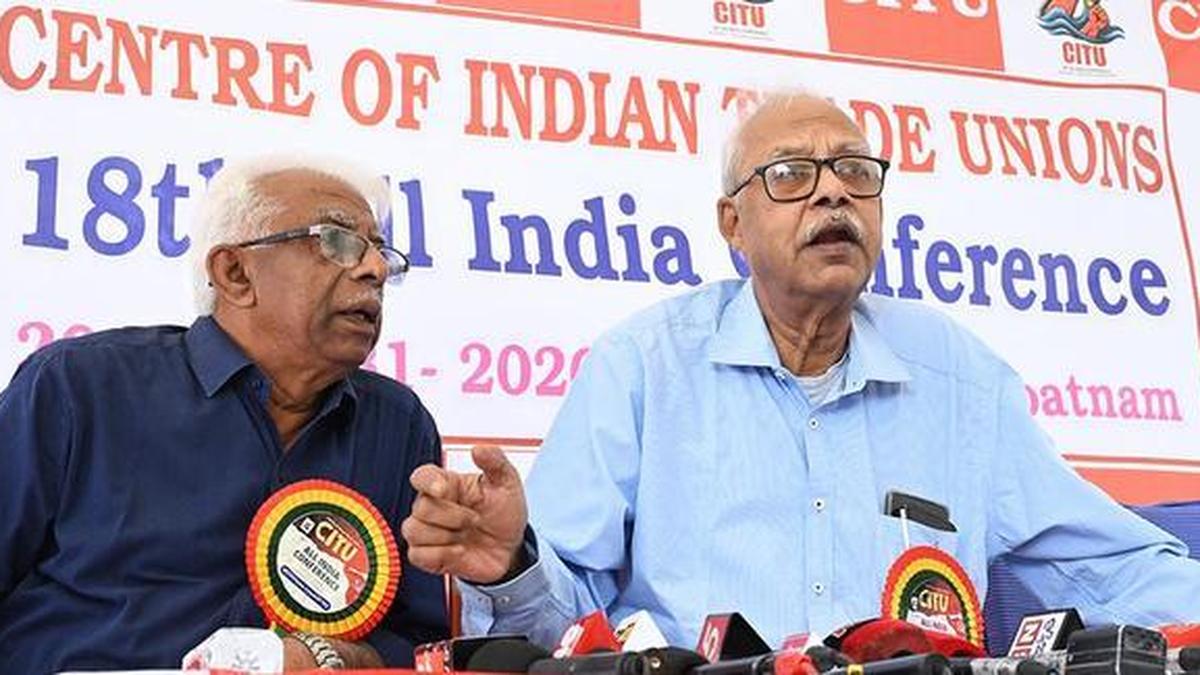

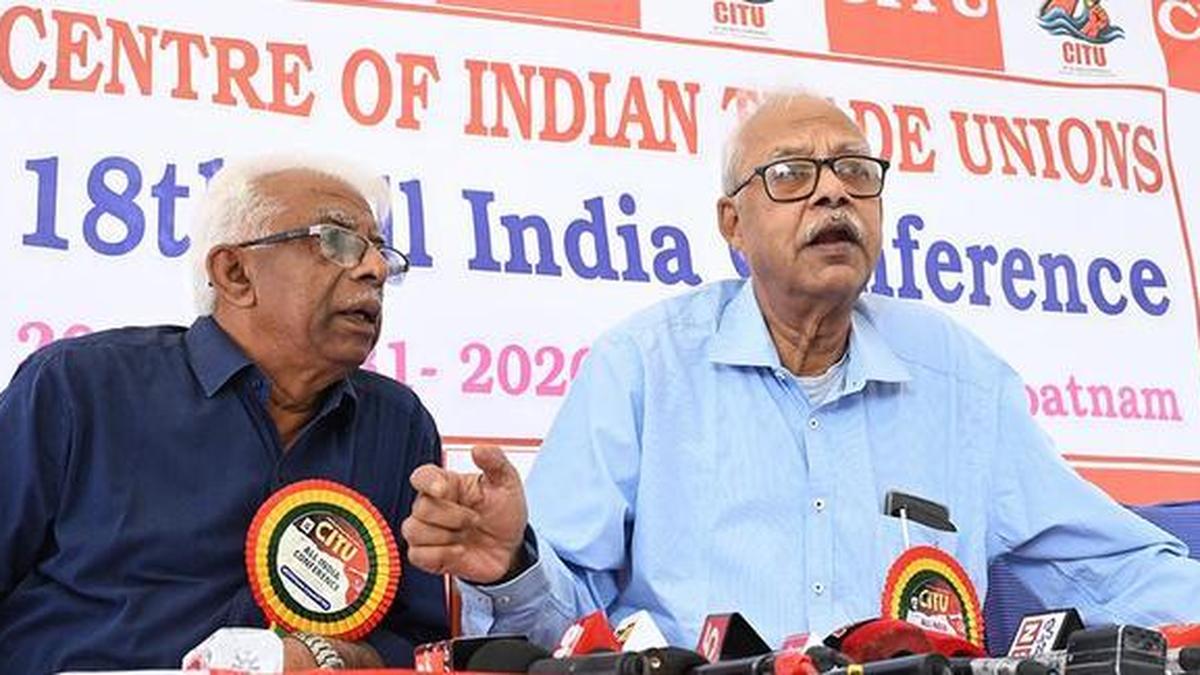
CITU general secretary Tapan Sen addressing a media conference as part of the CITU All India Conference in Visakhapatnam. CITU State general secretary Ch. Narasinga Rao is also seen.
| Photo Credit: V RAJU
The 18th All India conference of the CITU has discussed the anti-worker, anti-people and pro-corporate policies of the BJP-led NDA government at the Centre, and the way forward to counter them more effectively, CITU national secretary Tapan Sen said.
Addressing a media conference along with CITU A.P. general secretary Ch. Narasinga Rao, here, on Friday, Mr. Sen said that the lopsided policies of the BJP-led government was resulting in the rich becoming richer while the poor were being impoverished. A general strike would be observed on February 12 to oppose the anti-worker policies, particularly the Labour Codes, which would deprive the workers of their right to form trade unions.
He said that the conference also reviewed the organisational situation of the union throughout the country. The leaders from various States put forth their views on how to strengthen the union further to save the people and the nation. There were also deliberations on how to advance the struggles further, and to counter the ‘divisive politics of the BJP government’, which was trying to divide the people on caste and religion in a bid to divert their attention from the real problems, he alleged.
Mr. Tapan Sen said that the Centre could not go ahead with its plans to privatise Visakhapatnam Steel Plant (VSP) due to the relentless struggles by the workers and trade unions during the last five years. He alleged that the Centre had hatched a conspiracy to sell the plant by withholding the supply of raw raw materials to VSP and blaming the workers for the losses. He said the plant management could not be blamed as it was working on the directions of the BJP-led government at the Centre.
The Electricity (Amendment) Bill, 2025, enables the private distributors, to utilise the electricity grids, set up by the government, to supply power to the consumers and profit from it. The installation of pre-paid smart meters was also a step in that direction. The ultimate aim of the government was privatise the distribution of electricity and to do away with power subsidies being given to the poor consumers. The consumers, particularly farmers, would stand to lose, if the Bill was implemented.
The CITU national general secretary said that all trade unions came together and were organising agitations in various States against it. A welcome development was farmers (who are also power consumers) joined the agitation against privatistion of power distribution. The CITU was trying to create awareness among the people on the amendment bill in all the States.
Published – January 02, 2026 04:39 pm IST