






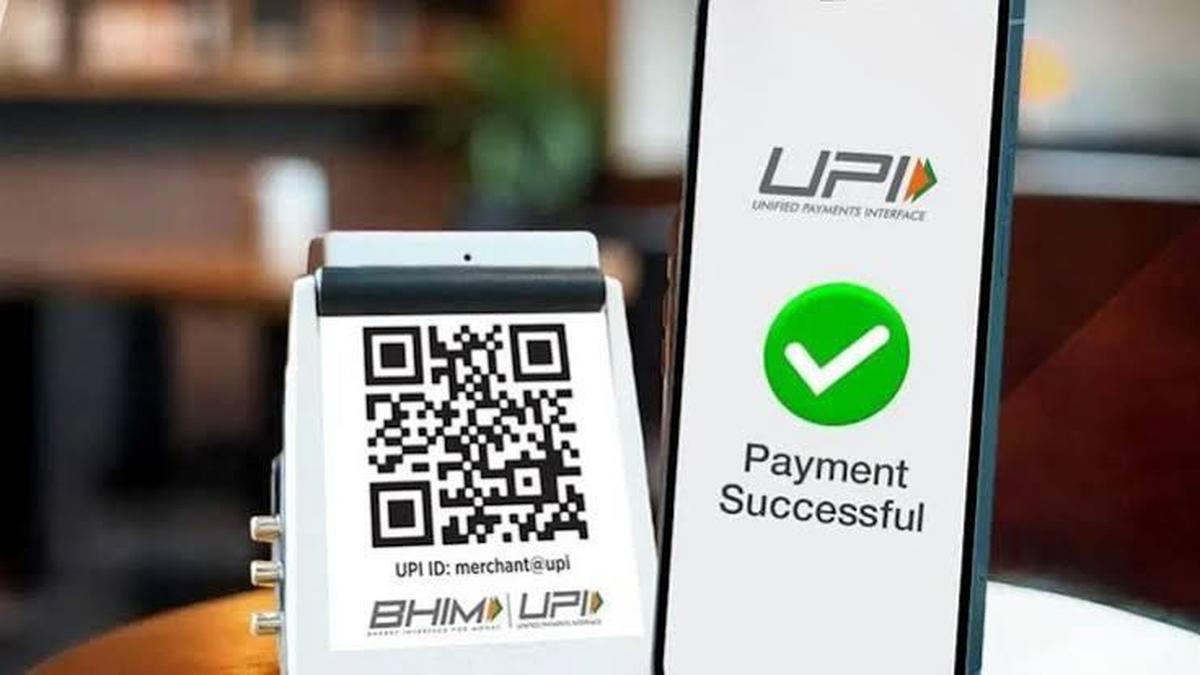


For illustration
| Photo Credit: The Hindu
The introduction of the Merchant Discount Rate (MDR) will help more domestic payments companies to operate under UPI, contrary to the allegation that the charge has been introduced under external pressure, the government said on Thursday.
The public sector National Payments Council of India (NPCI) on Wednesday announced the MDR structure on UPI payments prompting criticism from the Opposition and allegations that U.S. pressure had pushed the Indian government to introduce this charge.
“Contrary to misleading claims made that MDR has been introduced under external pressure, introduction of MDR on select high-value transactions will enable more domestic companies to operate under UPI,” the Department of Financial Services (DFS) said on X. “Thus, the action of introduction of MDR is a step in protecting India’s sovereignty in the electronic payment ecosystem.”
The DFS further said that the allegations of U.S. pressure refer to a report by the U.S. Trade Representative in which it cites the inability of American electronic payment services suppliers to participate in the UPI ecosystem, including credit transactions on UPI, on a level playing field with RuPay.

The DFS said that the actions by the NPCI do not rectify these American concerns.
“The NPCI circular of 15.9.2026 does not allow credit transactions of UPI by any other credit card other than RuPay credit card,” the DFS clarified. ‘There is a clear policy of only allowing RuPay credit card on UPI to enable RuPay credit card to become the preferred choice of credit card amongst users in India.”
The USTR report also raised the issue of an NPCI rule mandating a maximum market share of 30% for third-party apps as a potential hindrance. Here, too, the DFS said that while the rule was put in place, enforcement was not possible due to market conditions.
“Although NPCI had mandated market share limitation of 30% for third-party application providers in November 2020, however, this mandate could not be implemented because companies other than the market leaders could not compete in absence of a self-sustaining revenue model,” the DFS said.
A previous analysis by The Hindu shows that India’s UPI market is dominated by American companies, with Walmart-owned PhonePe holding a market share of about 46% and Google Pay with 32% in the total volume of UPI transactions conducted in the country.

“Introduction of MDR on select high-value transactions will provide a self-sustaining revenue model to smaller companies to compete for higher share in the UPI ecosystem,” the DFS said. “Thus, introduction of MDR has been done with the intention of allowing more domestic companies to expand their operations.”

Published – September 17, 2026 03:41 pm IST