





Justice C. Saravanan said several complications have arisen on account of the petitioner having breached the conditions of the Tourist Visa granted to her for a limited period.
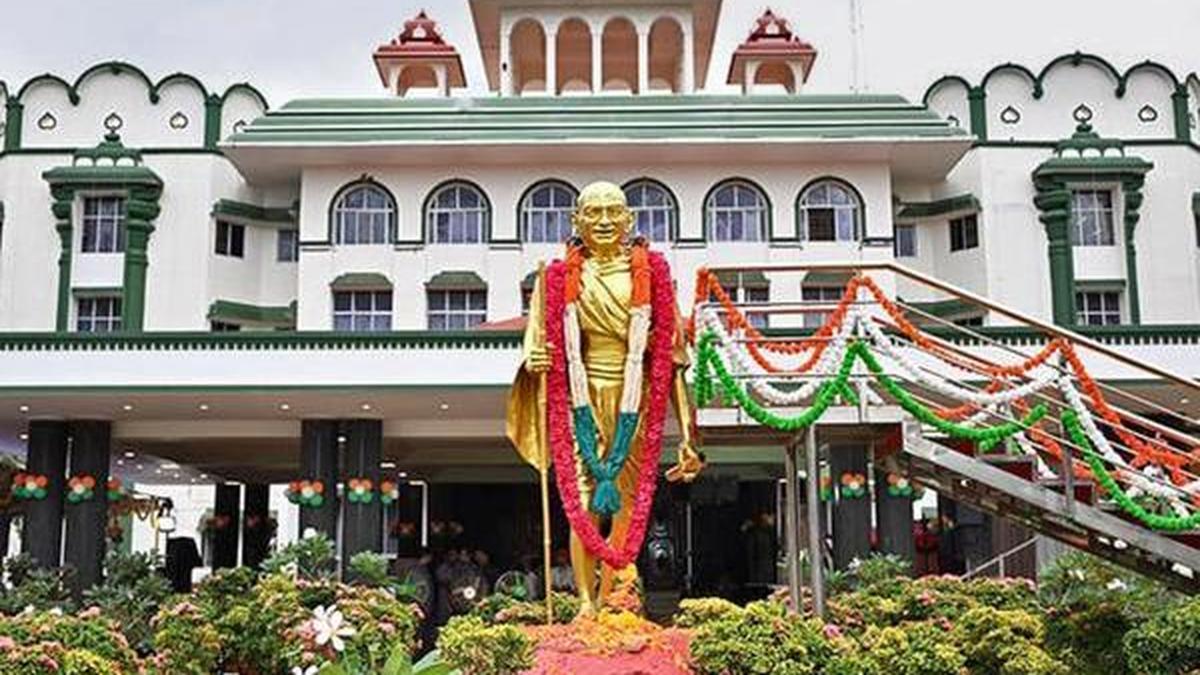
The Madurai Bench of the Madras High Court has granted 60 days to a couple, a woman professing the Hindu faith from Sri Lanka and her husband, an Indian citizen following the Christian faith, to regularise their relationship by solemnising a valid marriage under any of the applicable statutory forms.
The court was hearing the petition filed by the woman. The petitioner and her husband got married in June in the presence of the family members of the petitioner’s husband in Tiruchi district. She had arrived in India in May on the strength of a Tourist Visa, for a period of one month. She was entitled to stay in India from May 14 to June 13. The petitioner is now pregnant and the expected date of delivery is in March 2027.
The woman sought a direction to the authorities concerned to register the marriage and grant her visa extension / regularisation application on the basis of the marriage solemnised / registered.
Justice C. Saravanan said several complications have arisen on account of the petitioner having breached the conditions of the Tourist Visa granted to her for a limited period.
Section 15(a) of the Special Marriage Act, 1954, deals with the registration of marriages celebrated in other forms. Under the provision, a marriage ceremony must have been performed between the parties, followed by their having lived together as husband and wife ever since, the court said.
The ceremony undergone by the couple does not, strictly speaking, answer to any recognised form of marriage ceremony. The factum of the petitioner’s pregnancy has now presented a fait accompli, the court said.
The court is not inclined to disrupt the relationship arising out of the ceremony undergone by the couple. However, the court is inclined to grant them 60 days to regularise their relationship by solemnising a valid marriage under any of the applicable statutory forms, namely, the Hindu Marriage Act, 1955, or the Indian Christian Marriage Act, 1872, or the Special Marriage Act, 1954, the court said.
For the aforesaid period, the petitioner shall not be deported, the court directed. In the event of the marriage being solemnised and registered within the said period, the petitioner shall be permitted to continue to remain in the country, subject to the applicable law, the court directed.
The court directed the authorities concerned to provide her with necessary medical assistance as and when required and disposed of the petition.
Published – October 01, 2026 08:12 pm IST