


When keyboardist Abhijit Pohankar and his Global Varkari group presented Marathi abhangs for the Delhi crowd, they were aware that a language barrier might cloud the audience grasp. So, Pohankar explained what abhangs are, the meaning of the songs and the ragas on which they are based. Harini Iyer, founder and vocalist of the Chennai-based Tamil Jazz Collective and Tsewang Nurboo, frontman of the Ladakh-based band Dashug, adopted their own methods to deepen the audience’s appreciation.
Soundscapes of India — a three-day showcase, organised by the Indian Performing Right Society (IPRS) and curated by MusiConnect India — brought together sounds from across India. There was music from Meghalaya, Maharashtra, Ladakh, Chennai, and beyond — some known names and some new. From fusion rock and folk to Carnatic jazz and Hindustani classical jugalbandis, the range was diverse.

Abhijit Pohankar of Global Varkari.
| Photo Credit:
Special Arrangement
Music industry talent scouts and international promoters watched the performances closely, tasked with placing the musicians in festivals back home. They made notes on each artiste’s musical and production skills besides showmanship. Additional marks were given to those with a distinct sound. Many were impressed.
Now in its third edition, Soundscapes of India, acts as a launchpad for many artistes, opening doors to larger festivals or solo gigs. Alongside veterans such as sitarist Purbayan Chatterjee, tabla exponent Anuradha Pal and guitarist Ravi Iyer, groups such as the Dobom Doji Collective from Arunachal Pradesh, Da-La-Riti from Meghalaya, Jatayu and Tamil Jazz Collective from Chennai, U.K.-based guitarist Kapil Seshasayee and Folk Foundation from Kolkata also took the stage. Overseas musicians included Ngartini Huang, an Indonesian who plays the traditional Chinese instrument guzheng, and Egyptian singer-keyboardist Noha Fekry, who blends Arabic music with jazz.
With a surge in live independent or indie music in the past decade, musicians look at different avenues to get visibility. The festival route is a vital platform. These events focus on a specific theme — Jodhpur RIFF spotlights folk music, Mahindra Percussion Festival on different styles of drumming, or Bengaluru Open Air, which is about hard rock and heavy metal. At times, there are multiple genres, such as Lollapalooza in Mumbai, Ziro Music Festival in Arunachal Pradesh or NH7 Weekender in Pune.

Kanjira exponent Selva Ganesh is part of major global instrumental ensembles
| Photo Credit:
Special Arrangement
Some Indian acts have performed at international festivals too, examples being Chennai-born, California-bred Sid Sriram at Coachella, kanjira exponent Selva Ganesh, who is part of several global ensembles, mridangist Viveick Rajagopalan’s Ta Dhom Project at the prestigious Womad world music gathering, drummer Darshan Doshi at the Cape Town International Jazz Festival and Mumbai band Midhaven at the German metal extravaganza Wacken Open Air.
India or abroad, festivals play a crucial role in building an artiste’s fan base. While solo programmes often cater to those who are familiar with the music, a festival appearance draws a crowd that may be hearing a band for the first time. An example was the metal band, Bloodywood at Lollapalooza, earlier this year. Though it was an established band within the metal community, this show attracted those who had come to watch other acts or just to hang out. Some even became converts.
Thirty-five year old and a popular band in India, Delhi group Indian Ocean, is excited to perform at Lollapalooza early next year. Younger artistes such as the eclectic duo Ranj X Clifr, and singers Anoushka Maskey and Shriya Rao also have slots at the festival.
Dobom Doji, a singer from Arunachal Pradesh who performed a folk-rock set at Soundscapes, says: “At a festival, people gather to experience different artistes and genres of music. Someone who has never heard my music before can discover it simply by being here.”
Sahib Singh, guitarist of Chennai fusion bands — Jatayu and Tamil Jazz Collective — says, “festivals are a great space for crossovers and discovery. “The best ones, for me, are those that bring together completely different styles, sounds and genres without trying to fit everything into a fixed theme. It forces audiences to be open to the experience rather than deciding what they’re going to expect.”
There have also been instances when an artiste sings to an audience that is not familiar with a language. Examples are Bengaluru singer Varijashree Venugopal, who sings many songs in Kannada, and Harini of Tamil Jazz Collective, whose songs are in Tamil. They just explain the core meaning of the song before singing.

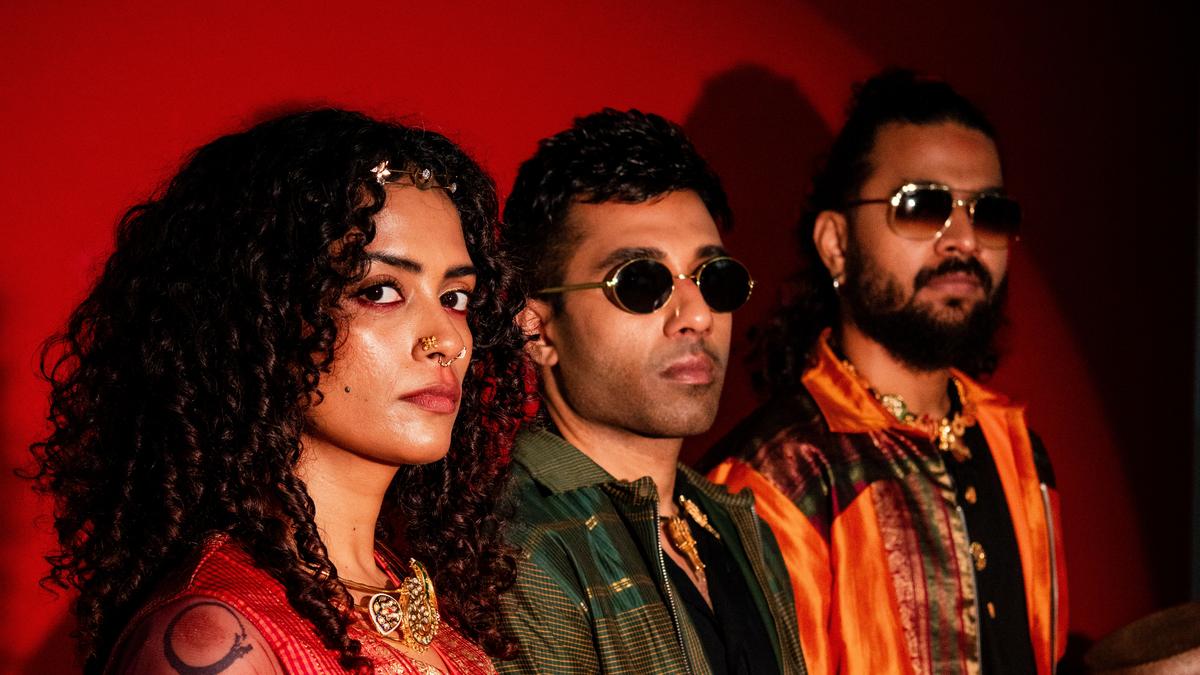
Dashug, Ladakh’s first musical band, that has kicked a storm in an otherwise tranquil region
| Photo Credit:
Courtesy: The Band
Harini says she is inspired by the American improvisational singer, Bobby McFerrin, and the manner in which he uses his voice. She explains, “I am exploring how to use the voice as an instrument, not just for singing, but to emulate Nature and its sounds. McFerrin explored these aspects. This sentiment opened up many forms of music and languages, for me. I carry this forward in Tamil Jazz Collective and hope people will understand and enjoy our music even if they don’t understand the language.”
At times, festivals also promote a city’s heritage and talent — Kala Ghoda Arts Festival in Mumbai and Bengaluru Habba. There’s also the second edition of the Higher Ground festival in Bengaluru (to be held September 25 to 27). The event aims to bring together the city’s independent music community, with genres such as rock, alternative, progressive, electronic and singer-songwriter sounds. “Besides established acts, there will be new musicians making their mark on the city’s independent scene, and emerging artistes waiting to be discovered and heard,” says Vishwas Karanth of Gigital India, which is curating the festival along with Dogmatix Events.

Dobom Doji Collective from Arunachal Pradesh
| Photo Credit:
Special Arrangement
Conferences too are a part of festivals such as Soundscapes where a platform is created for musicians to interact with industry folks and event promoters to pitch their work, even if they’re not performing.
Showcasing a state’s culture also becomes a part of the event. For Dobom, “Every time I perform outside Arunachal Pradesh, I see it as an opportunity to also to represent the place I come from besides my music.” Wherever Tsewang Nurboo performs, he loves to talk about Ladakh and its beauty. “It ignites an interest in our culture.”
During a panel discussion, at Soundscapes, tabla exponent Bickram Ghosh stressed on the need for more curations and collaborations. As Bickram Ghosh noted, this is the era of collaborations, and each new artistic partnership has the potential to create fresh sounds and fresh audiences.