



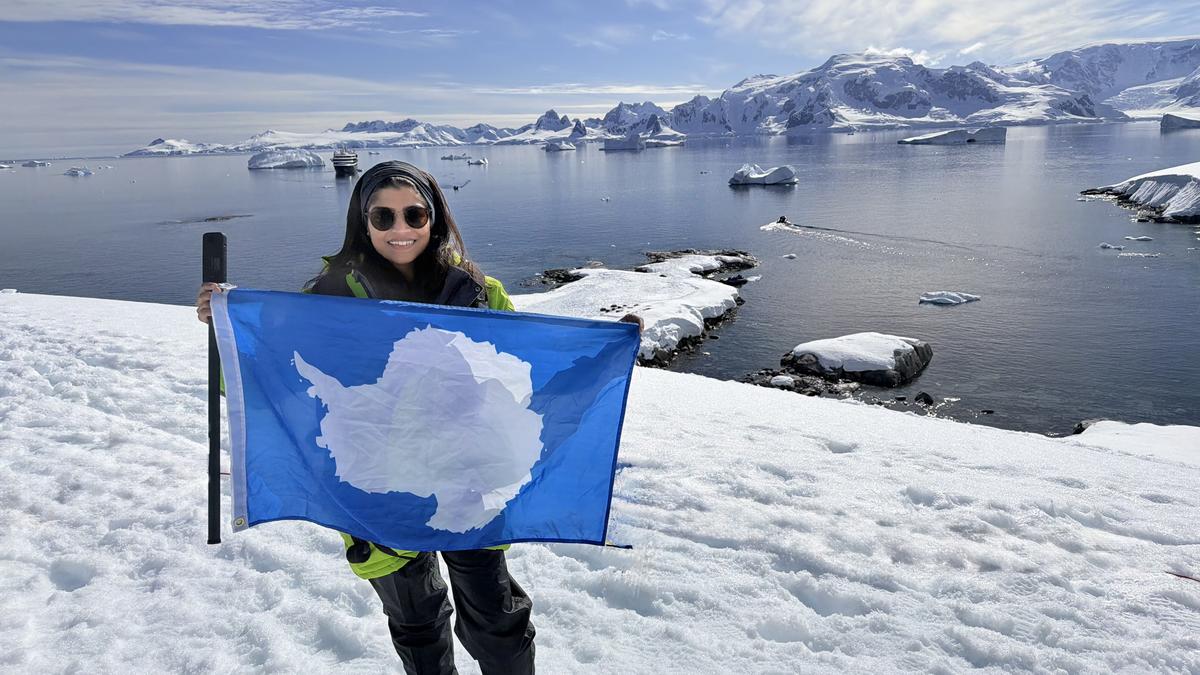

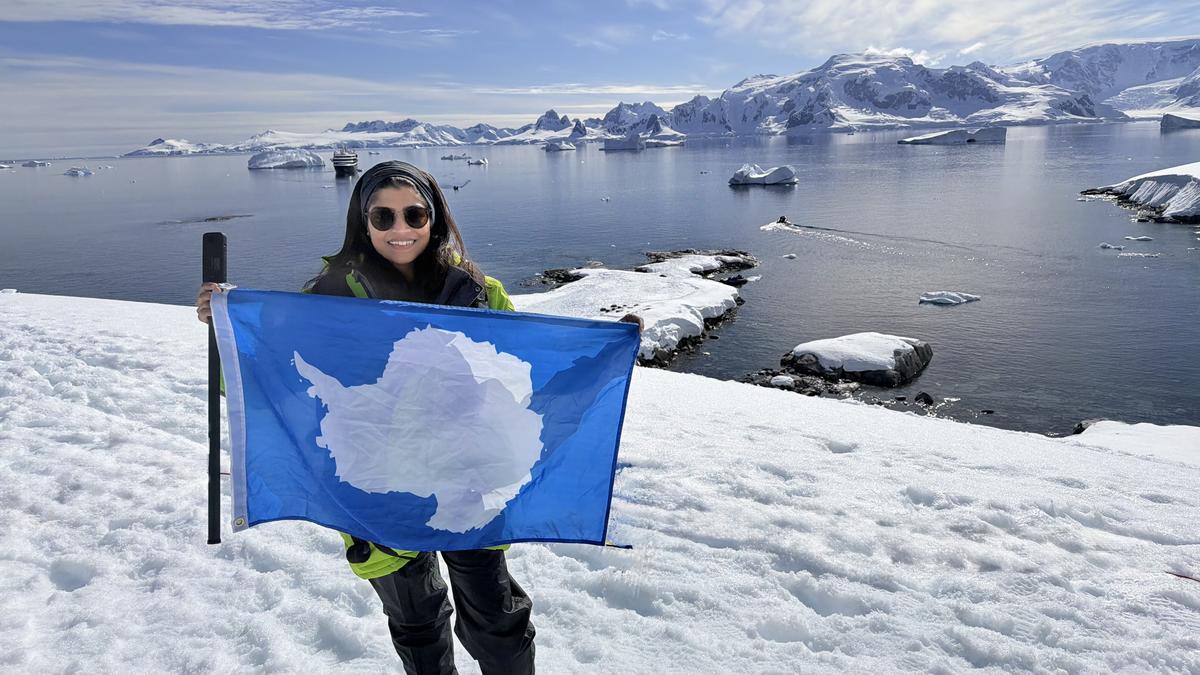
Sneha Raju, a two-time kidney transplant recipient, successfully completed a full Antarctic expedition.
| Photo Credit: Special Arrangement
A two-time kidney transplant recipient from the city has successfully completed a full Antarctic expedition, making history by achieving interior landings, camping overnight on the continent and crossing the Antarctic Circle. The expedition was undertaken between December 17 and December 28 last year.
Diagnosed with chronic kidney disease when she was just three-years-old, Sneha Raju, now 34, underwent her first kidney transplant at the age of seven. In 2013, during her final year of college, she underwent a second transplant after complications from cerebral malaria damaged the first graft.

Sneha Raju at Detaille Island in Antarctica.
| Photo Credit:
Special Arrangement
The journey began from Ushuaia, with the team navigating the notoriously turbulent Drake Passage before reaching the Antarctic Peninsula. The first landing took place at Barrientos Island on December 19, followed by an official continental landing at Portal Point. On December 20, Ms. Raju camped overnight at Portal Point.
Speaking about the experience with The Hindu, Ms. Raju said the journey across the Drake Passage presented an unexpected test. Despite having no such prior history, she experienced severe seasickness during the 48-hour crossing.

Diagnosed with chronic kidney disease at the age of 3, Ms. Raju underwent her first kidney transplant at 7. In 2013, during her final year of college, she underwent a second transplant after complications from cerebral malaria damaged the first graft.
| Photo Credit:
Special Arrangement
For transplant recipients, strict adherence to medication schedules is critical. “We transplant recipients have to take immunosuppressants on the clock. The ship was constantly shaking, there was no pause. Trying to keep my regular medicines down without throwing up for those 48 hours was a big task,” she said.
Preparation for Antarctica went far beyond physical training. Given the remoteness of the continent, she conducted extensive research before selecting the expedition cruise. “I had to make sure I picked the right cruise. It was not about luxury. I had to ensure they had a helipad and helicopter medical evacuation facilities,” she said.
Unlike previous expeditions in India, such as the Chadar Trek, where emergency evacuation could involve assistance from the Indian Army or access to nearby hospitals, Antarctica presented a completely different risk landscape. “I also had to ensure that the expedition team included certified medical nurses and doctors on board,” she added.
Published – February 02, 2026 07:14 pm IST