








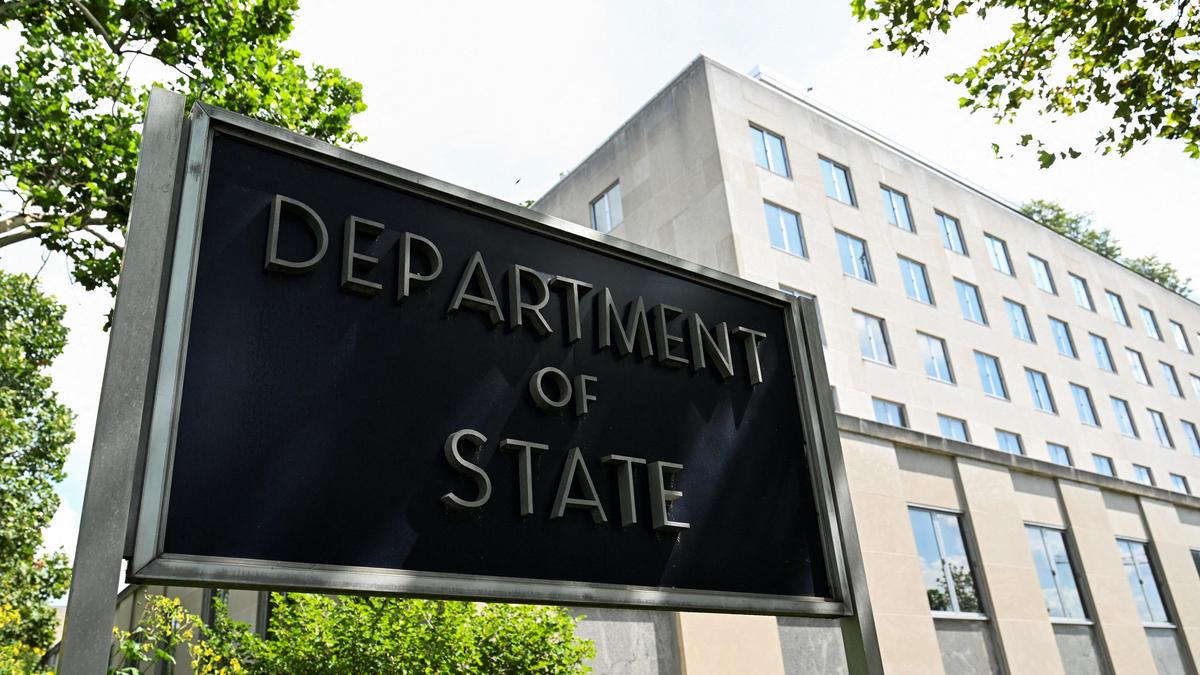
The report cited a guidance issued in a cable sent by the U.S. State Department to embassy and consular officials.
| Photo Credit: Reuters
The Trump administration is understood to have directed American consular offices across the world to deem those individuals seeking to enter and live in the U.S. ineligible if they have certain medical conditions, saying these people could end up relying on public benefits.
A report by KFF Health News said that foreigners applying for visas to live in the U.S. “might be rejected if they have certain medical conditions”.
The report cited a guidance issued in a cable sent by the State Department to embassy and consular officials.
“You must consider an applicant’s health…Certain medical conditions – including, but not limited to, cardiovascular diseases, respiratory diseases, cancers, diabetes, metabolic diseases, neurological diseases, and mental health conditions – can require hundreds of thousands of dollars’ worth of care,” according to the cable cited by KFF.
The cable also advises visa officers to consider conditions like obesity in making their decisions, noting that the condition can cause asthma, sleep apnoea and high blood pressure.

The officers are advised to take into consideration the medical conditions to assess whether an immigrant could become a public charge and “require expensive, long-term care”.
The new guidance directs “visa officers to deem applicants ineligible to enter the U.S. for several new reasons, including age or the likelihood they might rely on public benefits”.
“The guidance says that such people could become a ‘public charge’ — a potential drain on U.S. resources — because of their health issues or age,” the KFF Health News report said.
The cable directs visa officers to also assess if applicants are financially stable to pay for their medical treatment without help from the U.S. government.
“Does the applicant have adequate financial resources to cover the costs of such care over his entire expected lifespan without seeking public cash assistance or long-term institutionalisation at government expense?” the cable reads.
The guidance also directs visa officers to consider the health of family members, including children or older parents.
“Do any of the dependents have disabilities, chronic medical conditions or other special needs and require care such that the applicant cannot maintain employment?” the cable said, according to the news report.
The new guidance comes amid increased crackdown by the Trump administration on immigration.
The report added that the new guidelines mandate that immigrants’ health be a focus in the application process. It quoted senior attorney for nonprofit legal aid group Catholic Legal Immigration Network Charles Wheeler as saying that while the guidance applies to nearly all visa applicants, it is likely to be used only in cases in which people seek to permanently reside in the U.S..
Wheeler termed the guidance as “troubling”, saying that visa officers are not medically trained and have no experience in assessing how a person’s medical condition will progress in future and whether that individual will become a strain on government resources.
Immigrants have to submit their medical records as part of their Green Card process but the report quoted immigration lawyer at Georgetown University Sophia Genovese to say that the language of the directive encourages visa officers and the doctors who examine people seeking to immigrate to speculate on the cost of applicants’ medical care and their ability to get employment in the U.S., considering their medical history.
“Taking into consideration one’s diabetic history or heart health history — that’s quite expansive,” Mr. Genovese said.
“There is a degree of this assessment already, just not quite expansive as opining over, ‘What if someone goes into diabetic shock?’ If this change is going to happen immediately, that’s obviously going to cause a myriad of issues when people are going into their consular interviews.”
Published – November 08, 2025 09:38 am IST