





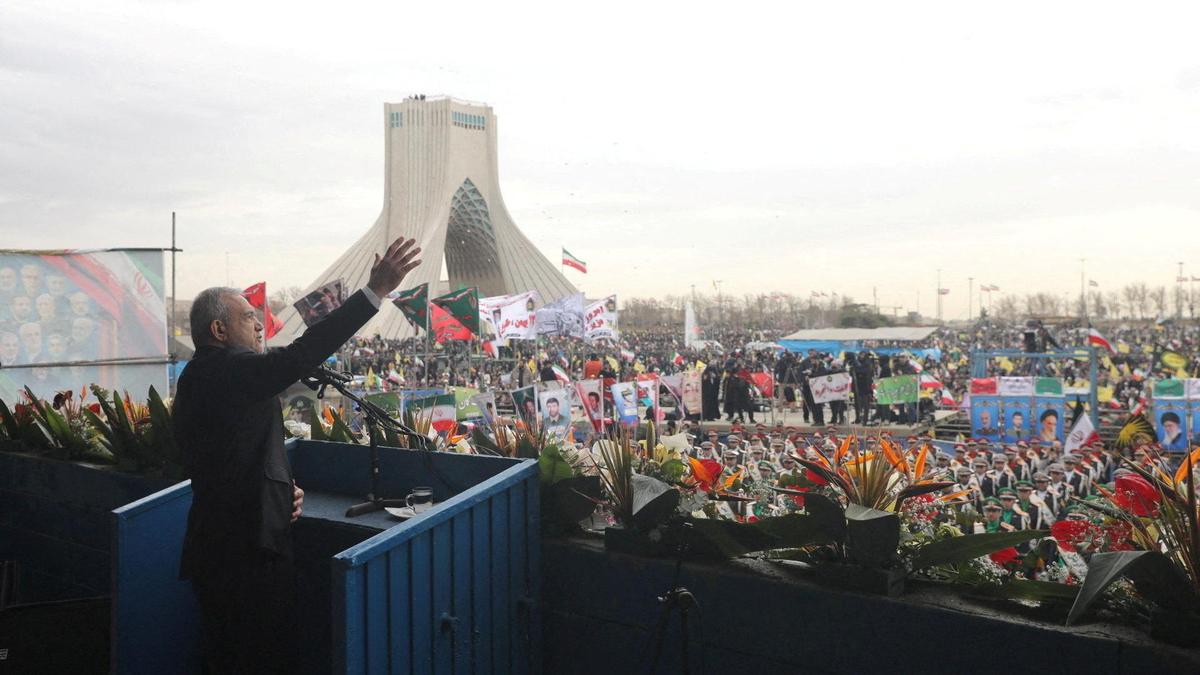

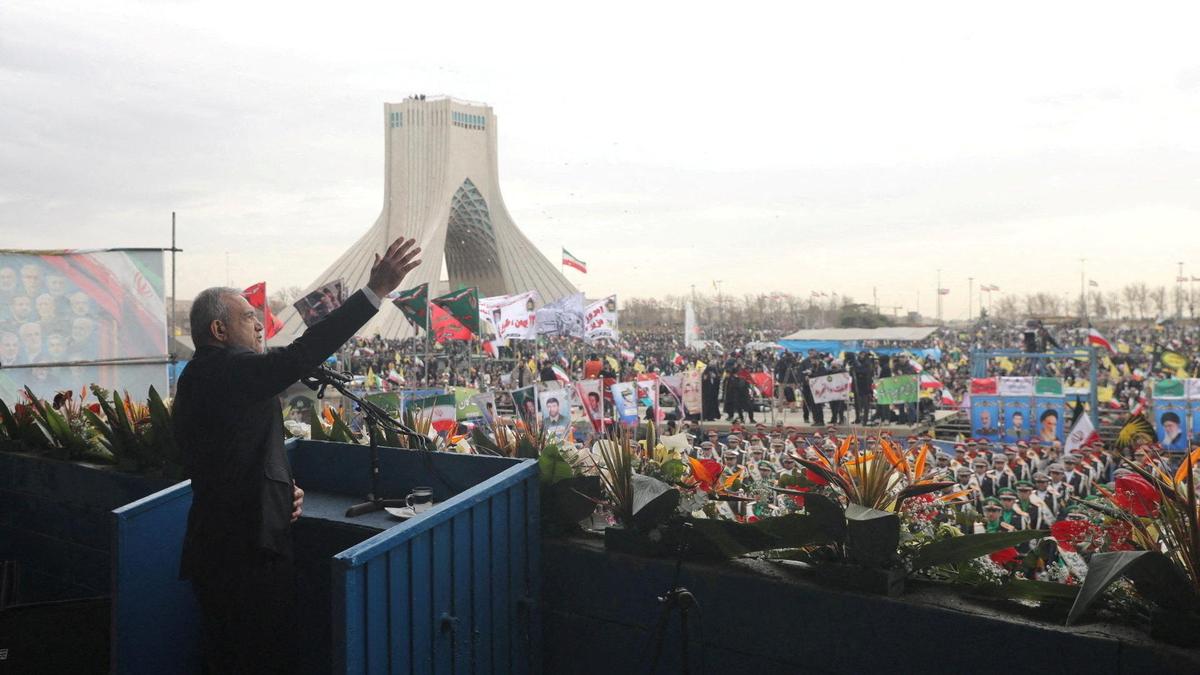
Iranian President Masoud Pezeshkian speaks during the 47th anniversary of the Islamic Revolution in Tehran, February 11, 2026.
| Photo Credit: Reuters
Crowds thronged Tehran and other Iranian cities on Wednesday (February 11, 2026) to mark the 47th anniversary of the Islamic revolution that toppled the U.S.-backed Pahlavi monarchy, and to show solidarity with the government at a time when Iran faces the threat of another war, with the U.S. shoring up military presence in the region.
On February 9, Supreme Leader Ayatollah Ali Khamenei urged Iranians to take part in “street marches” to demonstrate national power and drive “the enemy to despair”. On Wednesday (February 11), state TV broadcast visuals of demonstrators filling the streets, carrying portraits of Mr. Khamenei and Ayatollah Ruhollah Khomeini, the Islamic Republic’s founder, along with Iranian and Palestinian flags, and chanting slogans such as ‘Death to America’ and ‘Death to Israel’. State media claimed that huge crowds poured into Tehran’s Azadi Square and 1,400 cities and towns.

“From the very first days of the Revolution, the enemies tried to destroy our fledgling movement through actions such as creating division and staging coups,” President Masoud Pezeshkian, a reformist, said while addressing a rally at Azad Square. He said Iran was not seeking nuclear weapons and was ready for verification, but added that it would not fold under pressure.
“Our Iran will not yield in the face of aggression, but we are continuing dialogue with all our strength with neighbouring countries in order to establish peace and tranquillity in the region,” Mr. Pezeshkian said. “Our country, Iran, will not yield to their excessive demands,” he added, according to the state media.
Iran’s last Shah, Mohammad Reza Pahlavi, fled the country in mid-January 1979 amid nationwide protests. Mr. Khomeini, who was in exile in Paris, returned to the country on February 1. On February 11, the downfall of the Pahlavi regime was complete with the military declaring support for the revolution. The Iranian regime commemorates the revolution on this day every year.
This year’s anniversary celebrations are being held amid high tensions between Iran and the U.S. In the first week of January, Iran witnessed widespread anti-government protests and riots, which were put down by security personnel. According to Iranian authorities, at least 3,117 people were killed in violent protests and state crackdown.

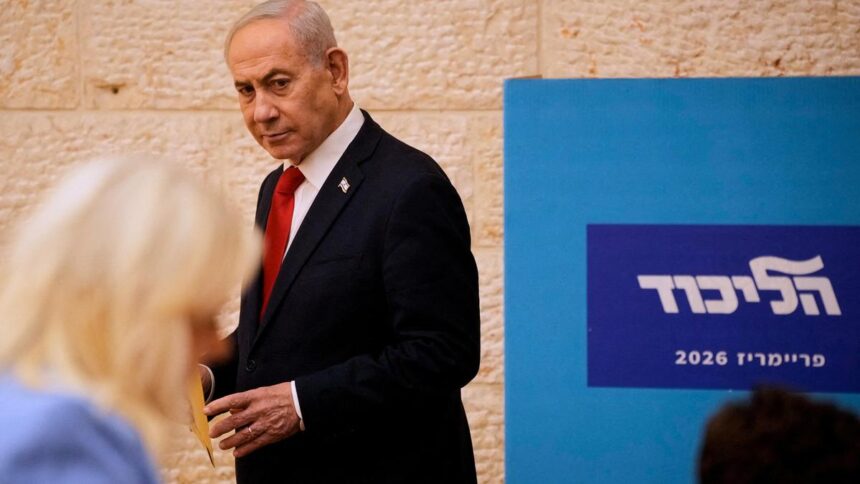
U.S. President Donald Trump, who told Iranian protesters that “help is on the way”, has sent an aircraft carrier group and dozens of fighter jets and warships to the region. The U.S. and Iran held talks in Muscat on February 6, but there was no breakthrough. Israeli Prime Minister Benjamin Netanyahu, who ordered air strikes on Iran in June 2025, triggered the 12-day war, is now in Washington to meet Mr. Trump. They are expected to discuss Iran among other topics.
Mr. Trump, in an interview on Tuesday (February 10, 2026), said he is considering sending a second aircraft carrier to West Asia to prepare for military action against Iran should negotiations fail. “Either we will make a deal, or we will have to do something very tough like last time,” said Mr. Trump, referring to the U.S. air strikes on Iran’s nuclear facilities on June 22, 2025.
“Last time they didn’t believe I would do it. They overplayed their hand. This time, the talks are very different,” said Mr. Trump. The U.S. has demanded that Iran’s nuclear programme, its missile production, and support for militias in the region be included on the agenda of the talks, while Iran has insisted it won’t negotiate any issues other than the nuclear programme. After the February 6 talks, both Iran and the U.S. have signalled that they would meet for a second round in the coming days.
Published – February 11, 2026 07:26 pm IST