





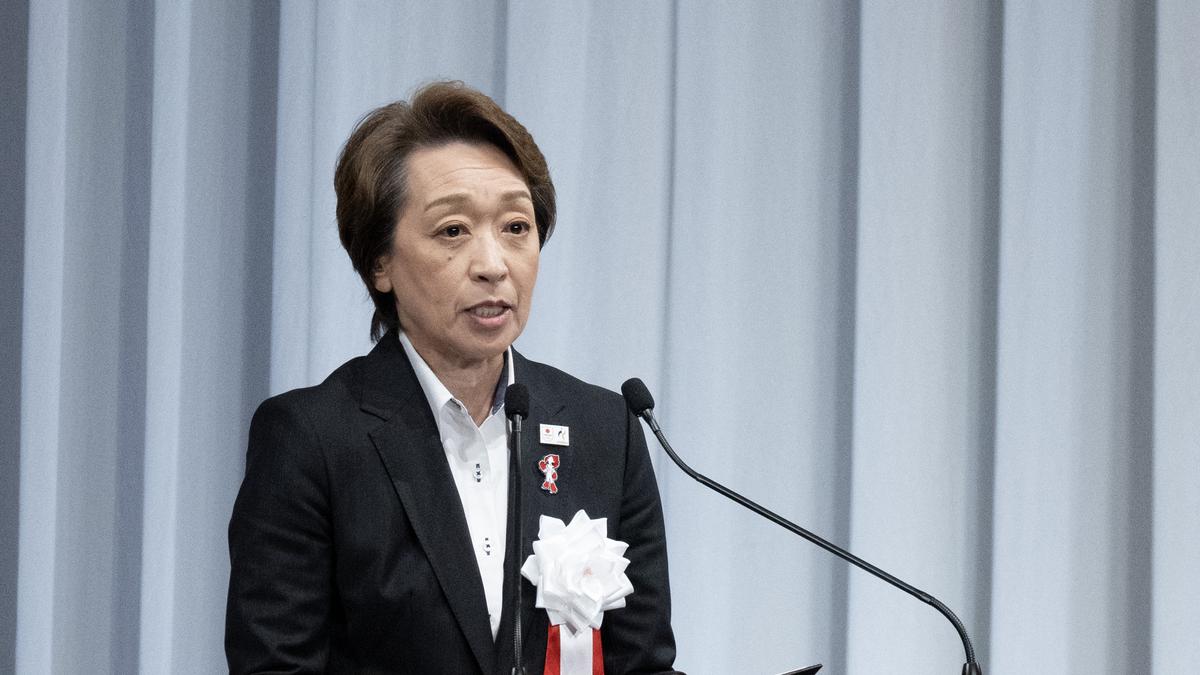

Japanese Olympic Committee (JOC) chief Seiko Hashimoto on Saturday (October 3, 2026) that “there were many problems” that marred the Aichi-Nagoya Asian Games and so many things could have been done better in retrospect but insisted that the harsh criticisms do not represent the whole picture and there were positive aspects of the Games.

Logistical chaos due to a cost-cutting decision to scrap a traditional Athletes’ Village, cramped lodgings and transport hassles marred the the Games, which officially began on September 19 and will end on Sunday (October 4, 2026).
“It is also true that there were many problems, although we also heard people say living aboard the cruise ship was a very good experience, with extremely good food — not only the Japanese food — and hospitality, including that from the volunteers,” Hashimoto said.
“I think the harsh criticism tends to receive a great deal of attention. But that isn’t the whole story. Even small moments of happiness that people experienced will, little by little, ultimately be communicated to the world as part of the tremendous value of hosting these Games,” she said at a press conference in Nagoya.
Instead of the traditional Athletes Village, the organisers used a mix of hotel rooms, temporary wooden containers and a cruise ship to accommodate 17,000 athletes and officials in cost-cutting measures that have gone terribly wrong.

But Hashimoto said that the attempt to cut the cost of hosting the Games could present possibilities in future for other countries.
“I think there were many things we tried for the first time at these Games. We made use of a cruise ship, for example, as well as transportable container-type accommodations.
“When we think about future international competitions and the varied circumstances in different countries and regions, by trying these new approaches this time, we were able to present possibilities…’by making use of this, perhaps our country or our region could also stage an international competition’. We were able to present that kind of major, forward-looking — or pioneering — possibility.”
The JOC chief said the challenges faced by her country could pave the way for enhancing the country’s future ability to hose such Games.
“How to overcome these challenges is the skillset we need to improve upon. This will pave the way for enhancing our future ability to organise and run an event (such as this). We also received harsh criticisms because of the challenges we faced. I am fully aware of that. This is all part of the Games, but we need to analyse those issues, so we can tackle them for the next future opportunity.

“There are so many things we could have done better in retrospect. So we’d like to take these lessons and learn.”
She also made a point that multiple sports were added to the Asian Games within a period of one year, and within a very short time frame, the organisers had to adapt to those changes as well.
Events in some sports like equestrian and rowing were wither postponed or squeezed due to challenges caused by the weather.
“Prior to the event, we were hit by a typhoon, and multiple typhoons came to Japan and hitting the area during the competition. Multiple events had to change their schedules. Adapting to that changeable environment has been quite tough but the organising committee was able to manage that situation, I believe,” she said.
“There are things that cannot be resolved through human effort, no matter what the organising committee does, and I think that means co-existence with nature.

“We received reports that heavy rain (fell at some) part of the athletes’ accommodations and caused considerable difficulties. Even with things that are beyond our control, it is important to anticipate and prepare for them.”
Japan accumulated its highest number of medals in its history in these Games, and Hashimoto expressed delight at the achievement of the home athletes.
“This is the highest (medal count) in our history and I would like to extend my deepest thanks to all those who have given Team Japan their enthusiastic support, particularly for the young athletes, who have developed so much and performed so well, which was really our focus for these Games.”
Japan crossed the 250 medal mark with more than 75 gold, but second to China, which have bagged more than 325 medals with 165 gold.
Published – October 03, 2026 02:49 pm IST