





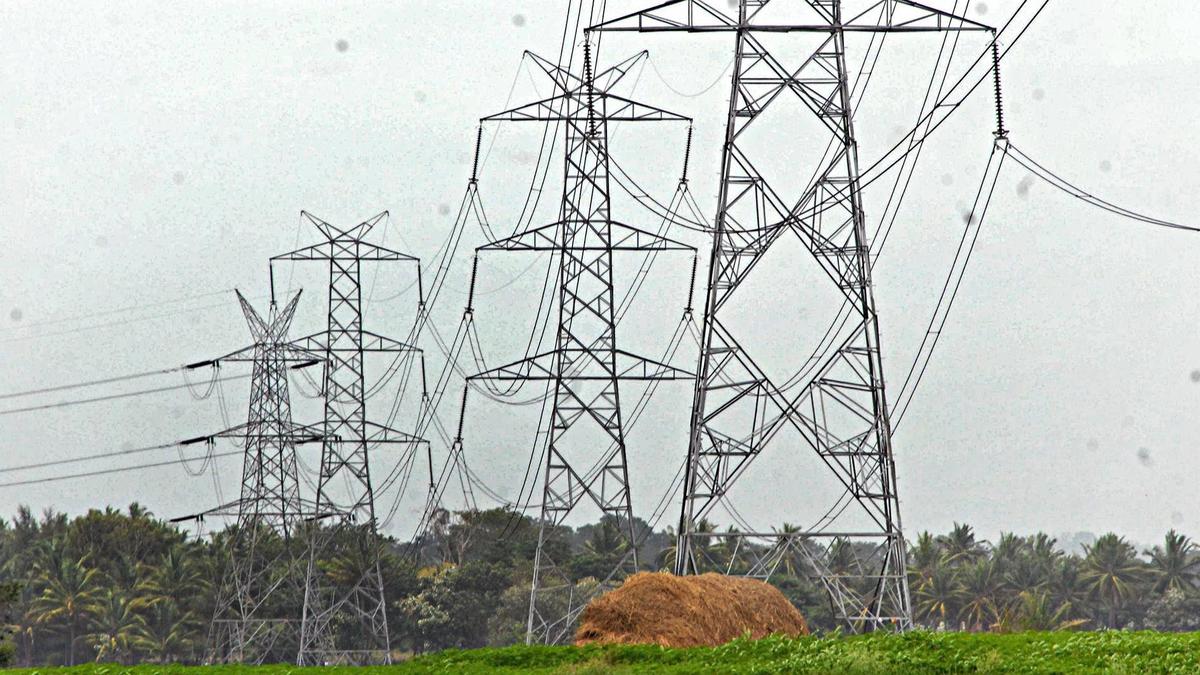


On September 7, Karnataka recorded a power demand of 340 million units, the highest ever for a day in September. In comparison, demand did not cross 210 million units during September last year.
| Photo Credit: File photo
In a bid to manage the power situation in the State amid rising demand, deficient rainfall and above-normal temperatures in September 2026, the Karnataka Energy Department has stepped up monitoring and coordination measures, with senior officials reviewing electricity availability and supply on a daily basis.
Officials in the Energy Department said a Crisis Management Group has been constituted to review the power situation every day and ensure that there are no disruptions in urban and rural areas.
Speaking to The Hindu, a senior Energy Department official said: “Several measures have been put in place to mitigate the power situation and ensure effective management of supply across the State. One of them is the formation of a Crisis Management Group comprising the Director (Projects), Karnataka Power Transmission Corporation Limited (KPTCL), officials of Power Company of Karnataka Limited (PCKL) and all the Escoms. The group has been constituted to monitor the power situation on an hour-to-hour basis.”
The official further said that all Escoms have been directed to coordinate with District In-charge Ministers and Deputy Commissioners to ensure effective communication regarding the power situation and the measures being taken to manage supply.
On September 7, Karnataka recorded a power demand of 340 million units, the highest ever for a day in September. In comparison, demand did not cross 210 million units during September last year.
Elaborating on the department’s preparedness, the official said: “At the field level, Executive Engineers have been stationed at 220-kV substations during peak hours to monitor the network and address issues that could lead to interruptions. The department is also continuously monitoring congestion and overloading in the 220-kV transmission network to prevent disruptions in power supply. During peak hours, especially in the evening, the transmission network comes under stress, which can lead to power disruptions.”
When asked whether the department planned to purchase power from the open market, the official said: “Anything may happen in the future. For now, we are meeting demand through available sources, including thermal, hydel, waste-to-power, the Yelahanka Combined Cycle Power Plant, solar, wind and central generating stations.”
He said that during reviews of power demand and supply, Escoms had been directed to provide uninterrupted power supply to urban areas, Nirantara Jyothi Yojana (NJY) feeders and industrial feeders. However, power supply to agricultural loads is currently being managed in batches. Three-phase power supply to agricultural pump sets is being provided for seven hours a day. Supply has been staggered between daytime and night-time hours to ensure that irrigation pump (IP) sets continue to function. The department said the existing arrangement would be restored once power availability improves.
The official said coordination among KPCL, KPTCL, PCKL and Escoms was intended to ensure efficient management of available power. “Coordination among all four agencies will help identify and address any emerging stress on the transmission network in time. The duration and pattern of supply to certain categories of consumers, including domestic, industrial, commercial and IP sets, will be reviewed based on power availability in the system,” he said.
Published – September 25, 2026 08:51 pm IST