






The story so far: Parvinder Singh Jhota, an anti-drug crusader, was shot dead on Tuesday (October 13, 2026) at a local medical store in Punjab’s Mansa district, sparking immediate outrage in the State, which has been battling drug abuse for decades.
On Tuesday (October 13, 2026), the Punjab Police’s anti-drug campaign ‘Yudh Nashian Virudh’ (Fight Against Drugs) entered its 591st day; however, the killing of Jhota has put the ruling Aam Aadmi Party (AAP) on the defensive over the State’s poor law and order and its pre-election promise to rid Punjab of drugs.

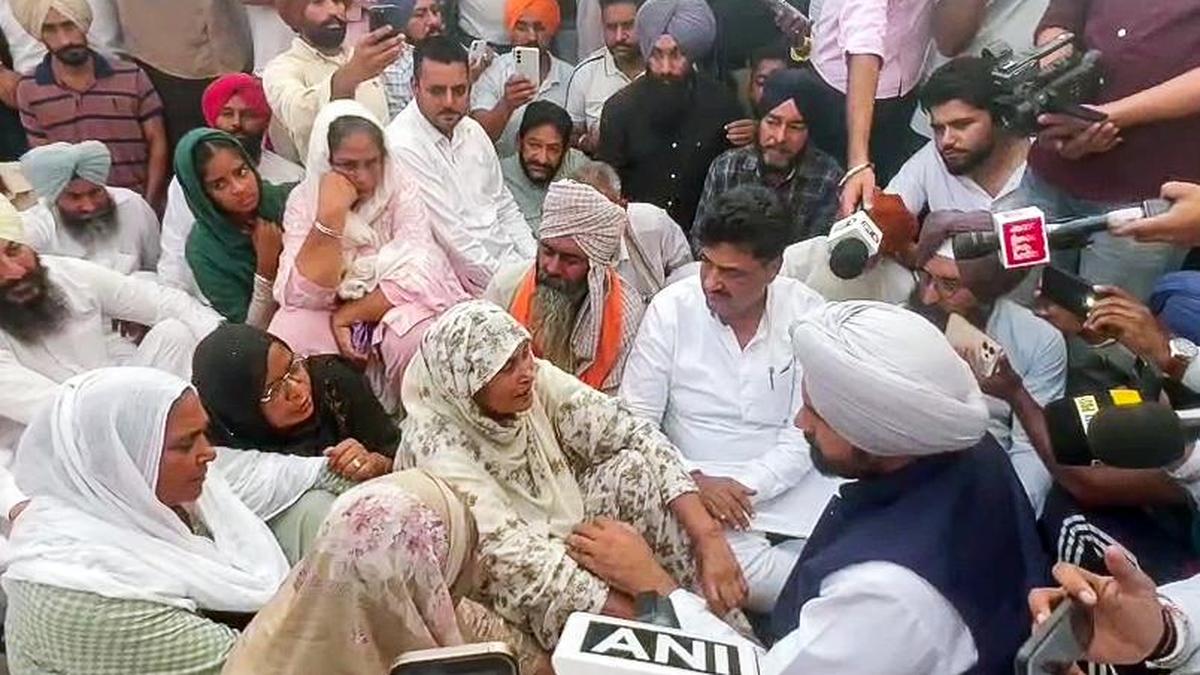
The Police asserted that preliminary investigation into the murder of Jhota has pointed towards personal enmity as the motive behind the crime, even as Jhota’s family and supporters refused to cremate the body, blaming the State government for its failure to curb substance abuse.
Jhota was shot at a chemist shop in Mansa town and rushed to the local civil hospital, where doctors declared he was brought dead. The assailants fled the spot. The Police received information about the incident at around 10:30 a.m. Preliminary investigation has revealed that Ashwani, a chemist shop owner, allegedly fired at Jhota with his licensed pistol, resulting in his death.
A purported video showed Jhota in confrontation with the accused at the medical store over the alleged sale of illicit drugs. Parts of the shooting were recorded in the video, as the accused could be seen brandishing a weapon and firing. After the incident, scores of people staged a protest outside Mansa Civil Hospital and shops were also closed in the town. The medical store of the accused was vandalised by protesters.

On Wednesday (October 14, 2026), Punjab AAP media in-charge Baltej Pannu claimed that the main accused had been arrested by Punjab police.
Did murder stem from personal enmity?
Assuring that police teams were working to apprehend all those involved in the case, Deputy Inspector General (DIG) Harjeet Singh said, “Preliminary investigation indicates that the murder stemmed from personal enmity. An incident involving the two individuals had also taken place in 2023, and this previous dispute is being examined as part of the investigation,” said the DIG.
The feud between Jhota and the accused goes back to July 2023, when Jhota allegedly garlanded the chemist with shoes, accusing him of selling illicit drugs. “The FIR has been registered in the present case and investigation was underway,” he added.
Who was Jhota?
A former boxer, Jhota (45), launched a campaign against drug abuse in Mansa in 2023. After seeking guidance from farmer union leaders, he started the “Nasha Roko, Rozgaar Do” (Stop Drugs, Give Employment) campaign. Along with his supporters, he raided chemist shops and homes suspected of selling illicit drugs and counselled people against selling or consuming them. His popularity grew, and civilian “Nasha Roko Committees” sprang up in villages across Mansa and Bathinda, carrying out similar searches and raids on suspected drug outlets.
Punjab drug menace: What’s the magnitude?
On October 8, 2026, PANJ Foundation, a Punjab-based think tank, released its 15-year data report titled ‘State of Punjab: Data Story of 15 Years’. Pointing out that the 2018 national survey is the only source that provides comparable estimates of substance use across Punjab and all other states using a uniform methodology, it noted that substance use in Punjab was higher than the national rate for every substance measured, with particularly large gaps for alcohol, cannabis, opioids and cocaine.
“Alcohol use was about twice the national rate, while cannabis use reached 12.55% of the population, 4.4 times the national rate and the highest among the 36 states and union territories. Opioid use was 4.7 times the national rate, while cocaine use was 6.6 times higher. The gap was also evident in dependence and the need for treatment. Opioid dependence affected 1.28% of the population aged 10–75, 4.9 times the national rate, while 2.8% required help for opioid use, compared with 0.70% nationally. The figures therefore point not only to higher levels of substance use in Punjab, but also to a substantially greater burden of opioid-related dependence and treatment needs,” it revealed.
The study added that, in numbers, more than 21 lakh adults in Punjab used opioids and nearly 31 lakh used cannabis in 2018. Punjab ranked second among states in people needing help for opioids (7.2 lakh), after Uttar Pradesh, whose population is about seven times larger, and second in current cocaine users. Alcohol use has moved in the other direction: the share of men who drink fell from 43.4% in NFHS-3 (2005-06) to 22.9% in NFHS-6 (2023-24), although the two rounds cover different age groups, the study said.
Published – October 14, 2026 12:50 pm IST