







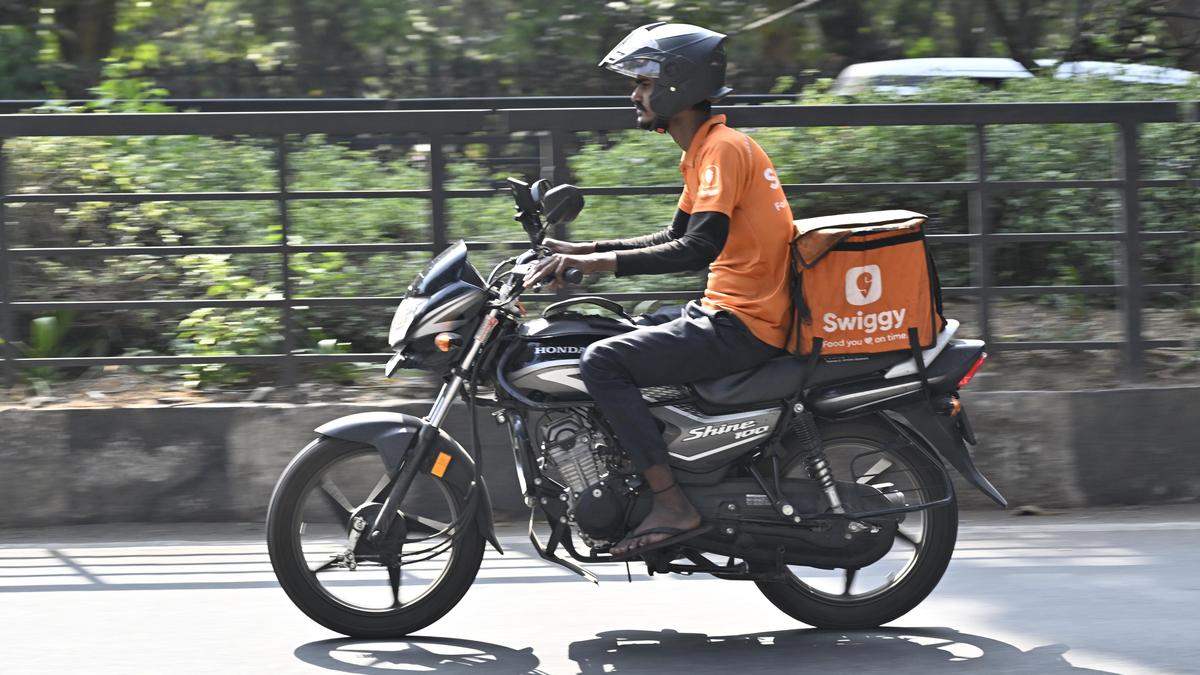

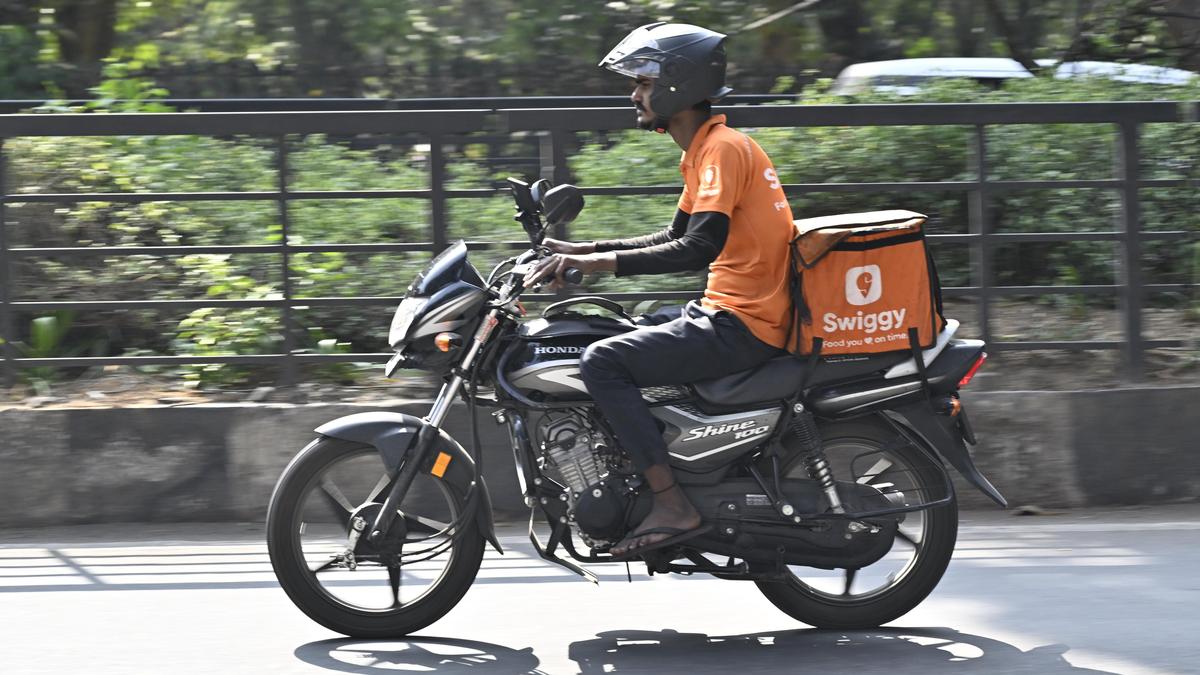
Some members opine that the welfare fee per translation to be paid by platforms may not be sufficient.
| Photo Credit: K. MURALI KUMAR
After the Karnataka government formally constituted the Karnataka Platform-Based Gig Workers’ Welfare Development Board, representatives of gig workers’ unions and associations welcomed the move, calling it a significant step towards recognising gig and platform workers as they are entitled to social security and legal protections.
But some members opined that the welfare fee per translation to be paid by platforms may not be sufficient.
‘Shows the way’
Shaik Salauddin, national general secretary of the Indian Federation of App-Based Transport Workers (IFAT), said, “Karnataka had “shown the way” by institutionalising a welfare board for gig workers.”
“This recognises gig workers as workers deserving dignity, rights and social protection,” he said.
He said the Karnataka model should serve as a precedent for other States and the Union government to establish similar welfare boards and enact comprehensive legislation covering social security, fair wages, occupational safety and grievance redressal for gig and platform workers.
Mr. Salauddin also expressed hope that the board would function in a transparent manner, with meaningful representation of gig workers and their unions in decision-making. “The real success of this board will lie in its effective implementation and its ability to improve the lives of workers on the ground,” he said.
Under the framework notified by the State government, both aggregator platforms and gig workers will be required to register with the welfare board.
Tanveer Pasha, president of the Ola Uber Drivers’ and Owners’ Association, said the formation of the board marked the beginning of discussions that had been ongoing since 2019. “This issue was repeatedly discussed earlier but sidelined. Now, at least, the Labour Minister and the department have shown seriousness through meetings and concrete steps towards implementation,” he said.
Mr. Pasha said sustained engagement by the Labour Minister with aggregator companies had played a key role in the process. “Earlier, companies were not willing to share data or agree to a welfare levy. Through repeated meetings, the Minister convinced them, and that is how the law was passed in the previous Assembly session and the Board has now been constituted,” he said, adding that both company representatives and worker representatives had been included in the board, which is a welcome step.
Some reservations
Some members, however, who are part of the 16-member committee said, on condition of anonymity, that the welfare fee proposed at 1% to 1.5% may not be sufficient to sustainably fund social security benefits for gig workers. They said that once costs such as health insurance, accident coverage, pensions and administrative expenses are accounted for, the initial corpus may fall short, particularly given the large and growing number of gig workers in the State.
While welcoming the formation of the board as a crucial first step, they cautioned that the effectiveness of the welfare framework would ultimately depend on whether the levy generates adequate resources to deliver meaningful benefits on the ground.
Uber, one of the four platform representatives on the committee, and Swiggy were unavailable for comment despite repeated attempts.
Published – January 27, 2026 09:53 pm IST