





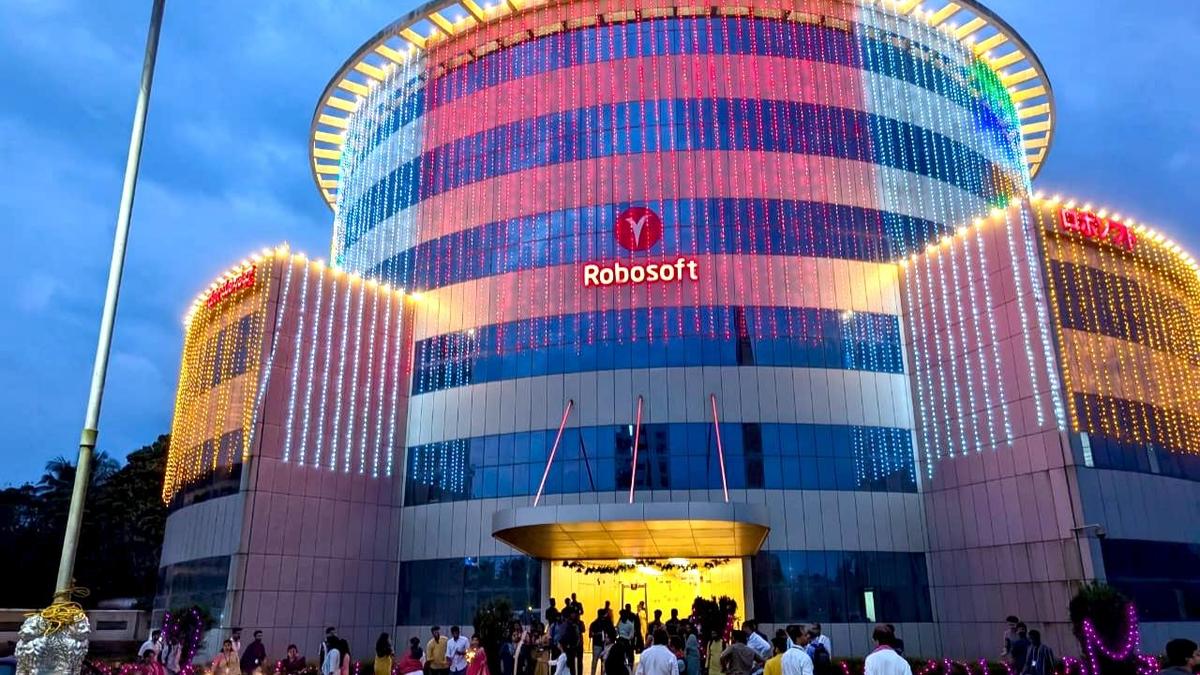

The study is a joint initiative of Karnataka Digital Economy Mission, Silicon Beach Program of Mangaluru, and Deloitte India.
| Photo Credit: UMESH S. SHETTIGAR
Mangaluru witnessed acquisitions and investments totalling approximately $240 million in the Global Capability Centre (GCC) and technology sectors in the past over four years, according to Mangaluru Data Centre Feasibility Study-2025.
The study, a joint initiative of Karnataka Digital Economy Mission (KDEM), Silicon Beach Program (SBP) of Mangaluru and Deloitte India, said that a recent report by the Union government’s Software Technology Parks of India (STPI) estimated that India’s GCC market is expected to reach $110 billion by 2030. “GCCs, particularly in the BFSI (Banking, Financial Services and Insurance) sector, which is a stronghold of Mangaluru, will have a strong focus on RegTech (Regulatory Technology) and FinTech (Financial Technology), along with AI-powered automation, which will emerge as major demand drivers for data centres in Mangaluru,” the study report released on December 26 said.
Several global firms are rethinking their approach to building global capabilities, and nano-GCCs have emerged as one of the key strategies. Mangaluru is also central to the growth of nano-GCCs in India, which focus on value creation and deep research and development, the report said.
An analytics firm, AIM, has pegged Mangaluru as one of the eight rising GCC spots in emerging cities in India, driven by access to skilled talent, higher retention rates, and a favourable business environment, it said.
BFSI sectoral push
Mangaluru also has a strong banking legacy, with one of India’s highest branch densities. The region has seen the foundation of several prominent banks, including Canara Bank (1906), Karnataka Bank (1924), Syndicate Bank (1925), Vijaya Bank (now merged with Bank of Baroda in 1931) and Corporation Bank (1906), which has since been merged with Union Bank of India. Driven by digital transformation, the sector will generate strong demand for data centres to host critical workloads, it said.
Edge data centres
The report said that India is seeing the rapid growth of edge data centres. As per reports, edge data centre capacity is likely to triple by 2027. “This is pertinent due to the multiplier effects caused by IoT (Internet of Things) and OTT (Over-the-Top) economies, as well as the push for decentralised data centre architecture and the need to locate data centres closer to customers, which will be a factor driving the setup of edge data centres in Mangaluru,” it said.
The report said that Mangaluru itself will not generate AI-led/LLM (Large Language Model)-led demand, the surrounding areas, including Bengaluru and Pune, could be a demand generator for data centres in Mangaluru.
It is also interesting to note that the IndiaAI Mission has selected the Bengaluru-based start-up Sarvam AI to develop the country’s first indigenous, sovereign LLM, reflecting the growing demand for advanced AI capabilities. Thus, AI and foundational LLM-driven demand can boost the growth of data centres in Mangaluru region, the report said.
Published – December 27, 2025 10:59 pm IST