




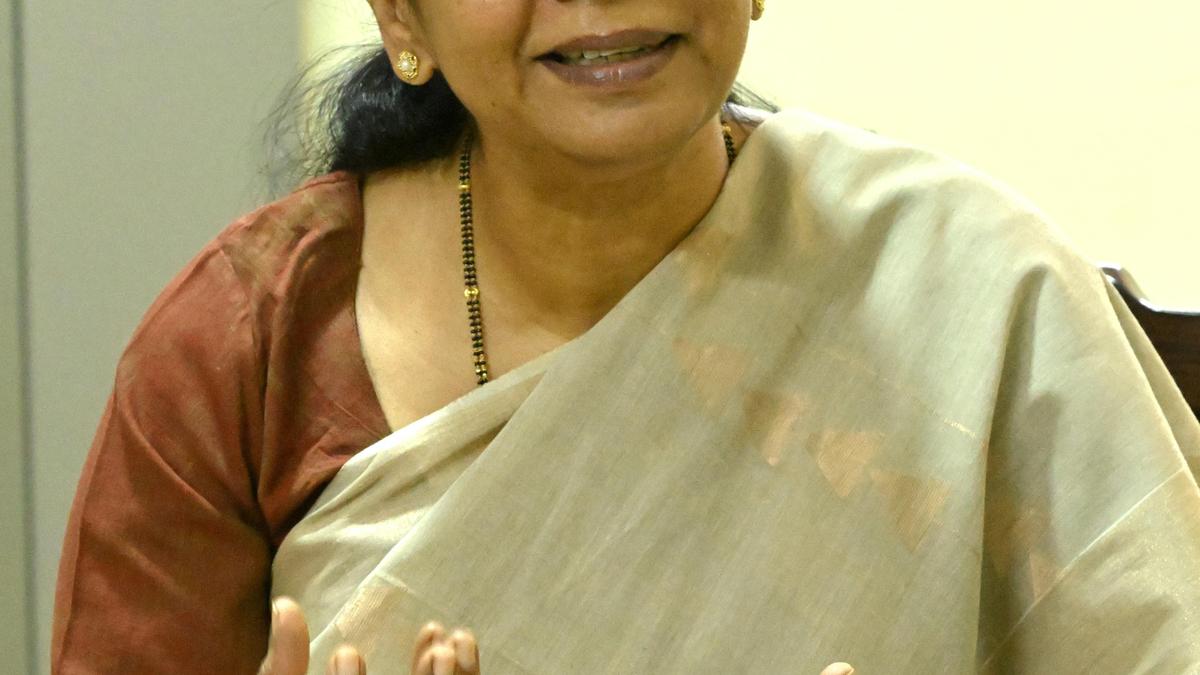

In a conversation with The Hindu, DMK deputy general secretary and Thoothukudi MP Kanimozhi Karunanidhi speaks about the ‘Neithal’ folk arts festival, the growing audience response, the changing livelihood opportunities of folk artists and the need to preserve traditional art forms and importance of taking them to younger generation.

The lives of many traditional folk artisans are not as vibrant and colourful as most of their performance or music. Many of them continue to struggle for a livelihood, particularly during the non-festival seasons, as several are still dependent on temple festivals. Since you have been organising the ‘Neithal’ folk art festival for the fifth consecutive year, how do you view the financial shifts? Are you seeing more artists travelling abroad for performance?

When we invite them for programmes, quite a few of them are abroad, teaching their art forms. Recently, Velu Asan was in Australia and the United Kingdom teaching the artform. Many artists are travelling abroad and it is nice as such an opportunities help them financially.
Apart from temple festivals, these artists are also being invited to perform in corporate and government programmes. I am not saying that every folk artist is recognised and they have a better life, but some are able to make it big. Many have even got opportunities in films. It is nice to see that people’s attention turned towards them and they are getting opportunities to improve their livelihood. But there is still a lot more to be achieved.
There are always discussions about preserving these art forms and passing them to the next generation. Do you think adequate steps have been taken in that regard? Do you believe that establishing regional or district level institutions would help preserve these art forms and ensure that they are passed on to the future generations?
There are organisations which have been set up by the government and private institutions. But I think much more has to be done. Because these folk artists sometimes struggle to find students. For instance, Velu Asan wanted to train a group of women in Parai attam. But the artists find several challenges including finding a place to stay. Accommodation becomes a challenge and they have to travel to another place and then get trained. That’s why the previous government, after obtaining necessary permissions, allotted him land to establish an institute that he always wanted to build. Beyond this, we need much more. Perhaps these art forms should also be introduced as part of school curriculum and students can develop interest in them. Children should be exposed to these traditional art forms.
The food stalls in ‘Neithal’ festival, particularly those serving Sri Lankan cuisine have become an attraction. How does celebrating gastronomy fit into your broader vision of celebrating the traditional art forms?
No festival is complete without food. Though initially we did not planned about having food stalls, then we started. Not everybody gets an opportunity to travel to different places and sample their food. When we bring different cuisines to festivals, people are very happy. Sometimes we have to bring these culinary varieties to the people to make them realise the variety of food we have. It also brings attention to the people who make it. There is no celebration without food and all our festivals are about food too.
Every year you try to bring new local art forms and artists to the stage. How do you plan this?
We keep in touch with quite a few people who work with these folk artists. Another great thing is social media, which helps us discover new talents. Whenever I come across music or an art from that I find interesting, we share it with the team and try to find them. Some artists also approach us directly. I think it is a constant search for new forms and new artists who deserve to be promoted. At the same time, there are definitely some favourites, which people expect to see again and again.
As the ‘Neithal’ festival marks its fifth year, how has the event evolved since its launch? How do you view the audience’s reception?
The audience support has actually been growing, and it has been very organic. We initially started the festival alongside a book fair, to bring people to the book fair. But now, the Thoothukudi book fair is doing well on its own. The way people engage with the festival has been heart warming and very supportive. I am surprised to see people attending even from other districts.