




Mumbai’s next ‘first citizen’ will be a woman from the open category, holding the mayoral office in Brihanmumbai Municipal Corporation (BMC) for the upcoming term of 2.5 years, stated Maharashtra Urban Development Department (UDD) on Thursday (January 22, 2026), following the reservation lottery process.
This paves way for the political parties to now formally announce their candidates for the mayoral position. The BMC and the other 28 Municipal Corporations (MC) are likely to have a mayor, the city’s top post, in the coming week.

Rotation method
The process was completed using the rotation method. So, if the previous mayor was from an open category, then that category may be excluded, ensuring that the position is reserved for another group.
Out of 29 municipal corporations (MCs), one post has been reserved for the Scheduled Tribe (ST) category, three MCs for the Scheduled Caste (SC) category (including two for women), eight for OBC posts (including four for women) and 17 MCs will have mayors from the general category (of which nine seats are for women), as per the UDD official.

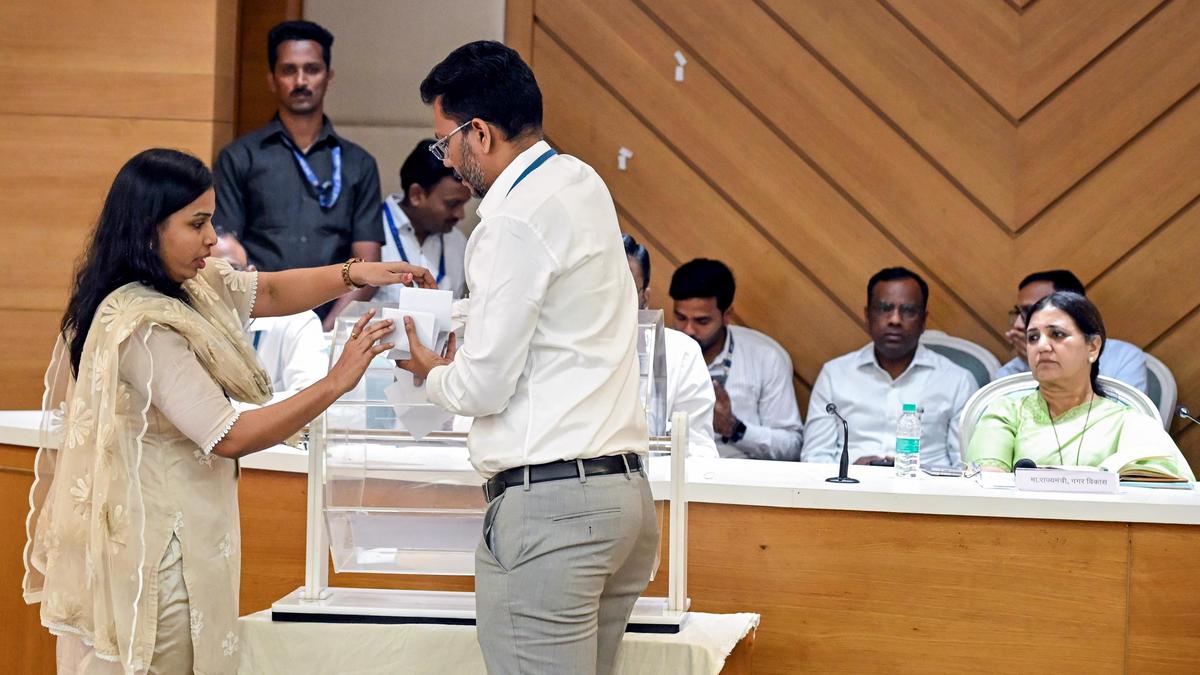
“Using the circular and Marathi letters under the lottery system, the reservation for the mayor position in all 29 municipal corporations was done,” said Minister of State for Urban Development, Madhuri Misal, adding that 15 MCs will have women mayors. Ms. Misal was present during the lottery process conducted at Mantralay in Mumbai.
Lottery system
The lottery system is a procedural mechanism to implement rotational reservation mandated in local bodies under the 74th Constitutional Amendment.
The reservation lottery has been pending since the civic body election results were declared on January 16. The BJP-led Mahayuti alliance, which secured 118 seats in Mumbai — crossing the halfway mark of 114 corporators — has the upper hand on appointing their mayor for India’s richest civic body, while the Shiv Sena (UBT) was keen on securing the mayoral post if the post was reserved for a Scheduled Tribe (ST), as the party had eligible candidates.
Objection over Mumbai in the general category pool
Former mayor Kishori Pednekar, who is the leader of Shiv Sena (UBT)’s newly elected corporators, objected to the placement of the Mumbai municipal corporation in the open women category instead of the OBC category, as the city’s last mayor was from the open women category. Shiv Sena (UBT) leaders staged a walkout after the administration declined to intervene, stating that their objections would be addressed only after the lottery process was completed.
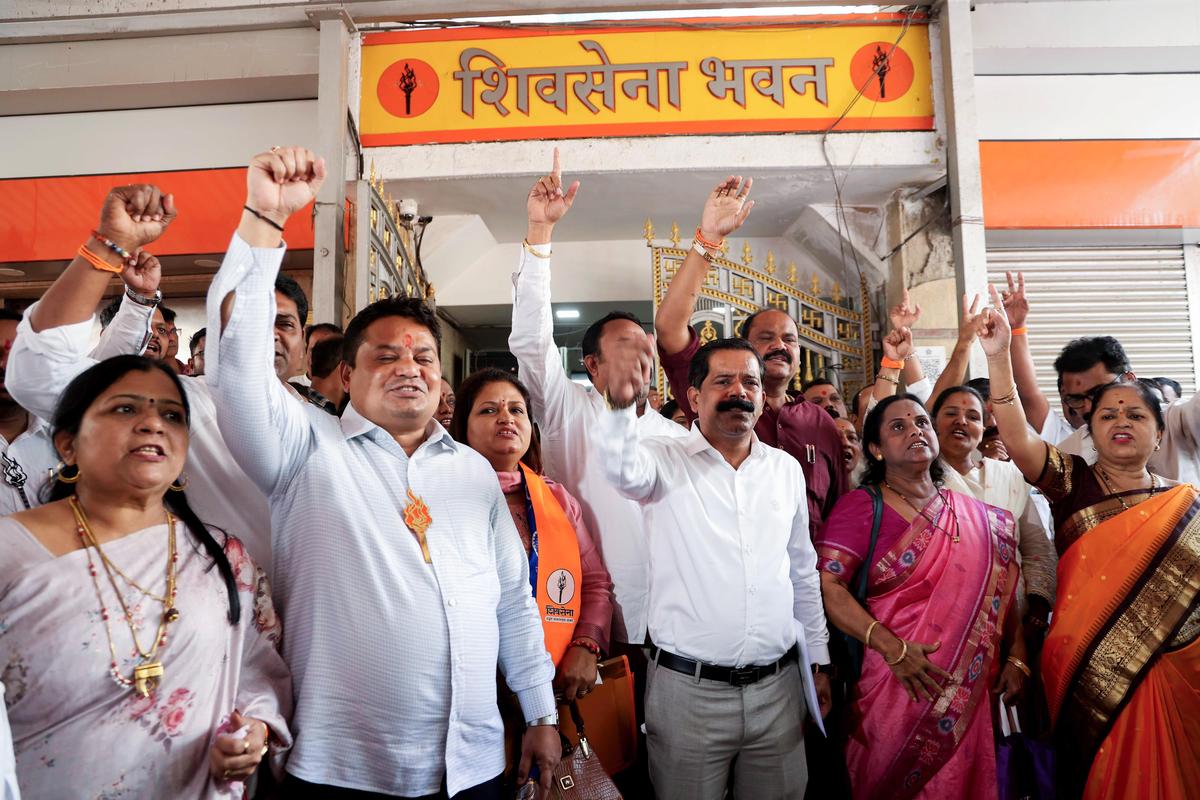
Elected candidates from Shiv Sena (UBT) head towards Konkan Bhavan to register themselves as corporators, along with their former Mumbai Mayor Kishori Pednekar, at Shiv Sena Bhavan, in Mumbai on January 21, 2026
| Photo Credit:
ANI
“The new mayor should have been from the OBC category instead of the open category, as the last two city mayors were from the open category. The ST category was excluded from the lottery system,” said Ms. Pednekar, alleging the lottery procedure was “fixed”.
Congress Legislature Party leader Vijay Wadettiwar also slammed authorities for conducting a lottery “in an opaque manner”.
In 2017 and 2019, BMC’s mayors were appointed from the general category. As per the rotation method, the BMC post was supposed to be reserved under the SC, ST or OBC category. Ms Pednekar highlighted that the new rule of having three ST corporators to get that reservation was also imposed deliberately, as the Uddhav faction has two ST corporators in BMC.
Shiv Sena (UBT) won both the reserved seats for STs — ward numbers 53 and 121. Jitendra Valvi, defeating the Shinde Sena’s Ashok Khandve, won ward 53, and Priyadarshini Thackeray won ward 121, defeating Pratima Khopde from the Shinde Sena.
Misal dismisses objections
In response to the allegation, Ms. Misal dismissed the objection, saying, “The procedure was followed. We requested them to let the procedure complete, and their objection will be resolved thereafter. However, they wanted Mumbai to fall under a certain category as per their will, which did not happen. Besides, Brihanmumbai did not come alphabetically in OBC, so it was put in the open category.”
BJP Mumbai president Amit Satam also slammed Shiv Sena (UBT) for not understanding the regulations and asked them to study the circular of the UDD for objections over ST reservations.
“In the case of the OBC category, Mumbai was in 17th place on the list of MC curated in alphabetical order. Probably after 2.5 years in the second tenure, BMC will have the OBC post,” he added.
UDD’s rationale
According to the UDD, since there is a provision of 27% reservation for OBCs, eight out of the 29 MCs are reserved.
At present, only three MCs have never been reserved for OBCs. If these MCs are not reserved for the ST or SC categories, they shall be reserved for the OBC.
The rest of the posts for the OBC will be reserved by arranging them in Marathi alphabetical order from the remaining MCs.
The UDD stated that to determine the reservation for the SC or ST category, the number of members from that category in that MC must be at least three.
Reservation in other MCs
The lottery for the reservation of the mayor’s post in 29 municipal corporations in the State reserved 15 MCs for women from various categories.
The MC reserved for ST is Kalyan-Dombivli, and those for the Scheduled Caste are Thane (general), Jalna (women), and Latur (women). For the lottery system, the MCs for the SC and ST categories were shortlisted based on the MC having the highest population of SC and ST, considering the 2011 census.
Under the OBC category, Jalgaon, Chandrapur, Ahilyanagar and Akola MCs were reserved for women, while Panvel, Ichalkaranji, Kolhapur and Ulhasnagar were reserved under the general category.
Prominent MCs in the State — Pune, Nagpur, Nashik, Brihanmumbai, Navi Mumbai, Dhule, Nanded-Waghala, Malegaon and Mira-Bhayandar — fell under the general women reservation, while Chhatrapati Sambhajinagar, Parbhani, Sangli-Miraj-Kupwad, Amravati, Vasai-Virar, Solapur, Pimpri-Chinchwad and Bhiwandi-Nizampur are reserved for the general category.
How reservations are alloted
All these reservations were allotted after officials prepared chits with the names of the MCs, folded and placed them in a glass box.
In the first round, the chit for the ST category was drawn; in the second round, the chits for the SC category were drawn.
In the third round, the chits for the OBC category were drawn based on 27% reservation provision, and in the final round, the chits for the general category were drawn. In the SC, OBC, and General categories, 50% reservation was given to women.
Mayoral election
After the process is completed, the UDD will issue a formal gazette notification.
The Municipal Commissioner will call a special meeting of all 227 newly elected corporators and conduct a secret ballot to show of hands to elect the mayor.