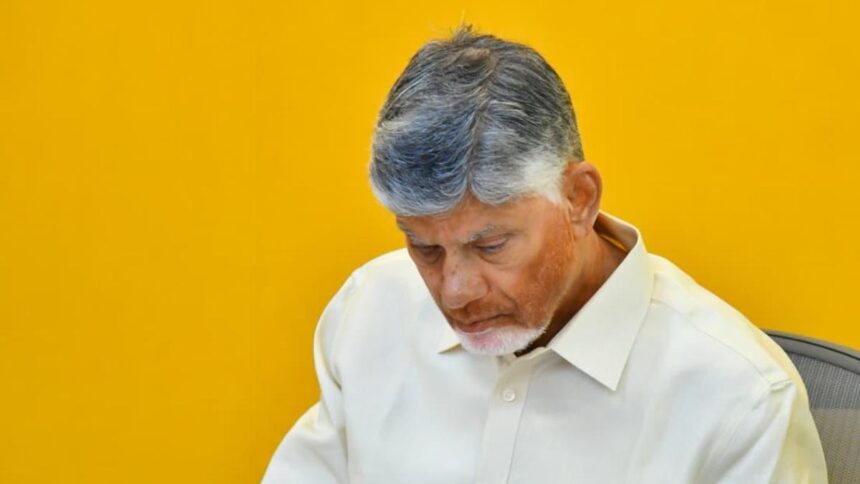







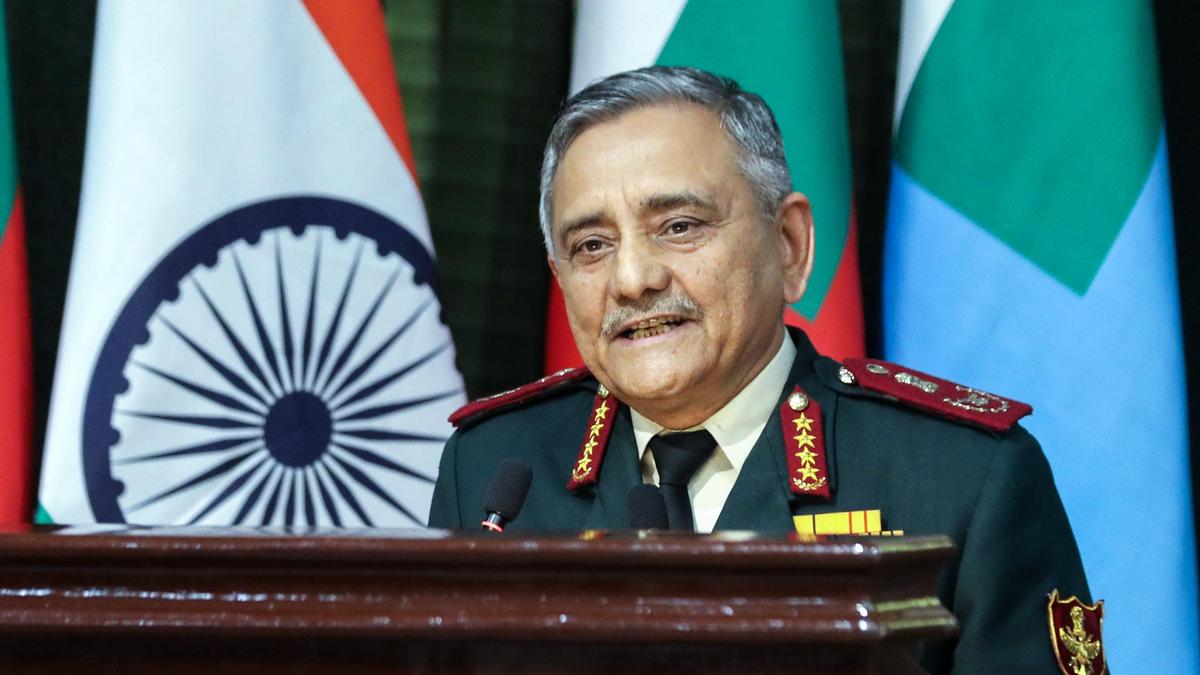


Chief of Defence Staff (CDS) General Anil Chauhan at a function on January 7.
| Photo Credit: ANI
Chief of Defence Staff (CDS) General Anil Chauhan on Thursday (January 23, 2026) underscored the enduring relevance of Netaji Subhas Chandra Bose’s strategic vision, asserting that his approach to diplomacy, military leadership and nation building offers critical lessons for India amid a polycentric, unstable and uncertain global order.
Delivering an address at Jawaharlal Nehru University (JNU) on the birth anniversary of Netaji, General Chauhan said Bose exemplified the seamless integration of political vision, astute diplomacy and military operations. “He created a government, built an army, planned campaigns, negotiated alliances and managed logistics. He was classically a military leader,” the CDS remarked, adding that the full impact of the Indian National Army’s (INA) contribution to India’s independence is yet to be fully recognised.

Reflecting on history, General Chauhan noted that much of the military history studied by Indian officers was written from a colonial perspective. He highlighted that the INA suffered the highest attrition rate faced by any army, yet stood as a powerful symbol of unity, transcending region, caste, religion and gender.
The CDS outlined how the concept of national security has expanded beyond traditional military concerns. “Today, national security is about securing land, people and ideology,” he said, explaining his framework of national security as three concentric circles — securing the nation, defending it, and at the core, military preparedness — all of which must work in close coordination.
Netaji’s strategic realism
Emphasising Netaji’s foresight, General Chauhan pointed to Bose’s vision for indigenous arms production as early as 1944, likening it to today’s emphasis on ‘aatmanirbharta’ (self-reliance). He cited the negotiation with Japan to secure the Andaman and Nicobar Islands — renamed Shaheed and Swaraj — as India’s first sovereign territory as a classic example of strategic realism.

Addressing contemporary challenges, the CDS spoke about comprehensive national security encompassing economic, energy, environmental, cyber and information security, achieved through diplomacy and statecraft. He highlighted India’s ability to engage simultaneously with groupings like Quad, BRICS and SCO, and its participation in the India–Middle East–Europe Economic Corridor as a long-term strategic move.
Warfare in future
On future warfare, General Chauhan warned of rapid technological disruptions, new domains such as cyberspace, electromagnetic spectrum and cognitive warfare, and an era of undeclared, informal wars. “There are no permanent friends or allies,” he cautioned, stressing the need for innovation rooted in Indian strategic culture rather than predictable Western models.

“The world is not undergoing gradual change but facing profound disruption, where technological advances will determine the outcomes of future conflicts. The post-World War II global order is breaking down, challenging established international institutions, and there are no permanent friends or allies among nations.”
“Emerging technologies such as bioengineering, genetic therapy and artificial intelligence hold the greatest transformative potential, yet governments and militaries are struggling to keep pace with these rapid shifts. At the same time, states are increasingly willing to use force to achieve political objectives. Warfare is moving into an era of undeclared, informal conflicts, with countries seeking to seize,” added Gen Chauhan.
He noted that 75 years after independence, India is shedding colonial vestiges while preparing for a world marked by profound disruption.
Published – January 23, 2026 10:35 pm IST