



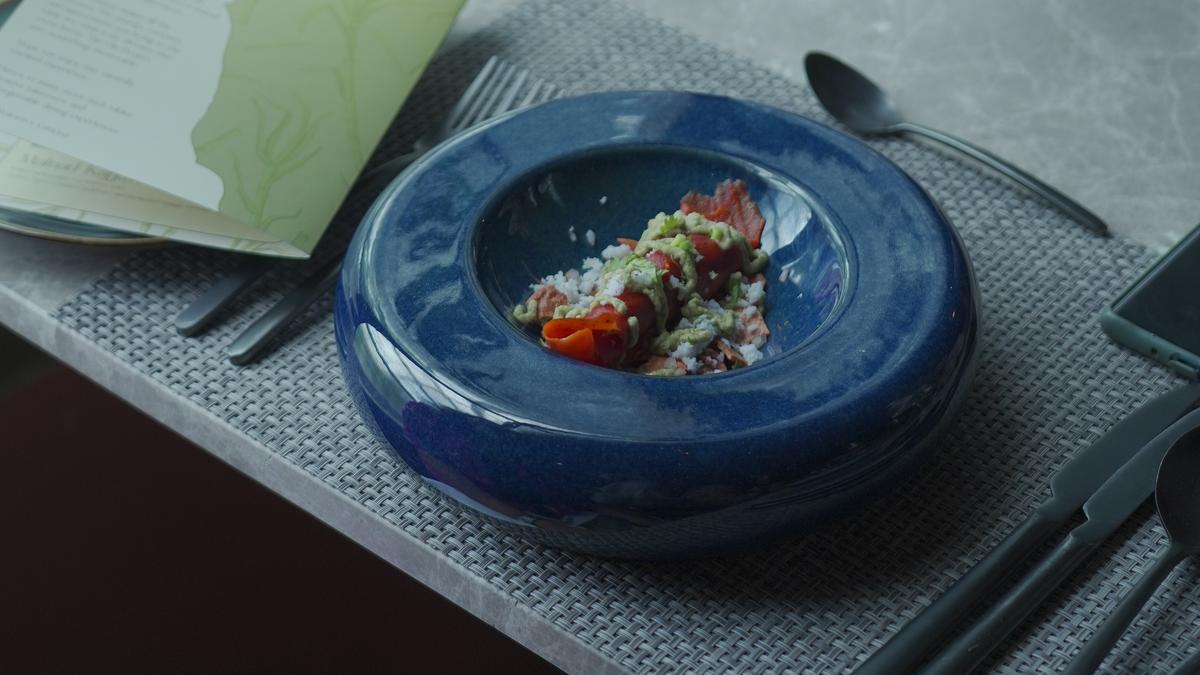


Malenadu Hoy Happala two ways — steamed and fried with ondelaga (brahmi) chutney
| Photo Credit: Ole Project
Think ‘Karnataka cuisine’ and benne doas and Udupi food come to mind. Unseen behind the popularity of darshinis and idli-vadas, is the very different cuisine of North Karnataka, that is born from its arid, drought-affected landscape. With the Ole Project, chef and researcher Anusha Venkatesh is preserving the cuisine of North Karnataka and looking at it through the lens of geography, produce and sustainability. This weekend, with a pop-up at Watson’s in Bengaluru, Ole Project brings a special menu called Jawari, that takes these grains and produce to another level.

Chef and researcher Anusha Venkatesh
| Photo Credit:
Special arrangement
Ole Project (Ole meaning stove or fireplace in Kannada) began in 2022 when Anusha started researching the various micro cuisines in the State. “Outside the State, this cuisine is very underrepresented, and only food from upper-caste kitchens is visible. In fact, there is no place where you can even get a jolada roti and ennegayi (brinjal curry). The kind of ingredients that we use are so different. So, I started archiving recipes through public records. And we brought it all together on one platform.”
The research is focused on four aspects. What the land is capable of growing. How caste-specific dishes such as meats are not represented enough. The plethora of the indigenous varieties of grains that are drought-and climate change-resistant. And also, how food trends and feedback loops affect what the farmers grow. While they research on many regions of Karnataka, this event is only about the dishes from areas such as Bijapur, Dharwad and Raichur.
A Kannadiga pasta?
“It is time for people to realise the value of this ‘humble food’. I have drawn parallels to Italian food in this menu, with the hand rolled doughs. The idea is to take dishes that we make at home and present them in a modern format.”
On the menu for the event is a handmade pasta-like dish, where bajra dough is hand rolled into small pieces. This is created into a menthya chakoli soup, with cowpea crisps and garlic oil. Yedmi, a local flatbread, is transformed into cannoli with a fiery ranjaka chili sauce and stuffed with kheema. Heirloom limes, grape, millet, roselle leaves all feature in the dishes.

Hand rolled wheat southebeeja
| Photo Credit:
Ole Project
What North Karnataka’s scarcity-born cuisine can teach us
“The techniques and food systems of these kitchens can be carried over to a climate change-resistant model for the world. Even in a situation of scarcity, North Karnataka’s land has managed to provide for its people. This can be the blueprint for other parts of the world as we face climate issues.”
Grains grown there use very little water and are drought-resistant. And not only that, the techniques used in cooking these grains are geared towards making the most of them. “The stone mills that grind the grains naturally add gluten-like properties to them, without having any gluten.”
The cuisine is also unintentionally vegan in many instances, as cattle is hard to rear, so there is not much dairy. The impact on the environment is less. “Instead of treating it as just peasant food, we can learn from the cuisine and it get us out of the issues we are facing, without compromising on flavour.”
Tickets for the event are priced at ₹2,699. At Watson’s Vasanth Nagar. October 10, 12 PM and 2 PM. For more details, check out @theoleproject on Instagram
Published – October 08, 2026 06:11 pm IST