


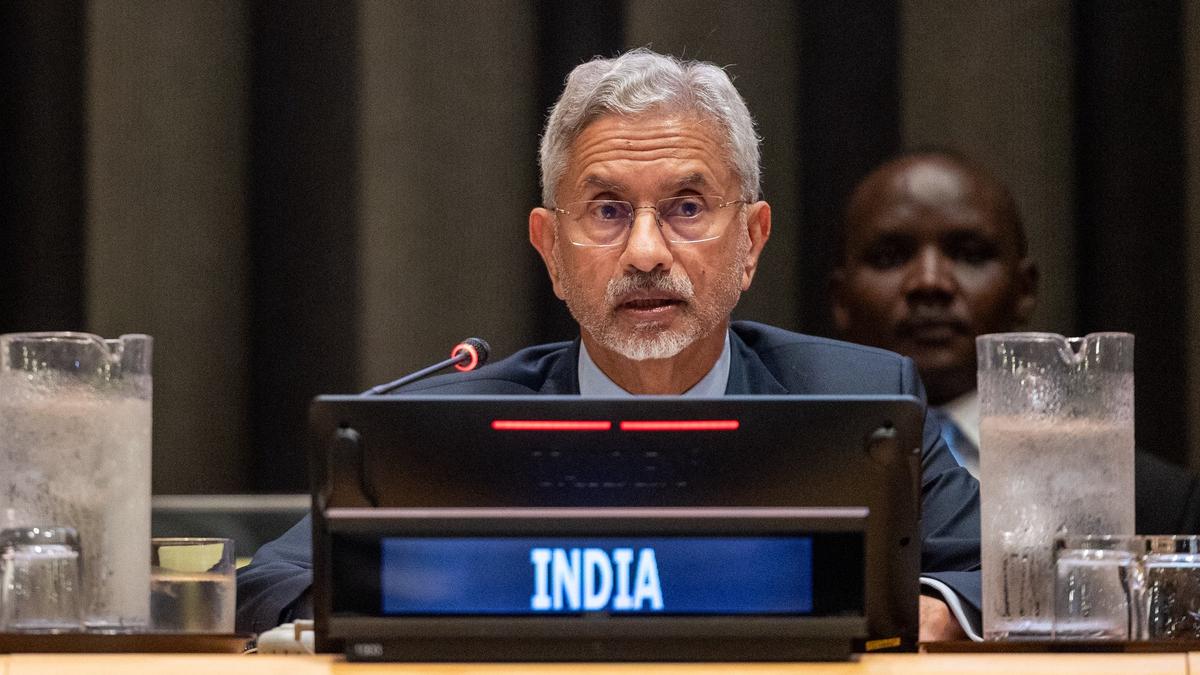

India on Monday (September 21, 2026) joined the Partnership for Multilateralism, endorsing the “non-superpower” grouping originally launched by the European Union (EU), Brazil, Canada and Kenya, and became an additional co-sponsor of the initiative along with Australia and Barbados.
The meeting of the grouping, called P4M, which is expected to build support for the United Nations and multilateralism, was one of several bilateral and multilateral meetings External Affairs Minister S. Jaishankar took part in as he and the Indian delegation navigate a tough task list this week at the United Nations General Assembly (UNGA).

On top of Mr. Jaishankar’s agenda, this year is to garner support for India at next year’s election for the United Nations Security Council (UNSC) non-permanent membership for the 2028-2029 period.
Back-to-back engagements
Within a few hours of landing in New York on Monday (September 21), Mr. Jaishankar met with Foreign Ministers from France, Ecuador, Slovakia, Hungary, Ukraine, Moldova, and Switzerland. He also met the President of Naoero (Nauru), participated in the P4M meeting, had another meeting with EU ministers, and attended an India-Visegrad group meeting with the Central European nations of Poland, Hungary, Slovakia and Czechia.
The meetings with European leaders, as well as expected meetings this week with his counterparts from the United States and Canada, are also expected to prepare for Prime Minister Narendra Modi’s upcoming visits to Brussels, Miami and Ottawa in December.
Officials say the rest of the External Affairs Minister’s schedule this week — he is expected to remain in New York until he addresses the General Assembly on Saturday (September 19) — will be equally packed for multiple reasons.
UNSC push
India has thus far been elected to the UNSC eight times, and on most occasions, has been the single name put forward for the Asia-Pacific group. However, this time, Tajikistan has also launched its candidature for the seat, and unless New Delhi can ensure a compromise, convincing the Tajik government to step aside in exchange for support for a future election, this will turn into a contest for the Asian seat.
As a result, all eyes will be on any meeting between Mr. Jaishankar and the Tajikistan Foreign Minister, Sirojiddin Muhriddin. In addition, Mr. Jaishankar’s meetings with Ministers from other Central Asian countries, as well as from other parts of the Global South, will also be watched for any announcements of support for India’s candidature.
On the sidelines of the SCO Summit in Bishkek earlier this month (September 1), Prime Minister Modi held a meeting with Tajikistan President Emomali Rahmon. However, Ministry of External Affairs (MEA) officials said they could not confirm whether Mr. Modi had received any assurance from Mr. Rahmon regarding the UNSC seat, given that the meeting was held during the SCO Council of Heads of State Summit, with access restricted for officials.
Other important engagements
Mr. Jaishankar’s visit comes days after the U.S. Congress passed the Lindsey Graham Sanctions on Russia and Iran Act, which seeks to penalise countries importing oil from these countries. India, which last month imported more than 51% of its oil from Russia, is one of the main targets of the Act, and U.S. President Donald Trump has been mandated by the law to impose up to 100% tariffs on it. As a result, Mr. Jaishankar’s meeting with U.S. Secretary of State Marco Rubio this week will be particularly significant, even as both men prepare for possible Modi-Trump bilaterals at the ASEAN Summit in the Philippines in November and the G20 Summit in the U.S. in December.
Another closely watched engagement will be with Bangladesh Foreign Minister Khalilur Rahman, who begins his tenure as the president of the General Assembly in this session. Apart from the UNGA agenda for next year and plans to intensify the UN reforms process that India has been pushing, Mr. Jaishankar and Mr. Rahman are expected to discuss bilateral ties. Tensions between Dhaka and New Delhi have been raised after a proposed visit by Bangladesh Prime Minister Tarique Rahman has failed to materialise so far.
While Mr. Jaishankar is expected to meet his counterparts from other South Asian countries, a meeting of the SAARC Foreign Ministers that had been held on the sidelines of the UNGA every year until 2019, has been scrapped over India-Pakistan tensions since then.
From Wednesday (September 23, 2026), much of the attention of those at the UNGA this week will be taken by Chinese President Xi Jinping’s visit to the U.S. from September 23-25, and the outcomes of the US-China Summit to be held in Washington.
A meeting of Quad Foreign Ministers of the U.S., India, Japan and Australia has also become a regular feature on the sidelines of the UNGA each year.
Published – September 22, 2026 09:23 pm IST