







The historical Silk Route facilitated the trade of various goods including silk, precious metals, spices and more, but when all this was happening, how could stories, cultures, and rituals be left behind? They too, mingled with the tapestry of time, leaving behind an impact – whether it is in our customs or our food. Silq, the new dining destination in the diplomatic enclave of Chanakyapuri in Delhi, is delving right into it, bringing together Persian, Mughal, Levantine, and Mediterranean traditions in an immersive journey of heritage.
Sagar Kumar, founder of Silq and a well-travelled man, shares that he has been fascinated with India’s culinary journey and the influences that have shaped them. “It is derived from different parts of the world and modified to suit the Indian palate. That is where the Silk Route comes in,” he shares.

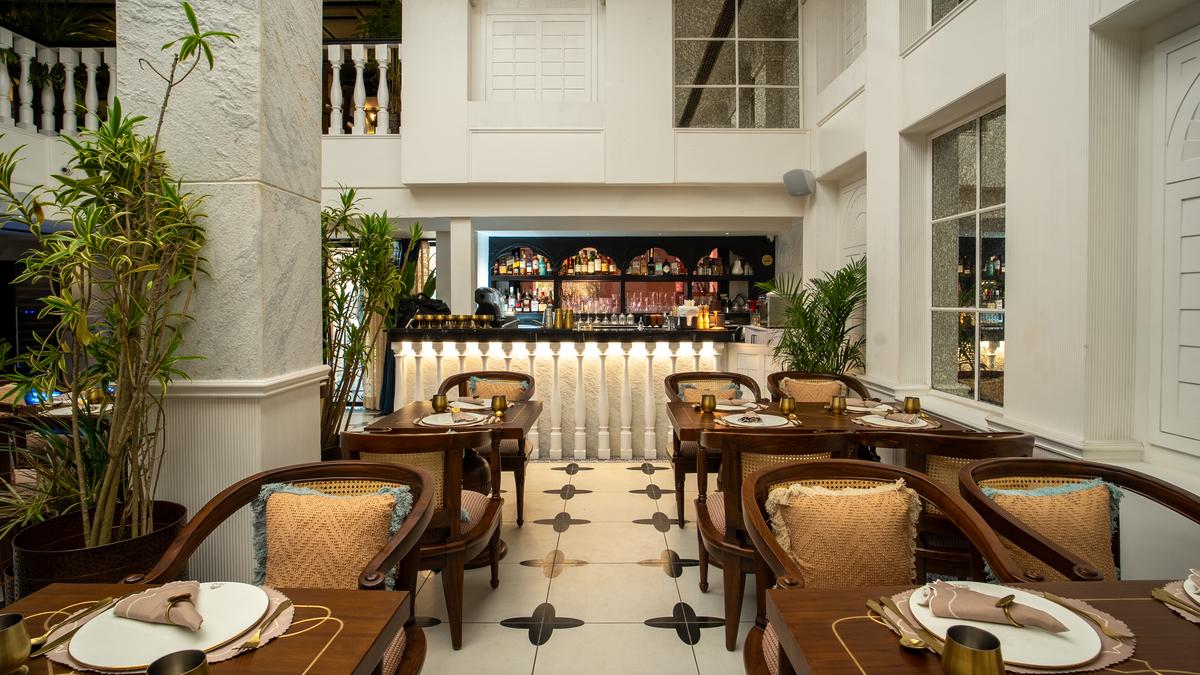
A fragrant tree-shaded avenue leads right up to the steps of the restaurant. A dab of oud on the wrists sets the mood for the evening, the first of the rituals at Silq. The seating is on two levels and the colour palette draws from deep saffrons, muted roses and dull copper. There’s also lilting music performed live on the sarangi.
A server comes for the Tajalli – lighting the candles on our table and offers us Mehraan sharbat – an aromatic welcome drink with saffron, cardamom, cinnamon and sandalwood. It works as a palate cleanser, preparing us for the feast coming our way. Before that, a crunchy masala papad acts as an amuse bouche.

Cuisine consultant Azaan Qureshi, from the legendary Qureshi family known for mastering Mughali and Awadhi cuisine, has created a menu which celebrates the soul of Hindustani food, while delving into stories of how it interacted with West Asia. . “During our R&D, we realised the best way to incorporate the Silk Route in our cuisine would be to imagine how the food would have actually interacted first when it came to this subcontinent,” he says.
Take for instance, the Laham Adana Kebab, tender pieces of spiced minced lamb skewered and hand-wrapped on sheesh, served with Turkish bread. The seekh kebab, which comes from the Turkish sheesh kebab, might be popular in its current format, but the chef wanted to capture the essence of the first interaction the Adana kebab (Adana being one of Turkey’s major cities) might have had with India.

“We travelled to parts of Nizamuddin where a more rustic form of the seekh kebab can be found with no added colour, just the flavour of the spices visible on the kebabs. The idea was to catch that taste and imagine how it would have been when Indian chefs had first made this kebab,” he says. The melt-in-the mouth kebabs are unlike any others we have tasted at other fine-dine restaurants — the rustic texture adding a bite to them.
The Jhinga Kunafe has mustard spiced prawns wrapped in kataifi. Served with a velvety toum, they hark back to Turkey’s solid dip game, while the Kathal Shami will appeal to vegetarians; the jackfruit and Bengal gram lentil kebabs spiked with whole spices and black cardamom, giving it a gentle heat. The Silq Nehari is potent, given that it has been strained over a muslin cloth and its silky texture makes it easy to scoop up and relish it with Khameeri Roti. The chef has not forgotten the vegetarians, and their Dakhni Saag and Dal Silq are right up there with their most exquisite creations. The creamy Malai Phirni with gulab and silver varq seals the deal.

The cocktail programme is designed with a similar narrative in mind. The tequila-based Bazaar-e-Kanji hits the sweet, spicy and sour notes with its blend of beetroot and guava infused with chilli and coriander, while the gin-based Genda Phool is slightly bitter on the palate, with house-made marigold syrup, orange blossom and coconut water. For those who want to try something bold, the Sunaar Ras makes for a worthy contender as the JW Gold Label scotch infused with supari, finds balance with angostura bitters and a whisper of rose water. Served over rose block ice and crowned with gold varq and dried paan, the sweet-smoky cocktail with a nutty core is luxurious and aromatic. Silq is meant for slow evenings heading into the night with gentle grace. Long after one has left the restaurant, the fragrance of oud still lingers.
Silq is at 14/48 Malcha Marg, Chanakyapuri, New Delhi. A meal for two costs ₹3,500 without alcohol.
Published – December 26, 2025 02:44 pm IST