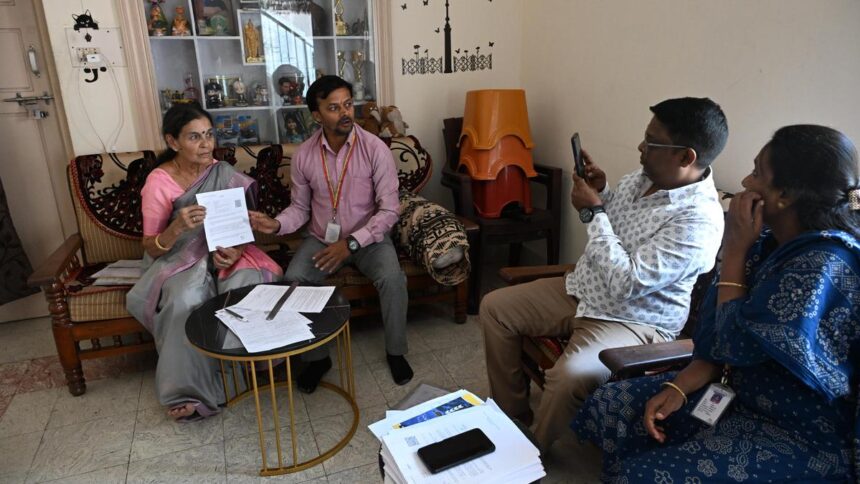





The Court’s comment came after perusing the report of a secondary medical board headed by an AIIMS team of doctors. File Photo: Special Arrangement
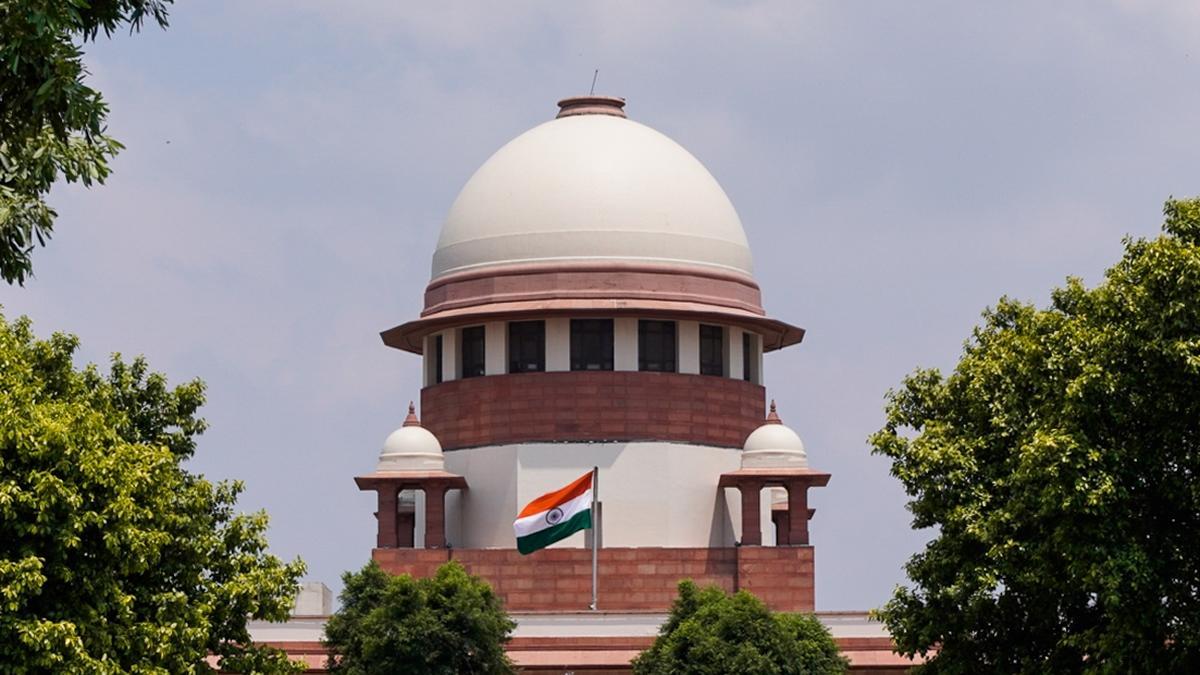
The Supreme Court on Thursday (December 18, 2025) asked to meet the parents of a 31-year-old man lying in a comatose condition for 13 years while contemplating their plea for passive euthanasia by withdrawing artificial life support for him.
What is passive euthanasia and why should we be talking about it more? | In Focus podcast
“It is a very sad report. We cannot keep this boy in this stage,” Justice J.B. Pardiwala, accompanied by Justice K.V. Viswanathan, addressed the family’s counsel. Advocate Rashmi Nandakumar and Additional Solicitor General Aishwarya Bhati.
The Court’s comment came after perusing the report of a secondary medical board headed by an AIIMS (All India Institute Of Medical Sciences) team of doctors. The report contained details of 31-year-old Harish Rana’s medical history, his general and neurological status and a follow-up on his diagnostic criteria.

In a previous hearing, the Court said the choice for the man was between a slow, painful life and peaceful release. The primary medical board, after examining his condition, had stressed the negligible chance of his recovery. The Court had noted in the last hearing on December 11 that the primary medical board had found Mr. Harish in a “pathetic condition” with tracheostomy tube for respiration and gastrostomy for feeding. The photographs attached with the letter had indicated that he suffered huge bed sores.
The Supreme Court guidelines of 2023 had required the formation of primary and secondary medical boards to provide expert opinion on the withdrawal of artificial life support for a patient in a vegetative state.
Mr. Harish sustained severe head injuries and 100% quadriplegic disability after sustaining a fall from the fourth floor of his paying guest accommodation as a Panjab University student in 2013.
The Bench directed the copies of the report of the secondary medical board to be served to the parents. The Court scheduled a meeting with the parents on January 13 at 3 p.m.
Mr. Harish’s father had approached the Supreme Court last year seeking judicial intervention to withdraw life support for his son. Ashok Rana had said that he had exhausted both his savings and willpower taking care of Mr. Harish.
The Bench, headed by then Chief Justice D.Y. Chandrachud, had found the case “very, very hard”, but refused to agree to the plea for passive euthanasia on the ground that medical board reports had shown Mr. Harish was not on a ventilator or any kind of life support. He was at the time taking in nutrition through a food pipe. Letting him go would not amount to passive euthanasia as Mr. Harish was not dependent on any external device to stay alive, the Supreme Court had concluded then.
“In this case, it would amount to active euthanasia, which is not legal,” the Chief Justice Chandrachud’s Bench had told the parents’ counsel in August 2024.
In March 2018, a Constitution Bench had upheld passive euthanasia and the right to give advance medical directives or ‘living wills’ to smoothen the dying process as part of the fundamental right to live with dignity.
The five-judge Constitution Bench led by the then CJI Dipak Misra, in four separate and concurring opinions, had ruled that the fundamental right to life and dignity under Article 21 of the Constitution included the “right to die with dignity”.
“The right of a dying man to die with dignity when life is ebbing out, and in the case of a terminally ill patient or a person in permanent vegetative state, where there is no hope of recovery, accelerating the process of death for reducing the period of suffering constitutes a right to live with dignity,” the Constitution Bench had held.
In 2023, the apex court had again intervened to simplify the implementation of the 2018 Constitution Bench’s directions enumerating the procedure for allowing passive euthanasia.
Published – December 18, 2025 12:51 pm IST