





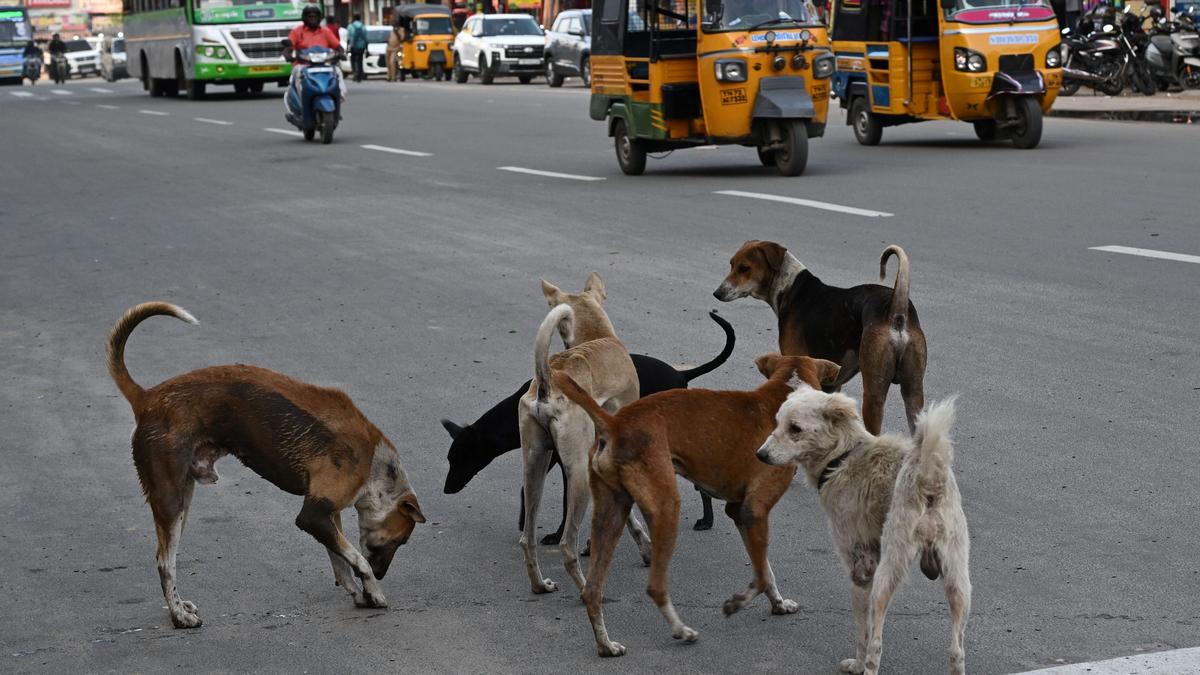

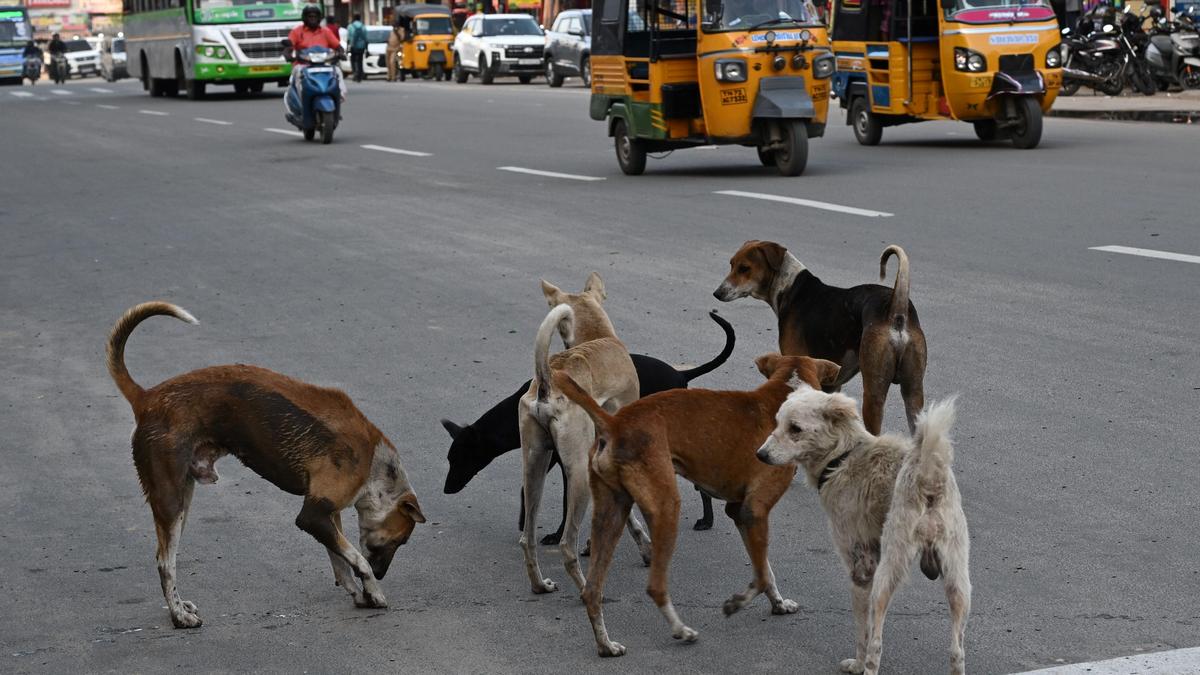
The Supreme Court said it “cannot remain oblivious to harsh ground realities where children, international travellers, old age people have fallen victim to dog bite incidents”. File photo for representational purposes only.
| Photo Credit: The Hindu
The Supreme Court on Tuesday (May 19, 2026) refused to modify its November 7, 2025 order directing all States and Union Territories to ensure the removal of stray dogs from high-footfall public institutions, including educational institutions, hospitals, sports complexes, bus depots, and railway stations.
A Bench of Justices Vikram Nath, Sandeep Mehta and N.V. Anjaria observed said, “Right to life with dignity encompasses the right to live freely without threat of harm from a dog bite attack. The State cannot remain a passive spectator. The court cannot remain oblivious to harsh ground realities where children, international travellers, old age people have fallen victim to dog bite incidents.”

“The Constitution doesn’t envisage a society where children, elderly people are to survive on the mercy of physical strength,” the Bench added.
The court said the problem had acquired “staggering dimensions” and that the “continued recurrence of such incidents” reflected deficiencies in the effective implementation of the Animal Birth Control (ABC) Rules, 2023, framed under the Prevention of Cruelty to Animals Act, 1960.

The Bench further directed that officials failing to implement its directions would be liable to face contempt proceedings as well as disciplinary action.
The directions in the November 2025 order were issued in the apex court’s suo motu proceedings aimed at framing a national framework for stray dog management and ensuring compliance with existing statutory regulations.
Published – May 19, 2026 11:29 am IST