




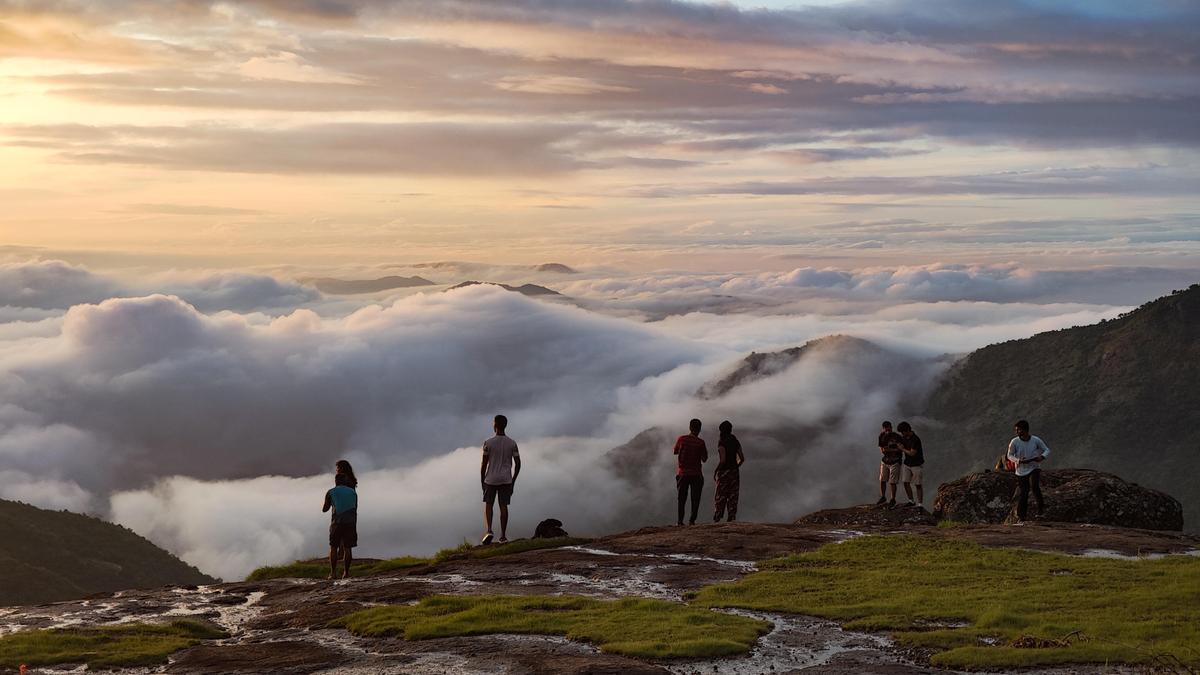

Tourism is often measured in arrivals, room nights and destinations covered. A quieter shift is taking place in the way some travellers experience a place: with smaller groups, local participation and closer attention to the ecosystems they enter.
In the Eastern Ghats and along the Visakhapatnam coast, a handful of nature-based initiatives are building experiences around that approach. Their work spans an eco-stay near Araku, guided treks, tidepool walks and scuba diving. Each operates differently, but the common thread is an attempt to make visitors more observant and reduce the pressure that tourism can place on fragile landscapes.
Pravaham: Staying with the landscape
At Pravaham, an eco-stay in Mettavalasa village near Araku, sustainability is built into the property, quite literally. Founder V Samved says nearly 90% of its construction uses locally available soil, hay, timber and bamboo. Mud, cob and hydrated lime plaster help regulate indoor temperatures naturally, reducing dependence on artificial cooling.

A view of Pravaham.
| Photo Credit:
SPECIAL ARRANGEMENT
The stay also draws much of its food, workforce and experiences from nearby villages. Guests are encouraged to spend time by the stream, explore local trails and participate in activities such as the Plant a Memory initiative.
“We want guests to experience the rhythm of slow living,” says Samved. “Our Black Box digital detox programme is one way of doing that. Instead of a packed sightseeing schedule, guests can wade in the stream, sit around a campfire or learn about natural building.”

Visitors at Pravaham.
| Photo Credit:
SPECIAL ARRANGEMENT
Waste management, composting, reduced use of single-use plastic and restrained energy consumption form part of the property’s everyday practices. Carpooling and shared logistics are encouraged to reduce transport-related emissions.
EcoHikes: Smaller groups, deeper trails
For Ravi Teja, trek leader at EcoHikes, sustainability is closely tied to the number of people entering a landscape. The group, which has conducted more than 600 treks and taken over 8,000 participants into the Eastern Ghats over nine years, has reduced its group size from 30 people to around 12.

Trekkers at a camp organised by Eco Hikes in the Eastern Ghats near Visakhapatnam.
| Photo Credit:
SPECIAL ARRANGEMENT
At camps, EcoHikes uses gas stoves instead of collecting firewood from the hills. Food is home-cooked, often using local ingredients and served on banana or Bauhinia leaves. Packaged food and plastic have been reduced, while participants are expected to carry back whatever they bring in.
Ravi is also wary of the effect of social media on lesser-known landscapes. “One viral reel can bring crowds within weeks,” he says. “Every place has a carrying capacity and once it is crossed, both the landscape and the experience are lost.”
The group has closed some trails when it felt that publicity could expose them to excessive footfall. It also works with local families, who contribute food, offer guidance and knowledge of traditional practices.
“Locals have cared for these mountains for generations. We are only visitors,” Ravi says.
East Coast Conservation: Reading the tidepools
Along Visakhapatnam’s coast, the East Coast Conservation Team (ECCT) is using tidepool walks to bring people closer to marine life. Led by Deepu Visweswar and Priyanka Vedula, the team introduces visitors to an ecosystem that appears and disappears with the tides and can contain hundreds of species in a relatively small area.

Indian featherstar from Visakhapatnam coast.
| Photo Credit:
Srichakra Pranav
For Deepu, the value of these walks lies in changing how people look at a familiar beach. “ People may have visited the same beach hundreds of times, but it can become a completely different world,” he says.
Tidepools can function as nursery and feeding grounds, with algae, corals, fishes, crustaceans and other organisms adapted to repeated cycles of exposure and immersion. The team limits groups to eight participants per instructor and briefs visitors not to touch or handle animals.

Indian lionfish from Visakhapatnam coast.
| Photo Credit:
Srichakra Pranav
The conservation argument extends beyond the walk itself. Participants are encouraged to photograph organisms rather than disturb them and upload observations to citizen science platforms such as iNaturalist.
“Tidepool walks are a way of getting people hooked on marine life,” Priyanka says. “Once people become fascinated by it, they begin to care about protecting it.”
She believes marine tourism can also create economic opportunities for coastal communities if carefully managed, while warning against permanent structures and poorly regulated visitor activity in sensitive habitats.
Platypus Escapes: Diving with restraint
At Platypus Escapes, founder Subhash Chandran sees scuba diving as an entry point to understanding the underwater world. The team combines recreational diving with conservation dives and underwater clean-ups, encouraging participants to regard themselves as visitors in a living ecosystem. Years of diving along the Visakhapatnam coast have also exposed him to the extent of marine pollution, with plastic and other discarded material becoming part of the habitat of marine species.

Scuba divers of Platypus Escapes.
| Photo Credit:
SPECIAL ARRANGEMENT
That experience has also found its way into dive training. Participants are encouraged to understand the marine environment they are entering and to take part in ocean clean-up activities, making conservation part of the learning process rather than an activity separate from diving.
“People protect what they experience and understand,” says Subhash. “Seeing plastic waste entangled around marine life or observing a damaged reef underwater creates a completely different connection.”
For him, responsible diving begins with recognising that divers are visitors in another habitat. Good buoyancy control, maintaining distance from marine animals, avoiding contact with corals and other sensitive organisms, and preventing anchor damage are essential. He is also careful about describing scuba tourism as entirely carbon-free, since boats, transport and equipment carry an environmental cost.
“Marine tourism can be designed to have a very low environmental footprint,” he says. “The focus should be on minimising that footprint and ensuring that tourism gives something back to the ecosystem rather than only taking from it.”
Published – September 25, 2026 01:07 pm IST