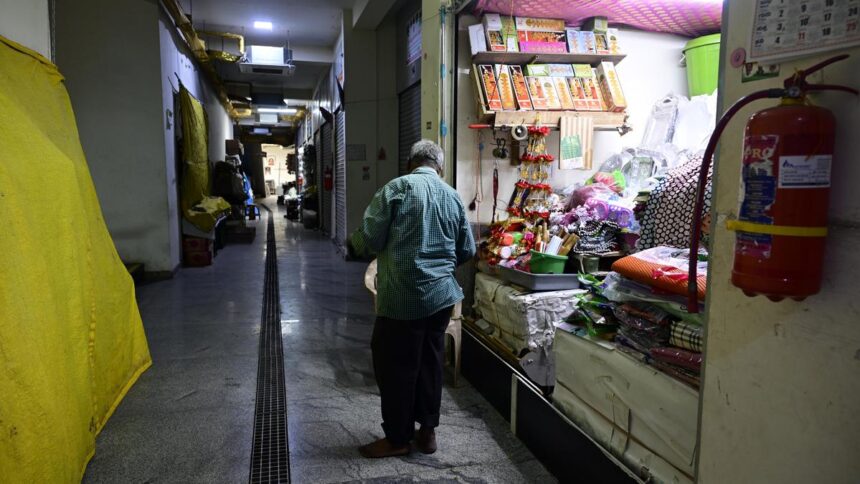






The percentage of people above 60 years has been on the rise in Telangana from the past decade. The image is used for representative purposes only.
| Photo Credit: GETTY IMAGES
Telangana is slowly heading to join those categorised as ageing States in the coming few years if the observations made in a recent study are any indication.
Ageing state definition
The share of people above 60 years in the total population has been on the rise since the formation of the State. From 10.1% in 2016, population of people above 60 years has increased to 12.5% in 2026 and is likely to reach 14.5% by 2031, closer to becoming an ageing State where 15 and above per cent of the population is above 60 years.
Percentage of people in Telangana above 60 years and estimates for next decade
| Year | Percentage |
| 2016 | 10.1% |
| 2026 | 12.5% |
| 2031 | 14.5% likely |
| 2036 | 17.1% likely |
According to the “State Finances – A study of budgets 2025-26” released by the Reserve Bank of India (RBI) recently, Telangana — which is currently in the intermediate stage insofar as its demographic profile is concerned — is likely to register 17.1% of its total population above 60 years by 2036 thus joining the ranks of Tamil Nadu and Kerala categorised as ageing States.
Working-age tax base shrinks
Population ageing becomes a dominant outcome, placing unprecedented demands on public resources while shrinking the working-age tax base that sustains them. Youthful states have a wider window of opportunity benefitting from expanding working age population and stronger revenue mobilisation. “In contrast, the window is getting narrower for the ageing States, facing fiscal pressure arising out of shrinking tax bases and rising obligations from committed expenditure,” the report said.
Dependency ratio on the rise
Along with ageing is the dependency ratio, the ratio of population aged 60 years and above relative to the working-age population between 15 and 59 years, resulting in high social sector expenditure obligations. The old age dependency ratio in Telangana has been on constant rise from 15.2% in 2016 to 18.4% during the current year and this is set to reach 21.5% in 2031 and 25.7% by 2036.
Dependency ratio and estimates
| Year | Dependency ratio |
| 2016 | 15.2% |
| 2026 | 18.4% |
| 2031 | 21.5% estimated |
| 2036 | 25.7% estimated |
What States can do
The differential fiscal pressure arising out of divergent age structure calls for forward-looking policies incorporating population dynamics and the related fiscal challenges. Going forward, intermediate States may balance growth priorities with early preparation for ageing and ageing States may enhance revenue capacity alongside healthcare, pension and workforce policy reforms.
In its policy suggestions to intermediate States like Telangana, the RBI study said they should take fiscal stance balancing growth enhancing investments with need to gradually expand social security and healthcare systems. Policies to encourage higher labour force participation, especially among women and older workers, will be critical to sustain economic dynamism.
Equally important are productivity oriented reforms, such as technology adoption, innovation, and industrial diversification, which could help offset the slowdown in labour supply and ease long-term fiscal pressures.
Published – January 27, 2026 06:10 pm IST