




(This article is part of the View From India newsletter curated by The Hindu’s foreign affairs experts. To get the newsletter in your inbox every Monday, subscribe here.)
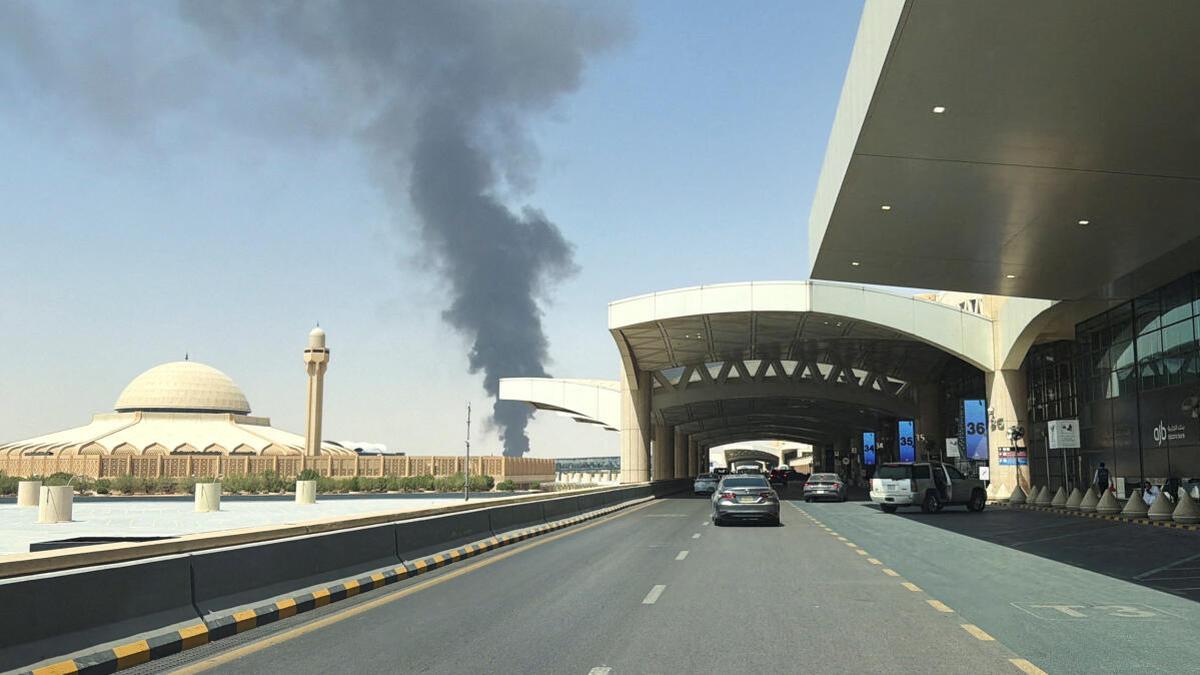
War is the reality of our times. Russia’s military invasion of Ukraine began over four years ago. It is nearly three years since the United States-Israel combine’s war, termed by many experts as genocidal, began. And the U.S. war on Iran, triggered by the joint U.S.-Israeli strikes on February 28, 2026, has lasted nearly seven months. The U.S. also appears fearful about a rapid escalation in West Asia after the Houthis attacked Riyadh recently.
U.S. President Donald Trump’s actions have repeatedly shown us that where he cannot take on an adversary on the battlefield, he will turn to tariffs and sanctions. In a move aimed at increasing the economic pressure on Russia over its war in Ukraine, U.S. lawmakers voted to pass a sweeping bill last week, imposing sanctions on Russia’s defence and energy sectors. The steep levies that entail the legislation, passed with strong bipartisan support on Wednesday, will impact not just Moscow, but also its top energy buyers, including India and China.
“On Friday, September 18, 2026, the President signed into law: H.R. 5334, the “Lindsey O. Graham Sanctioning Russia and Iran Act of 2026”, which authorizes and expands statutory sanctions, tariffs, and prohibitions on Russia and extends existing sanctions on Iran,” the White House said.
In a statement reacting to the move, the Ministry of External Affairs said, “India remains firmly committed to ensuring energy security for its 1.4 billion people” via diversified sourcing of energy inputs, determined according to evolving market forces. India would also “protect its trade and economic interests”. Read Sriram Lakshman’s report for context on the legislation.
The Hindu’s Economics and Business Editor T.C.A. Sharad Raghavan has been closely tracking developments around this move, as well as trends in India’s oil imports. He combed through the latest official data and found out that Russia accounted for more than 51% of India’s oil imports in July, an all-time-high.
His analysis of data from the Ministry of Commerce and Industry showed that India imported 110.4 lakh tonnes of oil from Russia in July 2026, the latest month for which data is available. This works out to nearly 52% of India’s total oil imports that month, the highest-ever share that Russian oil has enjoyed. India’s oil imports from Russia in July 2026 were also 26% higher than in June, and nearly 55% higher than in July last year. This sharp increase in volumes, coupled with elevated oil prices, also meant that India’s Russian oil import bill shot up in July 2026 as compared to last year. That is, India’s import bill on Russian oil stood at $7.3 billion in July 2026 more than double the $3.6 billion spent in July last year.
Writing on how the new legislation and the subsequent sanctions are likely to affect India, T.C.A. Sharad Raghavan notes: The impact on India’s economy has to be looked at in terms of two eventualities. The first is if India continues to buy large quantities of Russian oil and bears the tariffs. The second is if India cuts back on Russian oil imports and manages to have the potential tariffs removed. In the event that India continues to buy Russian oil and bears the tariffs, we can look at what happened during the period when the 50% tariffs were in force, between August 2025 and February 2026, to gauge the likely impact.
Further, along with our colleague Kallol Bhattacherjee, he looked at data to see how India has responded to U.S. curbs in the past decade. Over the last decade or so, India has complied with U.S. pressure to reduce oil imports from countries it has sought to isolate, such as Venezuela, Iran, and Russia, even though they were important sources. Once the U.S. pressure eased, official data show that India almost immediately turned back to these sources of oil, they wrote.
The economic impact is one aspect, the political impact and the diplomatic fallout are other aspects to consider. However one may see it, it is hard to ignore the serious escalation in tensions between the U.S. and India, as our editorial today makes clear.
“The escalation last year of reciprocal tariffs to 50% on India’s import of Russian oil was based on an Executive Order, and could be rescinded through the same method. This latest Act has been passed by the U.S. Congress and so carries a higher order of legal permanence and authority,” it observed, adding: “India’s ability to secure a low rate will be a true test of Prime Minister Narendra Modi’s friendship with Mr. Trump.”
In our neighbourhood

Closer to home, New Delhi continues navigating sensitive ties with India’s neighbours. Nepal’s Finance Minister Swarnim Wagle, an economist and former UNDP official, made his first visit abroad to Delhi to discuss plans with the government, and will soon travel to meetings of the Asian Infrastructure Investment Bank (AIIB), International Monetary Fund (IMF), and the World Bank to seek support for an estimated $5 billion recovery project. In an exclusive interview with The Hindu’s Diplomatic Affairs Editor Suhasini Haidar, Mr. Wagle said the new Balen Shah government in Nepal wants a “reset” with India, and a revision of old trade and connectivity projects.
Meanwhile, Kallol Bhattacherjee reports that after a brief disruption in ties, India and Bangladesh have resumed official-level talks to firm up plans for a visit by Prime Minister Tarique Rahman to New Delhi.
Published – September 21, 2026 12:30 pm IST