







(This article is part of the View From India newsletter curated by The Hindu’s foreign affairs experts. To get the newsletter in your inbox every Monday, subscribe here.)
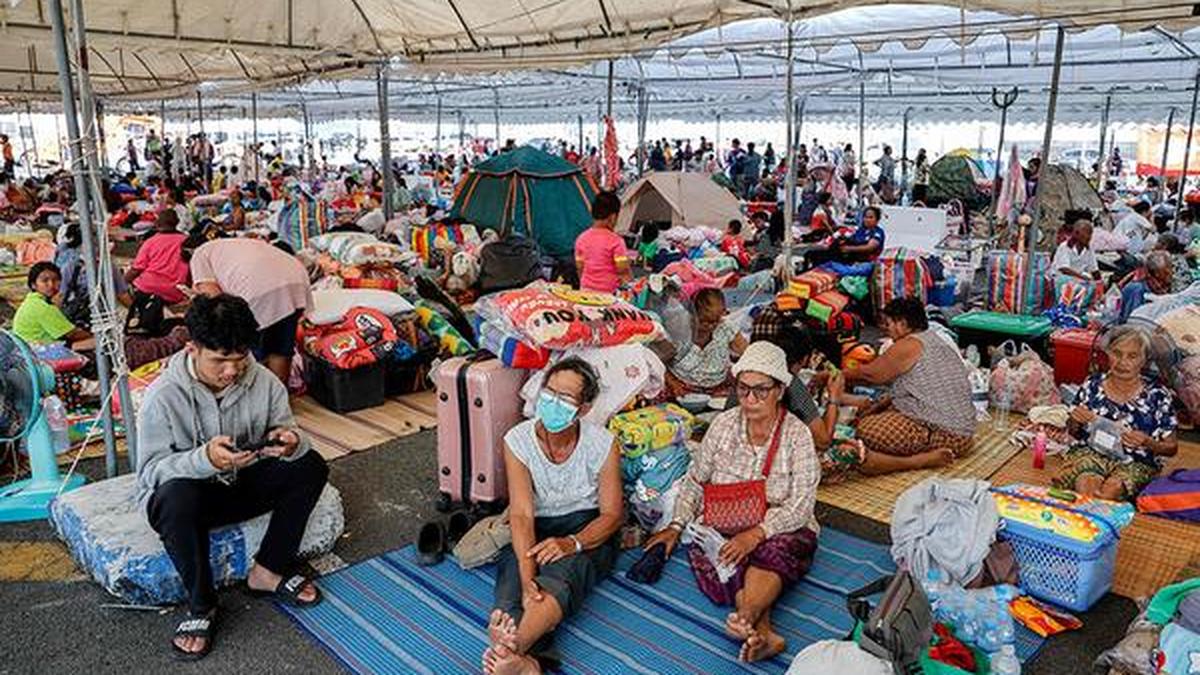
The Thai-Cambodia conflict was one of the eight wars U.S. President Donald Trump claimed to have ended. In July, fighting broke out along the porous border between the South East Asian neighbours in which at least 48 people were killed and over 200,000 displaced. Mr. Trump, along with Malaysian Prime Minister Anwar Ibrahim, mediated a ceasefire between Thailand and Cambodia. But the ceasefire did not last long. In November, Thailand announced that it would suspend the implementation of the ceasefire after a landmine blast injured several of its soldiers. Bangkok accused Cambodia of mining the border region. On December 7, it carried out air strikes at Cambodian forces, triggering another round of full-scale cross border fighting. Mr. Trump talked to Thai Prime Minister Anutin Charnvirakul and Cambodian Premier Hun Manet and announced that both leaders agreed to resume the ceasefire. But his claim did not have any impact on the ground as fighting continued. At least 28 people have been killed in the fresh round of violence.
The Thai-Cambodian crisis has colonial roots in the Franco-Siamese (Thai) treaties of 1904 and 1907, which defined the boundary between Siam and French Indochina. While these treaties sketched borders along the forested Dângrêk ranges, the line remained largely undemarcated on the ground. The flashpoint has been Preah Vihear, the 11th century Khmer Hindu temple and UNESCO World Heritage Site. When French surveyors created maps, they placed Preah Vihear on the Cambodian side despite the temple sitting atop a cliff more easily accessible from Thailand. After Cambodia got independence from France in 1953, its rulers renewed claims over Preah Vihear, but Thailand had deployed troops in the region. In 1962, the International Court of Justice awarded Cambodia sovereignty over the temple, but the dispute has endured in the absence of a mutually accepted border demarcation. Why is Preah Vihear so important for both Thailand and Cambodia? Read this profile of the temple.
Foreign investors and tourists watch nervously as the two ASEAN members exchange fire across the border. ASEAN is already grappling with a far larger challenge in Myanmar where a brutal military regime seems determined to cling to power even at the cost of its own people. If the Thai-Cambodia border crisis metastasises into something worse, South-East Asia’s hard-won reputation for stability and economic cooperation could further be undermined, writes The Hindu in this editorial. “Regional powers such as Malaysia and Indonesia have both the interests and the influence to facilitate renewed dialogue and must press both sides to return to talks without delay. Once the ceasefire is restored, ASEAN should promote confidence-building measures to address the deep mistrust between the two countries and ensure that another round of fighting does not erupt,” it adds.
Massacre in Sydney
Bondi Beach in Sydney, one of Australia’s most iconic locations, turned into a scene of massacre on December 14, the first day of Hanukkah, when two gunmen opened fire at a Jewish gathering. At least 16 people, including a 10-year-old girl and an 87-year-old Holocaust survivor, were killed and 40 others wounded. Police said the attackers were a 50-year-old man, who held licensed firearms, and his 24-year-old son. In recent years, Australia has witnessed growing antisemitic incidents, targeting its Jewish community, which makes up some 0.4% of its population. . Last year, in October, a kosher-food business in Bondi was targeted, while in December, a synagogue in Melbourne was firebombed. After Hamas’s October 7, 2023 attack on Israel and Israel’s retaliatory genocidal war on Palestinians in Gaza, antisemitic incidents in Australia rose by 316%, between October 2023 and September 2024, with more than 2,000 cases reported, according to the country’s special envoy to combat antisemitism. According to Australian Prime Minister Anthony Albanese, the attackers, identified as Sajid and Naveed Akram, were influenced by the Islamic State’s ideology.
The rise in antisemitic violence should be a grave concern for Australia, which hosts the world’s eighth largest Jewish community. Mr. Albanese should also remain alert to forces, domestic and foreign, that seek to divide Australian society, writes The Hindu in this editorial. “While antisemitic extremists target the local Jewish community, critics of Mr. Albanese, including Israeli Prime Minister Benjamin Netanyahu — under whose watch Hamas killed 1,200 people in Israel — have sought to blame Mr. Albanese’s policies, including his government’s recognition of Palestinian statehood earlier this year, for the Bondi shooting. Mr. Albanese should ignore such attacks and focus instead on healing society, combating hate crimes, and addressing concerns over gun violence.”
The Top Five
1. Cyclone impact sparks fresh calls in Sri Lanka to recast IMF deal
The programme’s crushing austerity measures make recovery harder, contend activists, reports Meera Srinivasan from Colombo.
2. With Bolsonaro in jail, Brazil’s right in disarray as Trump warms up to Lula
The former President’s absence has done little to rally his supporters even as his family is embroiled in a bitter succession battle; the markets and U.S. officials signal waning support for the Bolsonaro brand; with legal troubles and low public backing, the far-right in Brazil faces a turbulent path ahead, reports Shobhan Saxena from Sao Paulo.
3. Nepal anti-graft body charges officials, China firm in Pokhara airport corruption scandal
Investigation finds 55 individuals colluded with Chinese state-owned company to inflate Pokhara airport costs by $74 million, reports Sanjeev Satgainya from Kathmandu.
4. U.S. National Security Strategy: America, First in the World
The document outlining the foreign policy thinking of the second Trump administration says the U.S. should not be seeking global dominance or trying nation-building in other countries; it seeks strategic stability with Russia, a new balance of power with China, and new terms of engagement with Europe, writes Varghese K George in The Hindu Profiles.
5. How will Australia’s social media ban work? | Explained
Why did the government think this was necessary? What are the platforms blocked for children under 16? What do companies which don’t comply with the rules face? What did internal filings of certain social media firms reveal with respect to their handling of accounts of teenagers? writes Poulomi Chatterjee.
Published – December 16, 2025 12:43 pm IST