






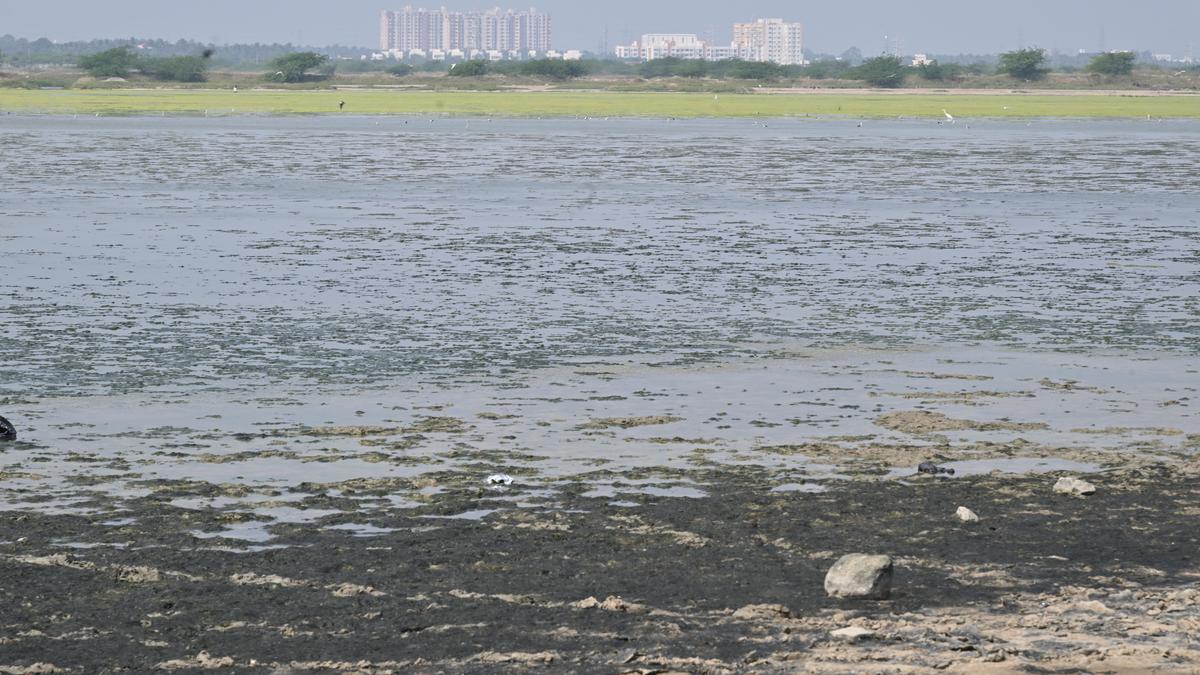


The Kovalam-Nemmeli wetland is an important stopover site for birds arriving along the Central Asian Flyway during the August-September migration season, according to Palluyir Trust.
| Photo Credit: M. SRINATH
The ongoing dredging and bund work for the proposed Mamallan reservoir in the Kovalam-Nemmeli backwaters has affected a crucial habitat for migratory waterbirds, according to the Palluyir Trust for Nature Education and Research.
In a representation to the Water Resources Department (WRD), the trust said four naturalists and zoologists surveyed the project area on September 29 and recorded around 3,500 waterbirds.
The team recorded 51 species, including 25 migratory species protected under the UN Convention on Migratory Species.
More than 1,500 garganey ducks, which migrate from temperate regions including Russia and Mongolia, were recorded foraging within the project site. More than 700 greater flamingos were also seen.
Stopover site
The trust said the Kovalam-Nemmeli wetland was an important stopover site for migratory birds arriving along the Central Asian Flyway during the August – September migration season. It said the presence of thousands of foraging birds indicated that the area comprised biologically active mudflats, although this had not been recognised in the coastal zone management plan. According to the trust, dredging and bunding for the reservoir had removed brackish and halophytic vegetation that had previously provided a buffer between waterbirds and traffic and human activity.
Blocking tidal flow
The blocking of tidal flow could also affect the movement of marine organisms during high tide and reduce prey availability for waterbirds, the trust said.
The organisation also raised concerns about the project’s potential implications for flood drainage in south Chennai.
Citing warnings by scientists from Anna University’s Centre for Climate Change and Disaster Management about extreme weather and the possibility of severe cyclonic events in the Bay of Bengal, it said blocking a crucial flood channel could increase flood risks in the region around OMR.
Published – October 04, 2026 05:00 am IST