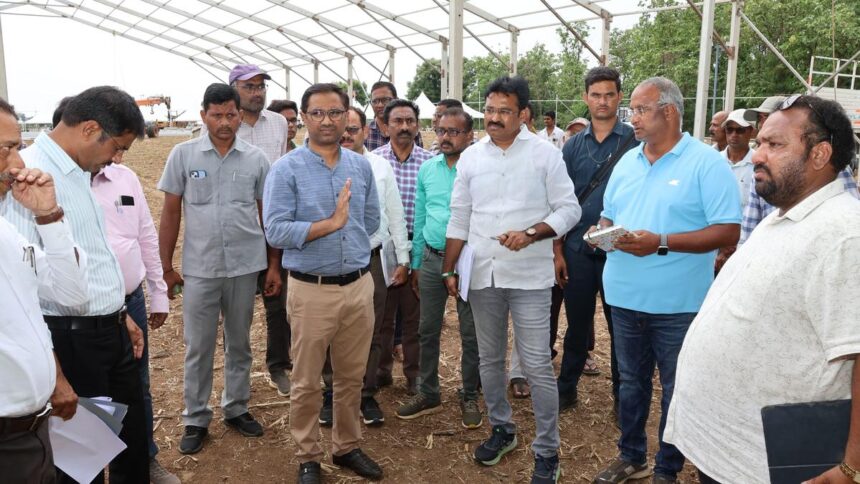



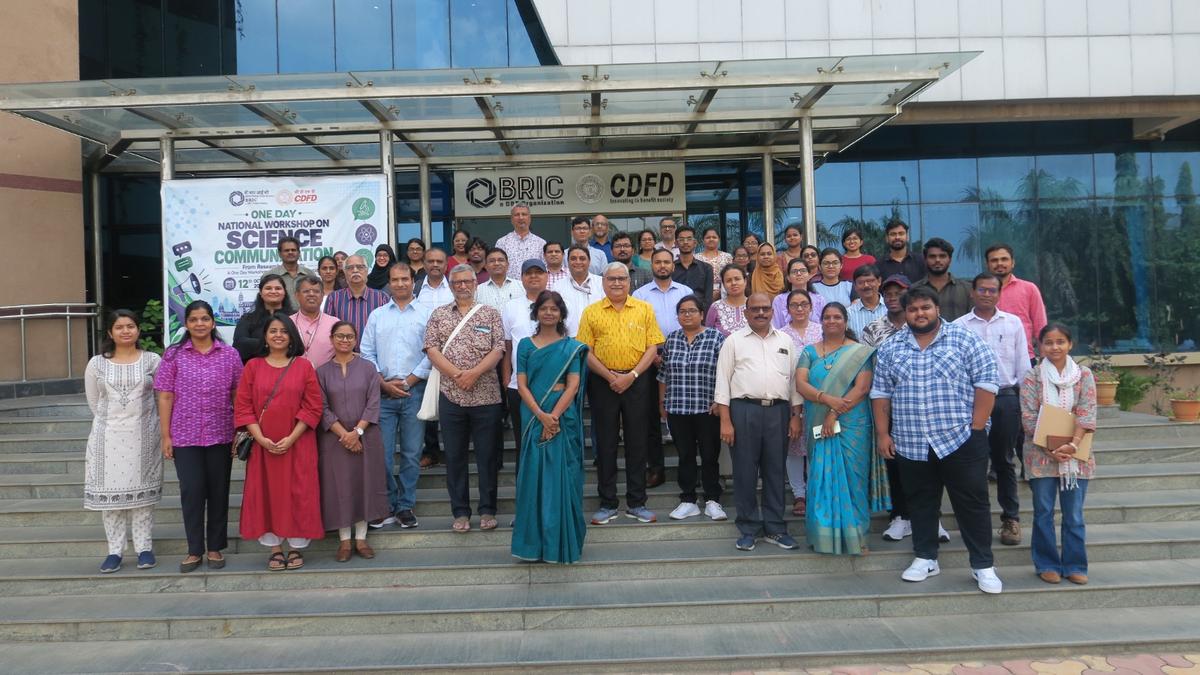


Participants of the national workshop on science communication titled “From Research to Reach” organised by the BRIC-Centre for DNA Fingerprinting and Diagnostics, Hyderabad, on Monday
| Photo Credit: Special Arrangement
The BRIC-Centre for DNA Fingerprinting and Diagnostics (BRIC-CDFD) on Monday (October 12) organised a national workshop on science communication titled “From Research to Reach”, bringing together scientists, science communicators, journalists and policymakers to discuss emerging trends, challenges and opportunities in communicating science to the public.
The workshop began with a welcome address by BRIC-CDFD Director Ullas Kolthur-Seetharam, who described the initiative as a unique effort to bridge the gap between scientific research and society and suggested that it be institutionalised as an annual programme. Organising Secretary and Staff Scientist at BRIC-CDFD Varsha introduced the objectives of the workshop. The keynote address was delivered by senior science journalist Pallava Bagla of NDTV, who shared insights from his decades-long experience in science reporting and highlighted the need for effective communication of scientific advancements.
A panel discussion on “Science Communication in the Age of AI” examined the growing role of artificial intelligence and digital technologies in public engagement with science. The panel featured Visiting Professor at IISER Mohali T.V. Venkateswaran, Sarah Iqbal of FAST India, and Tejah Balantrapu of LV Prasad Eye Institute. The session was moderated by Somdatta of CCMB, Hyderabad.
The second panel, “The Changing Landscape of Science Journalism,” focused on credibility, responsibility and the evolving media ecosystem. Participants included Pallava Bagla, Health Editor and Tamil Nadu Bureau Chief of The Hindu Ramya Kannan, former Bureau Chief of BusinessLine M. Somasekhar and assistant editor of The Times of India, Hyderabad, Nirupa Vatyam. The discussion was moderated by Dr. Varsha.
Representatives from the Department of Biotechnology, including Vamsi Krishna, Onkar Tiwari and Sangeeta Xess, discussed science communication strategies, the Government of India’s BioE3 policy and the role of social media in disseminating scientific knowledge.
The afternoon session, led by Sarah Hyder of FAST India and Banya Kar of BRIC-NII, focused on public engagement with science. The workshop concluded with a plenary lecture by Director of CSIR-NIScPR, New Delhi, Geetha Vani Rayasam. Certificates were distributed to participants, and A. Ketan, Consultant-Science Communication, proposed the vote of thanks. The organisers said the initiative aimed to strengthen collaboration between scientists, communicators and media professionals while making scientific research more accessible to society.
Published – October 12, 2026 09:25 pm IST