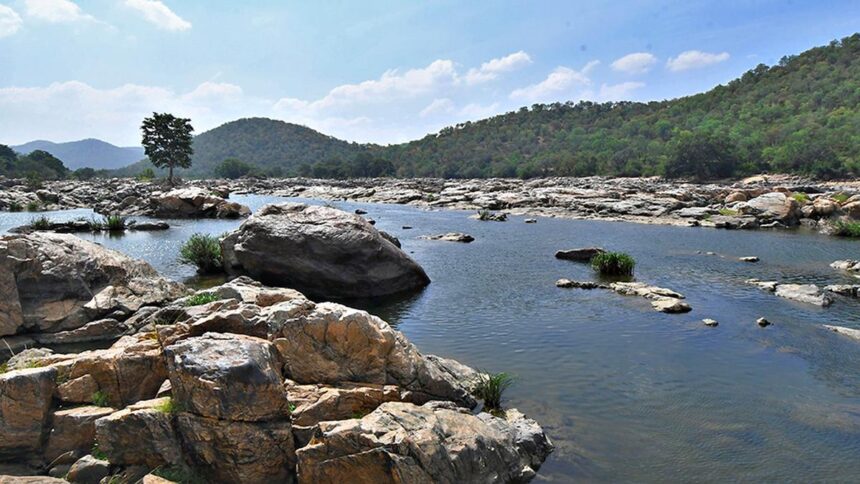







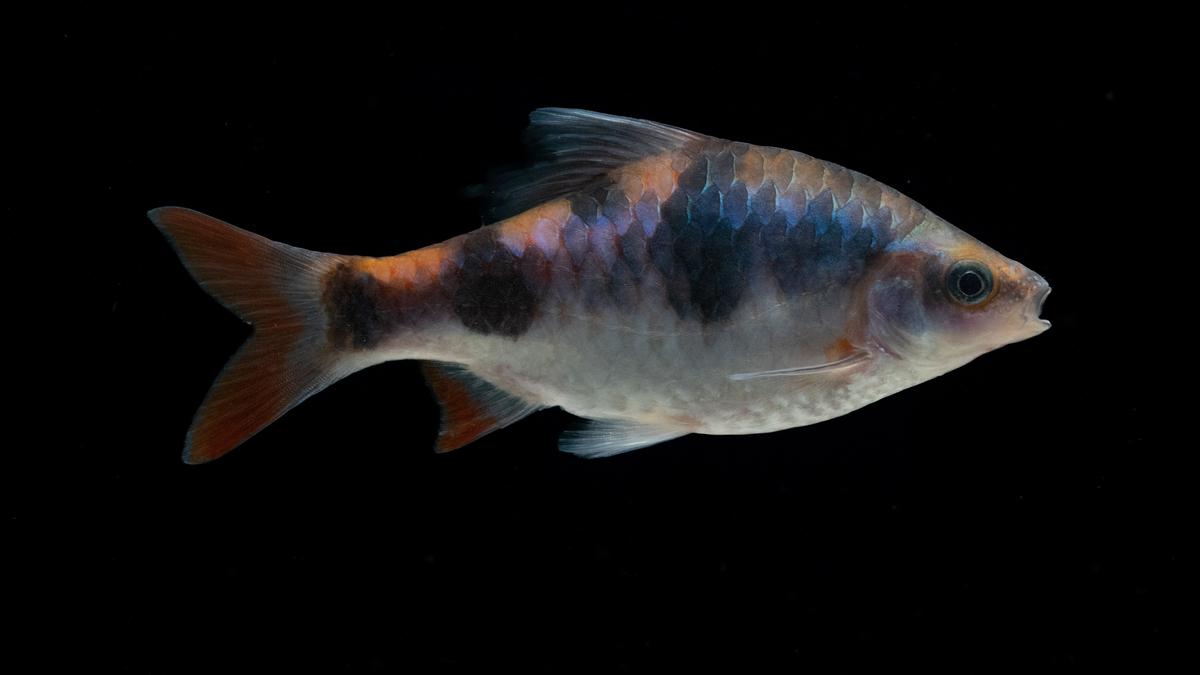

The Tamirabharani, the only river in Tamil Nadu that originates and culminates in the sea within the State, supports a highly diverse fish fauna, including seven endemic species that derive their names from the river and places through which it flows.
A total of 125 fish species have been identified in the upstream, midstream, and lower estuarine stretches of the river. Of these, seven are found exclusively in the Tamirabharani.

Hypselobarbus tamiraparaniei
| Photo Credit:
Special Arrangement
Pollution, habitat destruction, loss of riparian vegetation, invasive fish and aquatic plants, the use of soaps and shampoos by people bathing in the river, rituals on its banks, the dumping of pooja materials and clothes, and the discharge of untreated sewage have contributed to the decline in their populations.
One of the endemic species, Dawkinsia tambraparniei, has already been categorised as endangered.

Garra kalakadensis
| Photo Credit:
Special Arrangement
M. Mathivanan, senior research consultant at the Agasthyamalai Community Conservation Centre (ACCC), a unit of the Ashoka Trust for Research in Ecology and the Environment (ATREE) in Tirunelveli, said endemic species were indicators of the health of a river system.
‘Biological death of river’
“Five species continue to thrive, while two species, which are found outside the forest area, are facing threats. If the fish disappear, it will be a sign of the biological death of the river,” he said.

Mesonoemacheilus tambaraparniensis
| Photo Credit:
Special Arrangement
M. Vinod Kumar, a research consultant at ATREE-ACCC, said Dawkinsia tambraparniei, known in Tamil as Tamirabharani Seval Kendai, was found both inside the forest area and in the stretches downstream up to Srivaikundam. The species has been included in the IUCN Red List because of its declining population and is categorised as endangered.
Another endemic species is Haludaria kannikattiensis, or Kannikatti Melon Barb, named after Kannikatti, a locality in the Kalakkad-Mundanthurai Tiger Reserve. It is a steno-endemic species, meaning that it is restricted to a small geographical area.
“It lives in one of the tributaries of the Tamirabharani in the forest area and cannot be found anywhere else. Though there are several species of Melon Barbs, this particular species is found only in Kannikatti,” Mr. Vinod said.

Garra joshuai
| Photo Credit:
Special Arrangement
Neolissochilus tamiraparaniensis is a species of Masheer. It is a cold-water Masheer and relatively small in size, unlike the larger Masheer found in the Cauvery. Scientists J.A. Johnson and M. Arunachalam of Manonmaniam Sundaranar University described the species.
Mesonoemacheilus tambaraparniensis, known as Ayrimeen in Tamil and also called the Tamirabharani Zodiac Loach, is another endemic species. “It can survive only in oxygen-rich and clean water,” Mr. Vinod said.
Garra kalakadensis, known as Kal Kendai, is normally found in the forest area, where it lives close to rocks in the river. It derives its name from Kalakkad, through which the river flows. Another endemic species is Garra joshuai.

Hypselobarbus tamiraparaniei, belonging to the carp family, was last recorded at Kallidaikurichi during a fish census conducted last year.
Invasive species
Mr. Mathivanan said three invasive fish species — tilapia, African catfish and a tank-cleaner fish originally kept as an aquarium species but subsequently released into the river — posed a threat to native fish.

“These invasive species compete with local species for food and also eat their eggs. Destruction of riverine riparian vegetation in the name of cleaning the river deprives local species of space for survival and breeding,” he said.
Published – September 28, 2026 04:11 pm IST