






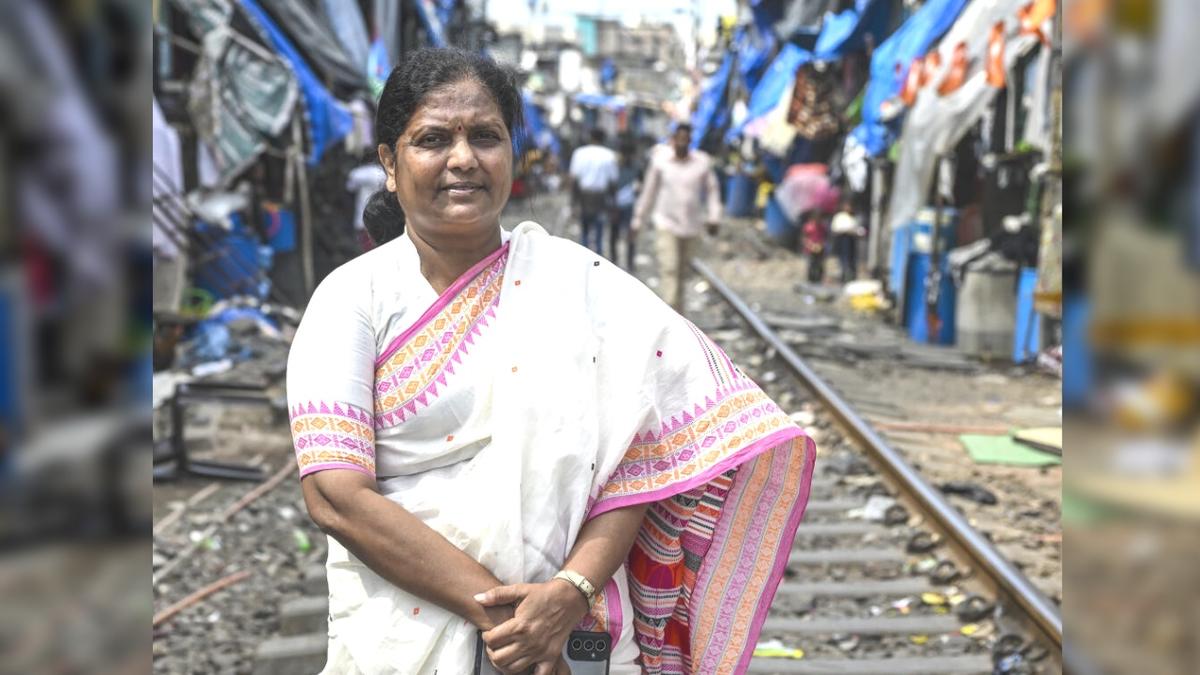

In another life, Sujata Sawant, 49, was an accountant with a salary and Sundays off. She plunged into politics in 2014 during the Legislative Assembly election in Maharashtra as a worker of the Bahujan Samaj Party (BSP), drawn in through an informally adopted brother.
She began working part-time in Mumbai’s Kurla constituency, and that’s when Sawant first visited a hamlet in Qureshi Nagar, a 25-year-old settlement, almost entirely Muslim and migrant, a forgotten slum sliced by the railway line. Home to daily-wage workers and with a high-school dropout rate of 95%, it would go on to become the centre of her life’s work.
You could describe her as a social worker, a community leader or a former party worker. “I joined politics because of [BSP leader] Mayawati but at the grassroots level, most men can’t handle women functionaries,” she says, adding that the party’s fiery promises to the poorest soon began to falter. “I understood that politics is all talk and no action.” But Sawant couldn’t move past the hunger and desperation she had seen. She quit her comfortable job and signed up to be a social worker with a non-profit in the neighbourhood.
In 2016, a disillusioned Sawant quit the non-profit and began Adarsh Foundation, which runs a study centre and community kitchen. A decade on, standup comic Varun Grover has become a firm supporter, helping her crowdsource funds. Recently, Grover and two other comedians, Gaurav Gupta and Gaurav Kapoor, pledged their joint ₹12.5 lakh winnings on game show Kaun Banega Crorepati to Sawant. Yet, Sawant can’t rest. She’s already worrying about where the next thousand meals will come from.
She’s a comet, she’s a hero
Her heroes are Ambedkar and Savitribai Phule. Her work embodies Gandhi’s idea of truth through service, while also laying the groundwork for an Ambedkar-style social democracy. Her method is deceptively simple: “Continuous work with honesty.” None of this, however, offers even a glimpse of her daily struggle to raise funds. If you send her money, you can expect an immediate receipt, with a beautifully worded ‘thank you’ note.

I think of her as a comet, tearing through barriers of caste and religion as she hurtles through life. In popular culture, heroes are usually male and upper class — Sawant, a Buddhist who wears saris these days, turns this idea on its head.
When Sawant first started talking about empowerment and education in Qureshi Nagar — where mothers stayed home, cared for children and everyone did piecework, earning ₹1 per shirt to cut extra threads or sew buttons on it — there were few takers. “People needed money, from anywhere, to pay rent,” she says. “Nobody cared about education, healthy eating or what they should wear.”
For the conservative Muslim residents, Sawant’s bindaas (carefree), voluble demeanour and casual clothes (kurta and tights or jeans) were a shock. “They would say, ‘she doesn’t even wear a dupatta, how will she keep our daughters barkarar (intact)?’ The religious barriers were very strong,” she says. The first few times she tried to get women together for a self-help group or to apply for a government scheme, only a handful showed up.
“I realised there were many children who wanted to make something of their life,” says Sawant. “For local leaders, they were just a vote bank.” She started a study centre and organised the women. Politician and columnist Sudheendra Kulkarni was an early benefactor. Sawant and the women tried everything from making fish nets for home aquariums to manufacturing sanitary pads and running a food stall at the local RTO (Regional Transport Office).

Hand that feeds many
During the pandemic, everything collapsed, and the focus turned to feeding people. Non-profit Khaana Chahiye Foundation helped and Sawant distributed 8,000 meal packets a day. In the second wave, the women started making the food themselves.
Over the years, Sawant has waged many battles for children who are married off as soon as they hit puberty, or forced to work from an early age, and sometimes trapped in addiction simply to stave off hunger. In addition to the 328 children enrolled at her study centre, Sawant feeds another 150 people every day — single or divorced women, senior citizens, people with disabilities, and those who have been abandoned. “Only if your stomach is full can you do anything else,” she says. Today, Sawant is a firm insider, everyone’s sister: tai, aapa and didi.
By 2018, the dropout rate in Qureshi Nagar had fallen to 5%. Sawant’s foundation was among those selected for the ‘Best Antyoday Practise’ award by the Indian Social Responsibility Network. The real reward, though, has been having a ringside seat to change. As the women began buying into her ideas, they braved the displeasure at home and pushed their children to study. Stanford and IIT-Bombay have both researched parts of this slum’s journey.
Over the years, Sawant’s study centre has birthed an engineer, a pathologist, an event manager, and a karate champ. In 2016, the first three children to pass Class X were all girls, two of them sisters. Sawant helped the siblings withstand marriage pressure and overcome an acid-attack threat for continuing their education. Today, they are nurses and own a flat. Sawant likes to call them a miracle, just one of many she has helped create.
The writer is a Bengaluru-based journalist and the co-founder of India Love Project on Instagram.
Published – October 02, 2026 09:36 am IST