






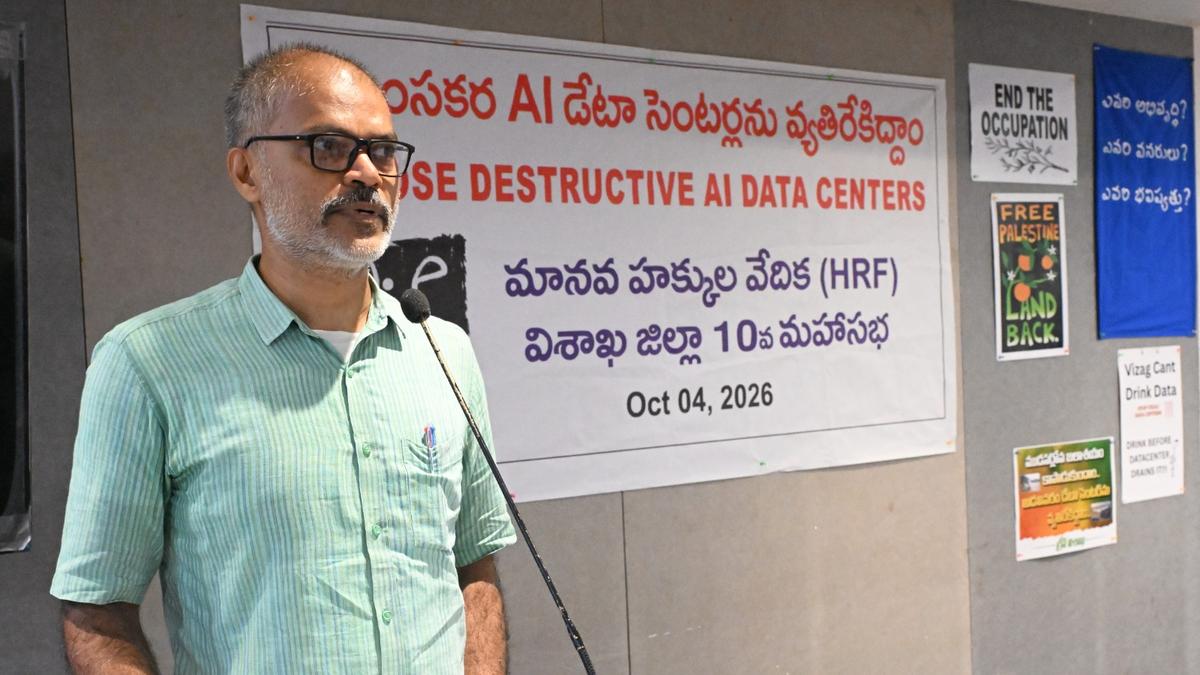


Y. Rajesh, State general secretary of the Human Rights Forum, speaks at the HRF’s tenth Visakha district conference in Visakhapatnam on Sunday.
| Photo Credit: V. Raju
The Human Rights Forum (HRF) held its tenth Visakha district conference, themed “Remembering Balagopal”, at Alluri Vignana Kendram in Daba Gardens in Visakhapatnam on Sunday (October 4, 2026). About 100 people, including young participants and veterans of the organisation, attended the event.
Speaking on “Balagopal’s Continuing Relevance”, Y. Rajesh, general secretary of the HRF’s Andhra Pradesh unit and an advocate based in Amalapuram, said he had drawn on the writings of the late lawyer and civil rights activist, whom he had not known personally. He said Balagopal and his colleagues had built a non-hierarchical work culture in the HRF, emphasising fact-finding on the ground and broader coalitions. Many of Balagopal’s writings dealt with destruction and development, he said.

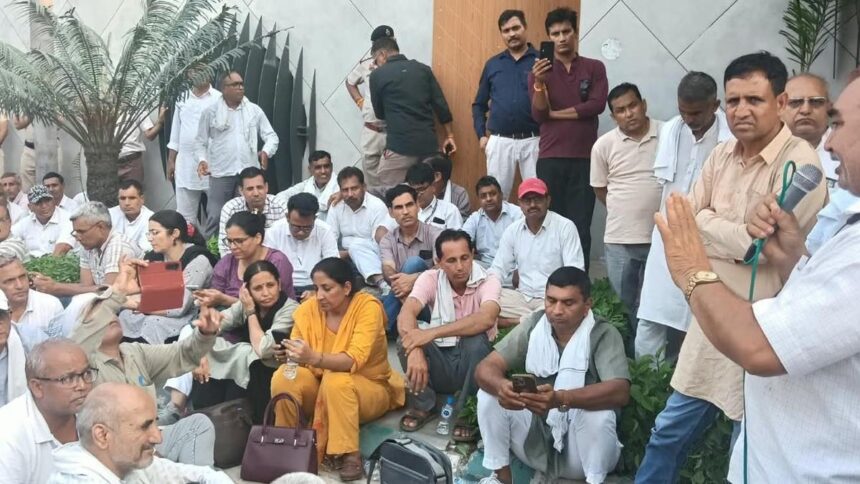
A section of the audience at the Human Rights Forum’s Visakha district conference in Visakhapatnam on Sunday.
| Photo Credit:
V. Raju
Mr. Rajesh said younger attendees were keen to learn about the HRF’s recent involvement in the debate on data centres and AI data centres. “People in Visakhapatnam were concerned about the lack of transparency, the State’s changing position on water and power requirements, and vague information on employment generation,” he said. He also alleged that the police had restricted processions and that social media posts had been blocked.

Phanindra, a software developer and member of the Free Software Movement, spoke on “These Destructive AI Data Centers” after a seven-minute short film. He said powering such facilities could affect communities already displaced by hydroelectric projects, including Polavaram, and by solar projects requiring lakhs of acres in Anantapur district. Data centres elsewhere, he said, continued to rely on thermal, fossil fuel and nuclear power, and he cited a proposed 3,200-MW power plant in Srikakulam district. He also referred to environmental clearances granted within nine days, the absence of public hearings and wrongful categorisation of projects.

He said the total proposed data centre capacity in the State now stood at 8 GW, up from the initial target of 6.5 GW, based on project-wise figures compiled on stopdirtydatacenters.org. A question-and-answer session followed, in which participants asked how they could engage with the issue as users of technology.
Published – October 04, 2026 06:06 pm IST