





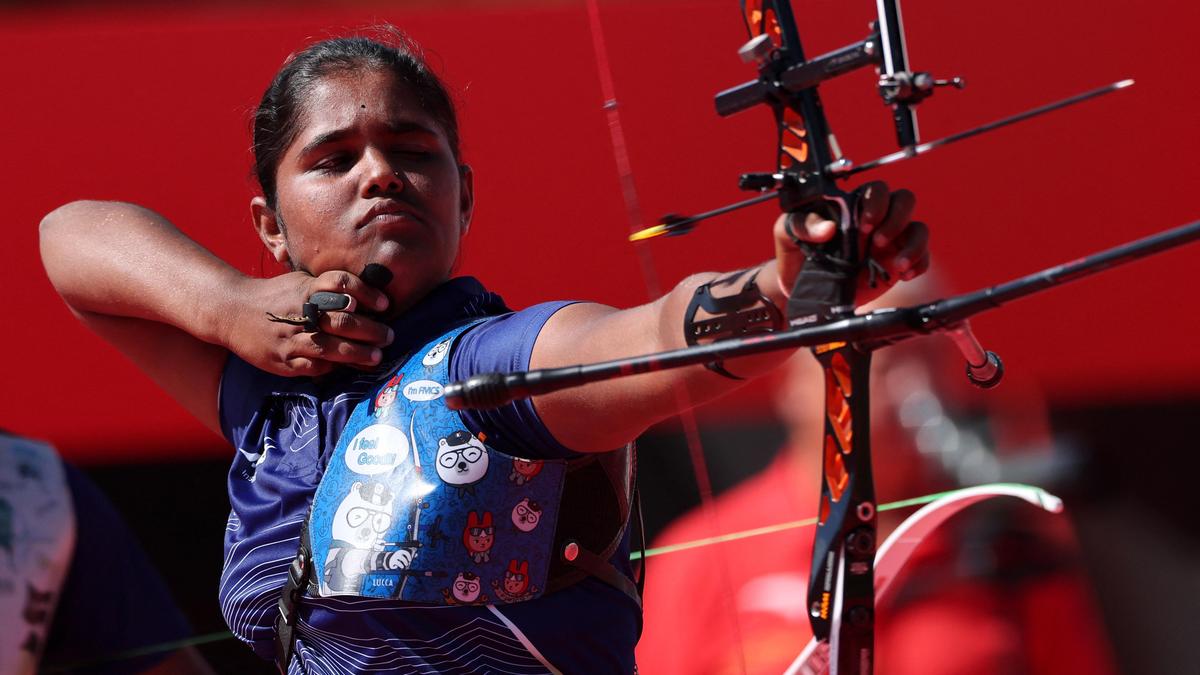


Kumkum Mohod won a historic gold in individual recurve event.
| Photo Credit: REUTERS
The Asian Games are over. The quadrennial spectacle that determines continental sporting excellence and bragging rights, ended the way most expected them to — China at the top, a million miles ahead of anyone else. Host Japan and South Korea completing the top-three. India, with a massive push in the last stretch, managed 85 medals, including 21 gold, to finish fourth.
This edition threw up several winners but few stood out as much for the magnitude of their achievements as the manner of it, none more than the Indian women recurve archers, led by the intrepid 17-year-old Kumkum Mohod. The youngest of the lot, she went where no Indian archer has gone before. As much as her gold in team and individual events are historic, the fact that she also booked a direct quota for LA Olympics matters equally. The next two years will see whether the fearlessness of youth is burnished further or gets tempered in the fire of international competition. It’s easy to run freely when you are the hunter; lot more difficult when you are the hunted.

The Indian women’s hockey team celebrates its triumph.
| Photo Credit:
R.V. MOORTHY
The women’s hockey team won the gold for the first time since 1982 and it was a maiden triumph with an Olympic spot at stake. Bettering China needed something special — Sjoerd Marijne brought it into the mix to turn a fractured bunch raked with groupism into a happy, united team, and called it ‘discipline’. With the mind free of qualifying worries, this team has it to go all the way to a medal in LA 2028, provided it stays the course, both in planning and personnel.
The men’s team as expected booked its ticket to the Olympics. The gulf in standards is big enough for even a less-than-optimum Indian hockey team to steamroll the opposition at the Asian level. The World Cup, however, exposed the growing gap with Europe. The administrative wranglings in the sport notwithstanding, the team will need to take a hard look at itself, decide where it wants to go from here and take some tough decisions and fresh ideas if it wishes to add to, and change the colour of the two Olympic bronze it has won on the trot.
Track and field was a mixed bag for India — the number of medals were close to what it won last time around (24 to 29) but it’s the close misses and lost golds that should be the focus of the Athletics Federation of India (AFI). The talent is there and, for large parts, the AFI has done a decent job of providing training and exposure. But there needs to be greater accountability of the various stakeholders, including athletes themselves, some of them stars in their own right, and a re-look at the selections if India hopes to get its best men and women out there.

Wrestler Aman Sehrawat won the gold in 57 kg.
| Photo Credit:
Reuters
Wrestling, on the other hand, proved it had a system, as criticised as it is, that works. Aman Sehrawat and Sujeet Kalkal are precious; the Wrestling Federation of India would do well to protect them, along with Antim Panghal, and perhaps bring greater focus on the Greco-Roman category as well. Similarly, the boxers had their best-ever outing with three gold and as many bronze.
The biggest areas of concern would be shooting and badminton, the two most heavily funded sports that had disappointing outings this time around. A single bronze in men’s badminton team event should set alarm bells ringing for the lack of back-ups to the established but ageing names. The shooters had their moments but it took Neeru Dhanda’s imperious gold for the contingent to finish marginally better.
If India does hope to substantially increase its tally and improve its position in Olympics, however, it really needs to amp up focus on the medal-intensive water sports, both pool and open.
For a lot of Indian athletes, the Asiad is the pinnacle of achievement. Events like kabaddi and compound archery are not part of the Olympic programme while rowing and sailing standards are far too high for the Indians to dream of success at the global level.
For the rest, however, the Aichi-Nagoya Games can, and should, be the springboard to leap higher and further, two years into the future. Or go back to the drawing board and start working on their Plans B, C & D if they wish for greater glory.
Published – October 04, 2026 06:09 pm IST