







Home to the Koundinya Wildlife Sanctuary, Chittoor district has an envious population of over 140 wild elephants, half of which keep crisscrossing the thick forests of neighbouring Karnataka and Tamil Nadu as well.
Seasonal migratory jaunts of the jumbos from as far as Mudumalai and Bannerghatta reserves of the Western Ghats trigger human-elephant conflict in several villages across more than a dozen mandals spread over Kuppam, Palamaner, Chittoor, Puthalapattu and Gangadhara Nellore Assembly constituencies in Chittoor district and some pockets in the neighbouring Annamayya and Tirupati districts.
Rise in jumbo mumber
Compared with the previous year, the number of wild elephants increased by about 20 in 2025, which was being considered a wildlife phenomenon.
Disturbingly, the number of human casualties in the attacks by the wild herds stood at nine during 2024-25. The number of persons injured during the period was six. The agrarian belt received a jolt, as the victims were farmers or cattle-rearers, who never returned home from the fields. Most encounters resulted when the victims were busy at work during the harvest season, when elephants keep raiding the crops as part of their seasonal search for food and water.
Crop damages
Crop damages continue to be a major aspect throughout the year. The elephants mostly targeted mango orchards, tomato, paddy, and vegetable fields. Crop losses were reported from dozens of hamlets abutting the sanctuary.
Forest officials said that though the damage component varied from season to season, the current year was collectively affected in over 1,500 acres, disturbing the agricultural activity and throwing farmers into economic distress.
Coming to the compensation aspect, the Forest Department enhanced the relief component.
As per the latest provisions, the kin of those killed in attacks by wild animals would receive ₹10 lakh as ex gratia. The crop damage claims also saw prompt settlement by the joint inspections of the Forest and Revenue officials.
“This year, we could see faster assessment and disbursal of compensation in both human casualties or crop losses, with little or no delays,” said Krishnappa Mani (62), a mango farmer of Mandipeta Kotur village in Palamaner mandal.
Kumki camp
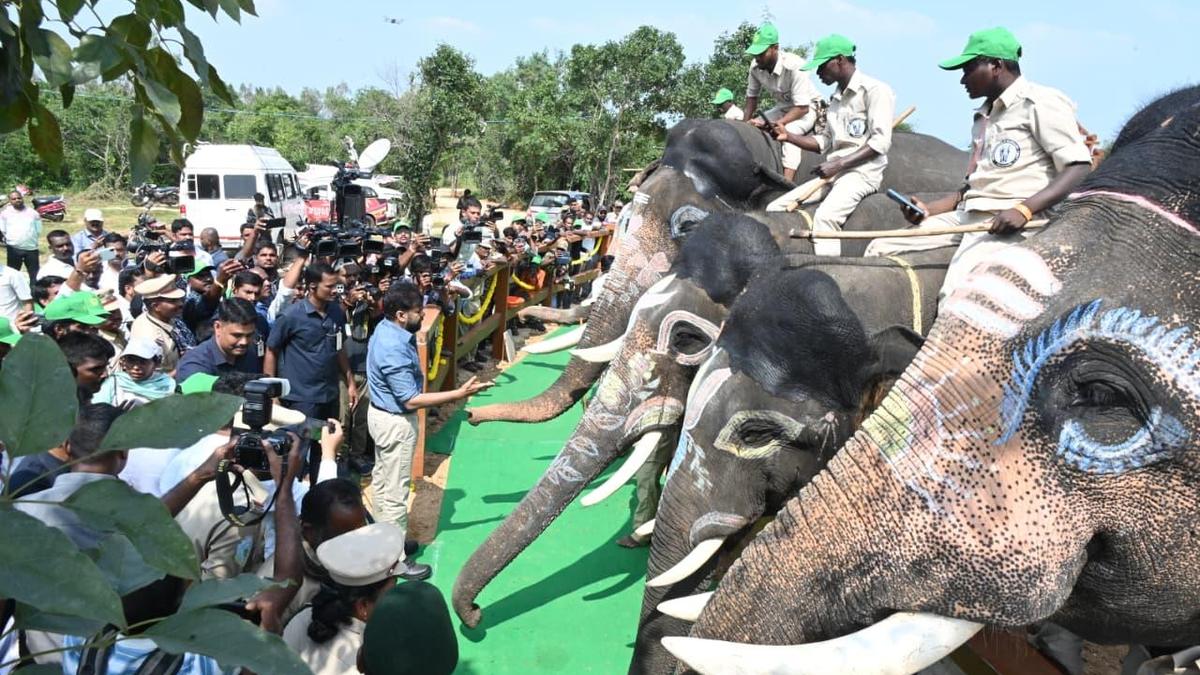
Importantly, conflict management took a revolutionary turn in the year with the deployment of trained kumki elephants in Chittoor district.
Previously, the trained elephants used to camp in the Naniyala forest zone, near Kuppam, and the forest officials kept transporting them to the trouble spots all over Chittoor, Tirupati and Annamayya districts.
Deputy Chief Minister K. Pawan Kalyan, who holds the Forest portfolio, met Karnataka Chief Minister Siddaramaiah in Bengaluru in August 2024 to strike a deal and bring the trained elephants to Chittoor.
As a result, four kumkis from Karnataka had arrived in Palamaner on May 21, 2025. Mr. Pawan Kalyan inaugurated the Kumki elephant training camp in a 20-acre forest stretch at Musallamadugu village, near Palamaner, on November 9, 2025.
The forest officials and villagers hailed the move as Palamaner remains the epicentre for wild elephant movements. Previously, the officials used to deploy two trained kumkis — Jayanth and Vinayak — from the Naniyala elephant camp, near Kuppam, at the vulnerable spots elsewhere in Chittoor, Annamayya and Tirupati districts to drive the wild elephants from human habitations and fields away into the forests. Now, the Musallamadugu camp holds the logistics to swiftly address the man-animal conflict in all the three districts.
Use of technology
Divisional Forest Officer G. Subburaj said that in addition to the traditional methods, the department had intensified the use of technology-based early warning systems and surveillance of wild herds at the tri-State junction. Solar-powered sensors and camera traps were installed in select villages to track elephant movement and warn residents in advance. The forest officials further stepped up night vigil with an increased number of watchtowers, and were holding a series of community awareness programmes.
A positive feature of wildlife conservation success in Chittoor district could be seen in the least number of casualties among wild elephants in 2025. While over 20 elephants were reported killed in Chittoor district in the previous five years, mostly due to electrocution in the fields, the current year saw only two jumbo deaths.
Published – December 20, 2025 06:38 pm IST