


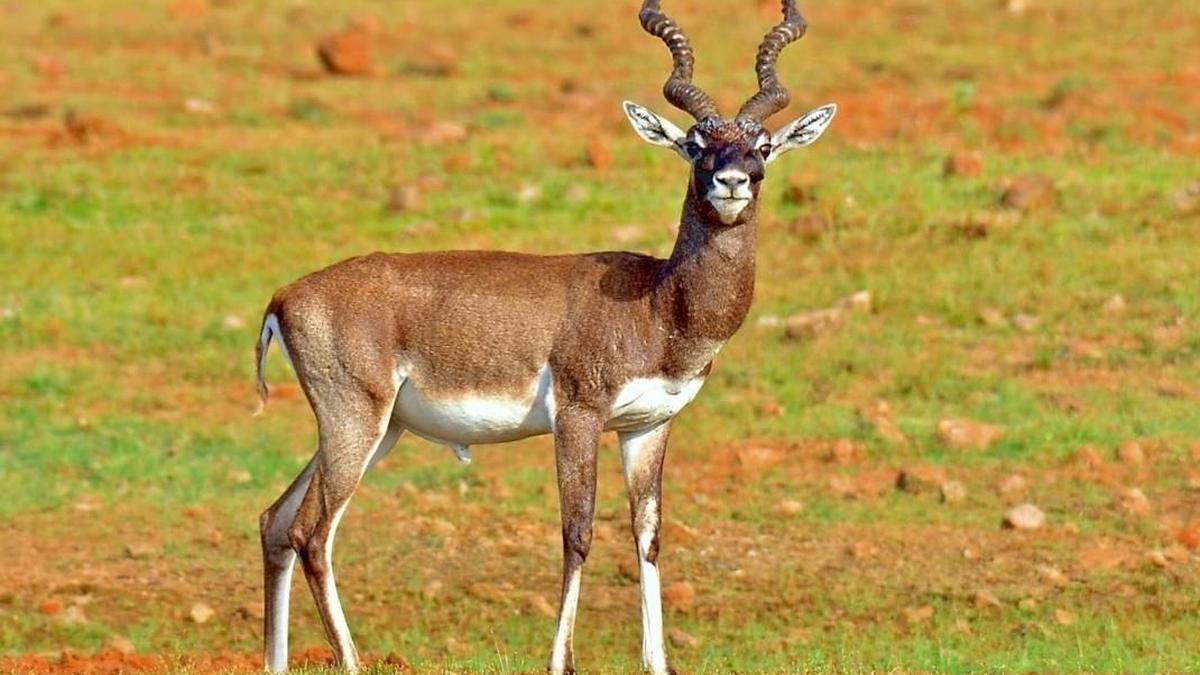

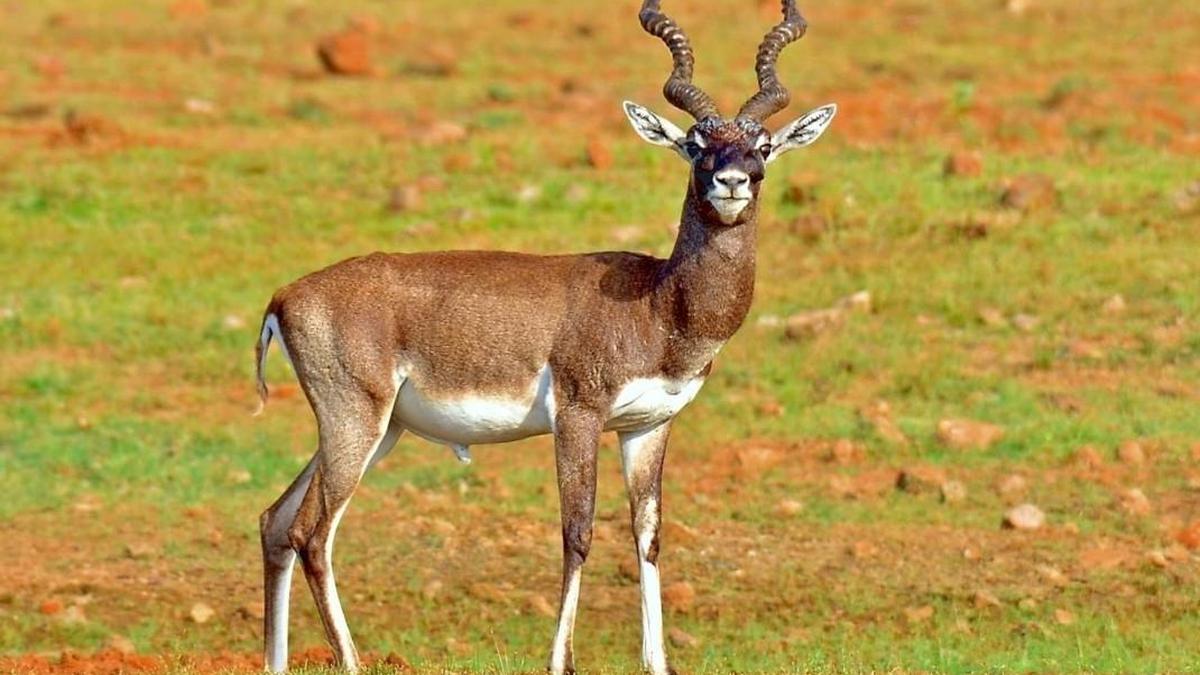
The Blackbuck at Vallanadu sanctuary.
| Photo Credit: SPECIAL ARRANGEMENT
Thanks to regional biodiversity enhancement efforts, the blackbuck (Antilope cervicapra) population at the sanctuary in Vallanadu has witnessed a surge, recording a total of 300 in 2023-2024 census. It was around 260 in 2022-2023.
The sanctuary, established in 1987 and spanning 1,641 hectares, is one of the few natural habitats of the blackbuck, an endangered species included in the Schedule-I of The Wildlife Protection Act,1972.
In Vallanadu, the numbers were around 140 in 2014-2015 and around 160 in 2016-2017. Although the sanctuary is extensively spread, it gradually became overrun with dense bushes, which made conditions difficult for the blackbuck to thrive, as they are quintessential open land animals that flourish on grasslands.
In order to make conditions more habitat friendly, the Tamil Nadu Biodiversity Conservation and Greening project for Climate Change Response (TBGPCCR) has undertaken an initiative to restore the grasslands and so far around 50 hectares of land have been restored with native grass, creating favourable conditions for the blackbucks.
Apart from blackbucks, the sanctuary also records 300 spotted deer and 150 sambar deer, along with other flora and fauna.
Speaking to The Hindu, Thoothukudi District Forest Officer M. Ilayaraja emphasised that grasslands were vital for the survival and sustenance of the blackbuck. “As the sanctuary currently faces threats from invasive plant species, including Acacia senegal, detailed mapping of invasive species have been completed and removal of the species will be carried out in phases.”
Mapping of existing native grass patches had been completed and further restoration would be carried out based on scientific assessment. Further, feral cattle entering the sanctuary had been stopped and around 150 abandoned cattle had been spotted within the sanctuary limits. Action had been taken to transport them to goshala.
On the proposed action plan for the sanctuary, he said that to strengthen scientific understanding and long-term conservation planning, systematic biodiversity documentation would be undertaken, with special emphasis on taxa such as butterflies, reptiles and raptors.
“The sanctuary supports an excellent and diverse population of raptors, making it an important raptor habitat in southern Tamil Nadu,” he added.
Published – December 27, 2025 07:01 pm IST