





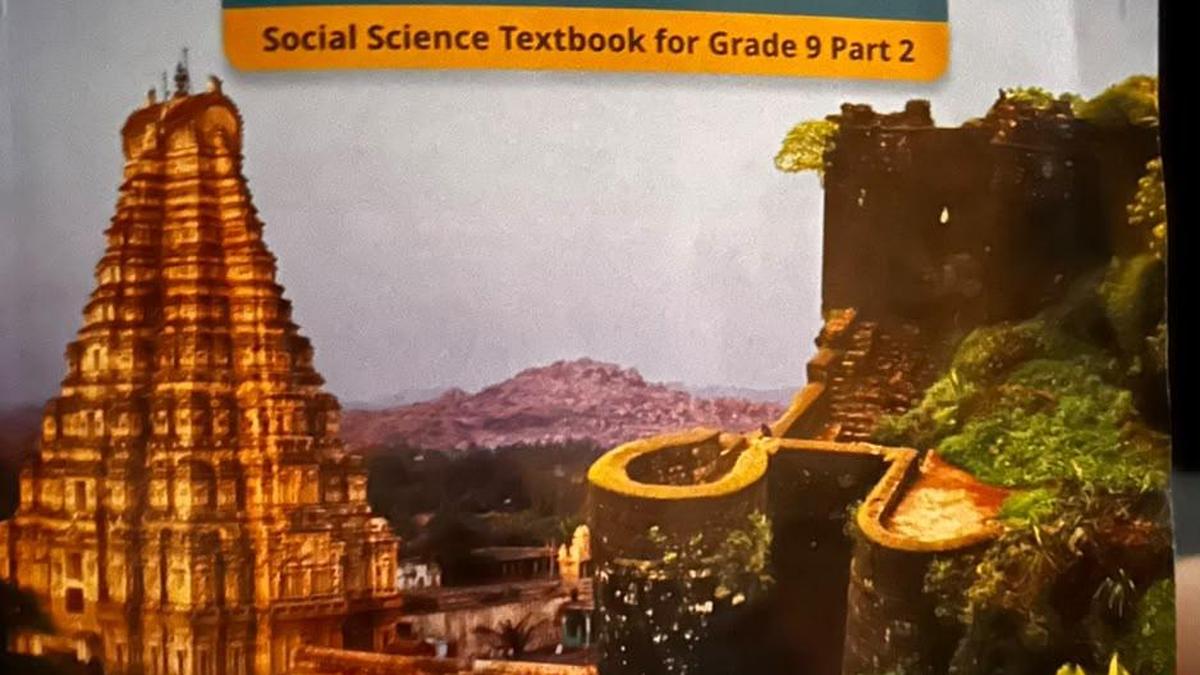


Cover of the new Class 9 social science textbook published by NCERT.
| Photo Credit: Special Arrangement
In a first at school level, students as young as those in Class 9 will be taught how to calculate income tax liability under the new tax regime.
The newly released social science textbook of the National Council for Educational Research and Training (NCERT) — Understanding Society: India and Beyond Part Two — has been included in the chapter, titled “Managing Your Personal Finances”.
The new tax regime was announced in February 2020 during the Union Budget announcement for 2020-21 by the Centre and has became the default tax regime starting April 1, 2023. If a taxpayer wants to opt for the old tax regime they have to actively opt out of the new regulations. Interestingly, there is no mention of the old tax regime in the chapter.
The new regime offers lower tax rates in exchange for giving up most exemptions and deductions.
Civic awareness
The Class 9 textbook carries a civic message that paying taxes “honestly and on time” is an “important responsibility of every citizen” that helps fund the nation’s development. It also mentions that the journey towards managing money begins in childhood.
The textbook was released on September 29, 2026, six months after the new academic session began. The first part of the textbook was released in June.
While until 2025-26, Class 9 students used to learn social science from four separate textbooks — History (India and the Contemporary World – I), Geography (Contemporary India – I), Political Science (Democratic Politics – I) and Economics — NCERT has now rolled all four subjects into one integrated set distributed across two volumes. The earlier 20 chapters across four books have been compressed into 16 integrated chapters or themes.
Students can now work through the actual slab-wise tax calculation under the new regime which is a first for this age group, stated NCERT director Dinesh Prasad Saklani.
Shaping financial future: NCERT director
“Managing money wisely is not just about earning more, it is about making careful financial decisions at every stage, whether it involves spending, saving, investing, protecting against risks, borrowing responsibly or paying taxes. The choices individuals make today shape their financial future and determine their ability to achieve financial stability while managing financial opportunities and challenges,” the textbook read.
The chapter contains a table of tax slabs under the new income tax regime and details the steps to calculate tax liability based on the listed slabs.
“India follows a slab system for calculating income tax as shown in table,” the textbook says, followed by a chart of tax slabs under new tax regime.
The chapter also contains a section on “pillars of personal finance”, covering Income (earnings), Budgeting (Planning expenses), Saving, Investing (growing wealth) and protection and risk management.
Under “power of early investments”, the chapter lists fixed deposits, bonds, stocks (equity or shares) and mutual funds as investment options.
(With agency inputs)
Published – October 01, 2026 05:55 pm IST