

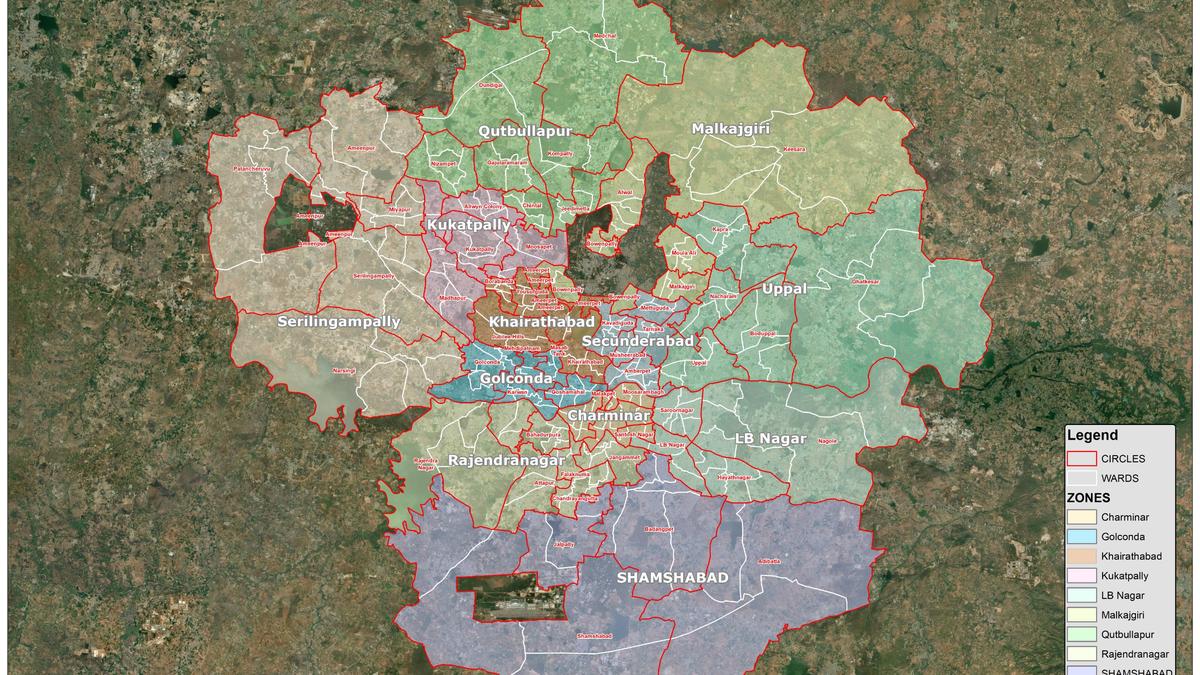

When the Greater Hyderabad Municipal Corporation (GHMC) on December 25 announced a major expansion following the merger of 27 neighbouring municipalities, it outlined a restructured civic body comprising 12 zones, 60 circles and 300 wards. Along with the announcement, the civic body released a revised jurisdictional map. The map, however, showed a small area out of its jurisdiction — the Secunderabad Cantonment area.
The Secunderabad Cantonment spans around 10,000 acres and is divided into land seven categories. Of this, A1 and A2 lands, covering about 5,670 acres, are owned by the Indian Army. B1 lands, totalling around 414 acres, belong to the Central government. B2 lands, spread over 2,676 acres, are privately owned by residents, while B3 lands, measuring about 501 acres, are old grant lands that will continue to be retained by the Government of India. B4 lands account for 98 acres of vacant land. The C category, classified as cantonment land, extends over about 260 acres, of which the government will retain key spaces such as the Bison Polo Ground and Gymkhana Ground, leaving roughly 160 acres of civilian area. In addition, there are about 235 acres of civil areas.
In all, around 3,071 acres are proposed to be merged into the GHMC, which will include 2,676 acres of privately owned B2 lands, 235 acres of civil areas and 160 acres from the cantonment category, while the remaining areas will continue under the control of the Indian Army and the Central government. The omission of the Cantonment has once again brought into focus the long-pending demand for merger of its civillian areas with the GHMC.
Secunderabad Cantonment traces its origins to 1798, when an alliance between Hyderabad’s Nizam Sikander Jah and the British East India Company led to the establishment of a military cantonment north of Hussainsagar. Named Secunderabad after Sikander Jah, the area continues to retain its distinct administrative identity more than two centuries later.
At present, the cantonment falls under the jurisdiction of the Secunderabad Cantonment Board (SCB), which functions under the Ministry of Defence (MoD).
Residents and civic groups within the cantonment have for years sought integration with the GHMC, arguing that a merger would help address persistent infrastructure and governance issues by bringing the area under a larger urban framework. Following formal discussions on the merger began in 2022 a six-member committee involving the Municipal Administration and Urban Development department of the Telangana government was constituted. The State government in August 2023 issued a -line no-objection certificate (NoC) permitting the proposed SCB-GHMC merger to move forward. The NoC followed the Union government’s decision to excise civil areas of select cantonment boards and merge them with adjoining municipalities to bring uniformity in municipal laws.
Based on this, the Union government constituted a high-level committee and asked the Cantonment Board to submit a final report within a month. However, there has been no public update on the process since then.
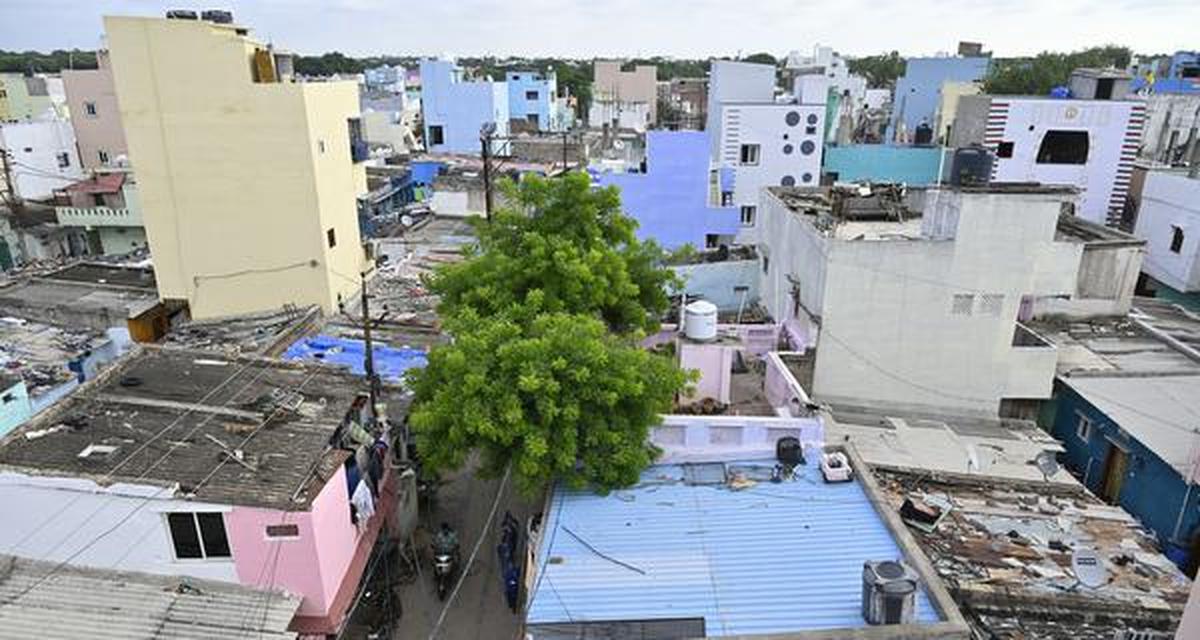
An aerial view of Rasoolpura, which covers Ward 2 of Secunderabad Cantonment area. Despite being located in a bustling area of Hyderabad, parts of Secunderabad Cantonment Board struggle with inadequate infrastructure and erratic water supply.
| Photo Credit:
NAGARA GOPAL
“There has been complete silence after the committee was asked to submit its report. While Hyderabad has been developing rapidly, the Cantonment continues to function under outdated regulations. Building bylaws dating back to 1924 are still in force, infrastructure is poor, and there is a growing civic deficit,” general secretary of an NGO Cantonment Vikas Manch Sanki Ravinder Babu said.
Not all residents, however, see the merger as the solution. Some argue that the immediate issue is the absence of an elected civilian body in the cantonment. Telukunta Satish Gupta, a social activist said that with the GHMC becoming even larger, it could become more difficult for residents to get civic works addressed. “We feel the merger may not bring much change. What we need first are elections to be held here,” he said.
Cantonment board elections have not been conducted since 2020, with the last polls held on January 11, 2015. “Nearly 12 years have passed without an elected civilian body, a situation that critics say has deprived thousands of residents of their constitutional right to democratic representation. The lack of infrastructure development is often attributed to the delayed merger with the GHMC, but the more immediate cause is the prolonged absence of elected representatives,” he added.
Published – December 27, 2025 07:03 pm IST