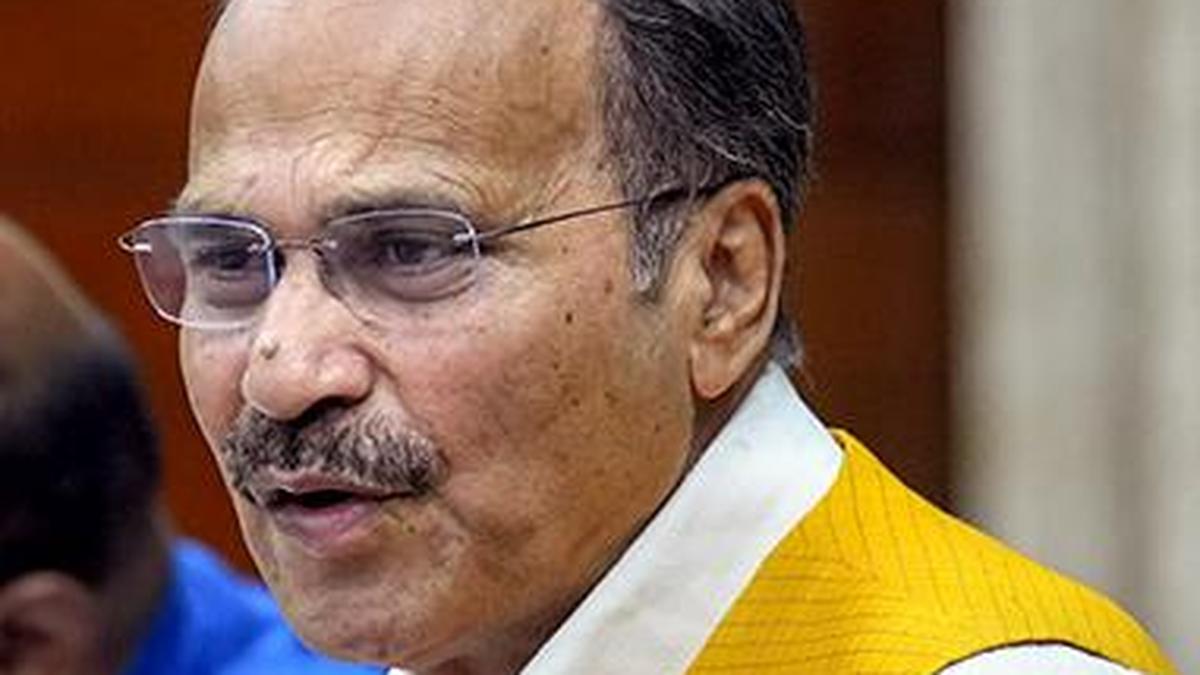

Congress leader Adhir Ranjan Chowdhury on Thursday (October 1, 2026) made a direct pitch to Trinamool Congress (TMC) supremo Mamata Banerjee to rejoin his party along with her remaining MLAs and MPs, saying the Congress is prepared to accept her leadership in West Bengal.
Mr. Chowdhury’s appeal came at a time when the TMC is battling what may be its deepest organisational crisis since its formation, with the party’s legislative and Parliamentary wings witnessing separate rebellions after its defeat in the 2026 Assembly elections.

“There is no need for any separate entity at this moment. Not much is left of the TMC after its defeat in the Assembly elections,” said Mr. Chowdhury, a former State Congress president, referring to the split in the party. Ms. Banerjee left the Congress and formed the Trinamool Congress nearly three decades ago.
“We would urge Mamata Banerjee to join the Congress along with all the leftover MLAs and MPs. We would accept her leadership in Bengal and work with her,” he said.
The TMC won 80 seats in the 294-member Assembly in the elections, in which the BJP emerged as the largest party. Within weeks of the poll verdict, however, the TMC’s legislature party itself split, with 58 rebel MLAs backing expelled leader Ritabrata Banerjee as their Leader of the Opposition and the Assembly Speaker recognising the rival bloc.

The rebellion was followed by a parallel churn in the TMC’s parliamentary wing, with rebel MPs also challenging Mamata Banerjee’s leadership. The simultaneous rupture in the Assembly and Parliament has turned what began as post-election dissent into a wider organisational battle over the party’s identity and future.
Mr. Chowdhury sought to link Ms. Banerjee’s recent engagement with the Congress-led Opposition platform with his call for a merger.
“As she has taken shelter in the Congress-led INDIA alliance, she should join the party. In Bengal, we would work under you in Congress,” he said.
The former leader of the party in Lok Sabha also asked Banerjee to enter the Congress “leaving behind her baggage”, an apparent reference to her nephew and TMC national general secretary Abhishek Banerjee.

The proposal carries an element of political irony. The TMC itself was born out of Ms. Banerjee’s break with the Congress in 1998 and subsequently built its political identity by challenging both the Congress and the Left Front. It went on to end the Left Front’s 34-year rule in 2011 and dominate Bengal politics for the next 15 years.
TMC MP Saugata Roy, however, said the party would consider such a proposal only if it came formally from the Congress leadership.
“He [Mr. Chowdhury] has said what he felt. We have nothing to say. The TMC is a separate party now. If Congress wants to come with an official proposal, we will discuss the matter in the party. The TMC is very much part of the INDIA alliance,” Mr. Roy said.
Asked about Mr. Chowdhury’s “baggage” remark, Mr. Roy said there could be no decision about the party without Abhishek Banerjee. “He [Abhishek Banerjee] is our leader and national general secretary,” Mr. Roy said.
While dismissing Mr. Chowdhury’s remarks, he did not close the door on discussions if a formal proposal were to come from the Congress leadership. The TMC’s internal crisis has also acquired a different character in the Assembly and Parliament.
While the rebel MLAs have sought to establish themselves as the legitimate legislative opposition to the BJP government, the rebel parliamentary camp has taken a separate political route — joining the little-known NCPI and extending support to BJP-led NDA at the Centre.
The BJP, meanwhile, sought to use the Congress-TMC exchange to argue that the TMC had exhausted its political purpose. The BJP’s West Bengal spokesperson Debjit Sarkar said the TMC had “no other purpose left” as its political trajectory was over.
“The TMC was born out of the Congress to fight the CPI(M). The TMC came to power on that plank. Now that the TMC itself is out of power, they have no other purpose left,” Mr. Sarkar said. “Whether they will join the Congress or not is up to them. We are ready to fight the Congress, TMC and CPI(M),” he said.
A merger would effectively redraw Bengal’s opposition politics by bringing together the TMC, the organisational base of which has been badly fractured, and the Congress that has struggled to regain its former political space in the State, a Kolkata-based political analyst said.
For Mamata, however, the proposition comes at a moment when her political challenge is not merely electoral. The TMC is simultaneously fighting to retain its organisational identity, its legislative presence and control over its parliamentary representatives. The irony is particularly striking for a party whose origin itself lay in a rebellion against the Congress.
Twenty-eight years after Ms. Banerjee walked out of the Congress to establish the TMC, Mr. Chowdhury is now asking her to make the journey in reverse — this time with the Congress offering to work under her leadership in Bengal.
Whether the proposal remains a political provocation by Mr. Chowdhury or develops into a wider conversation within the opposition camp could depend on how the TMC’s internal battle over its future unfolds.
Published – October 01, 2026 06:29 pm IST