
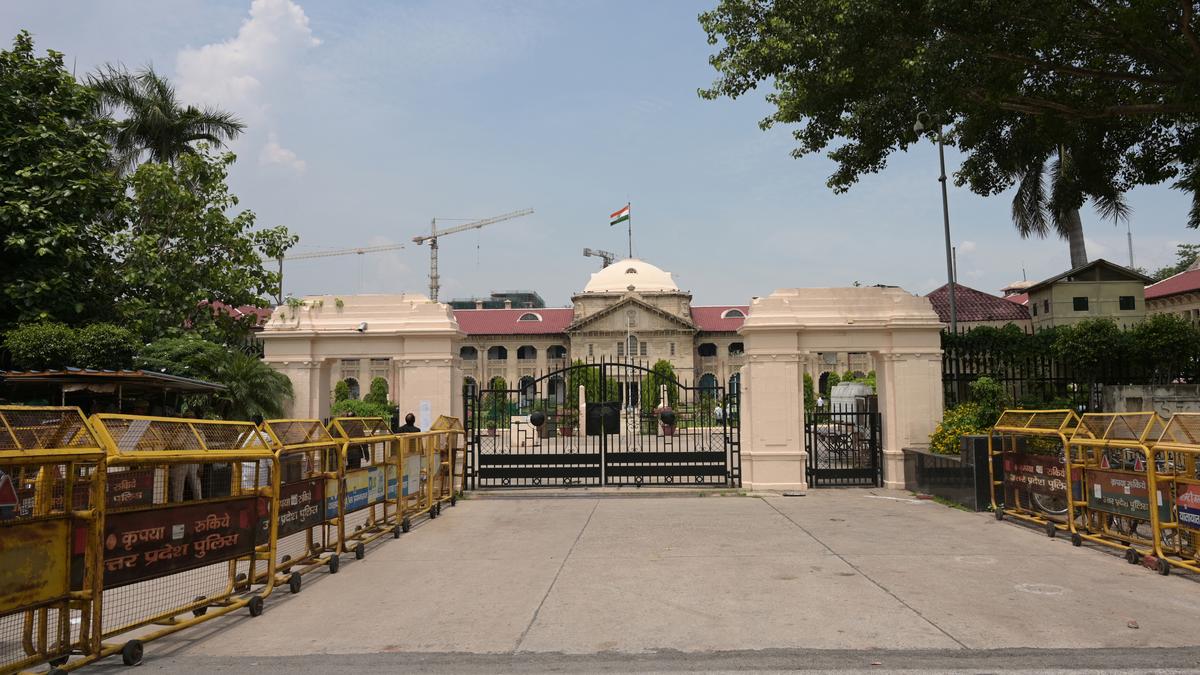

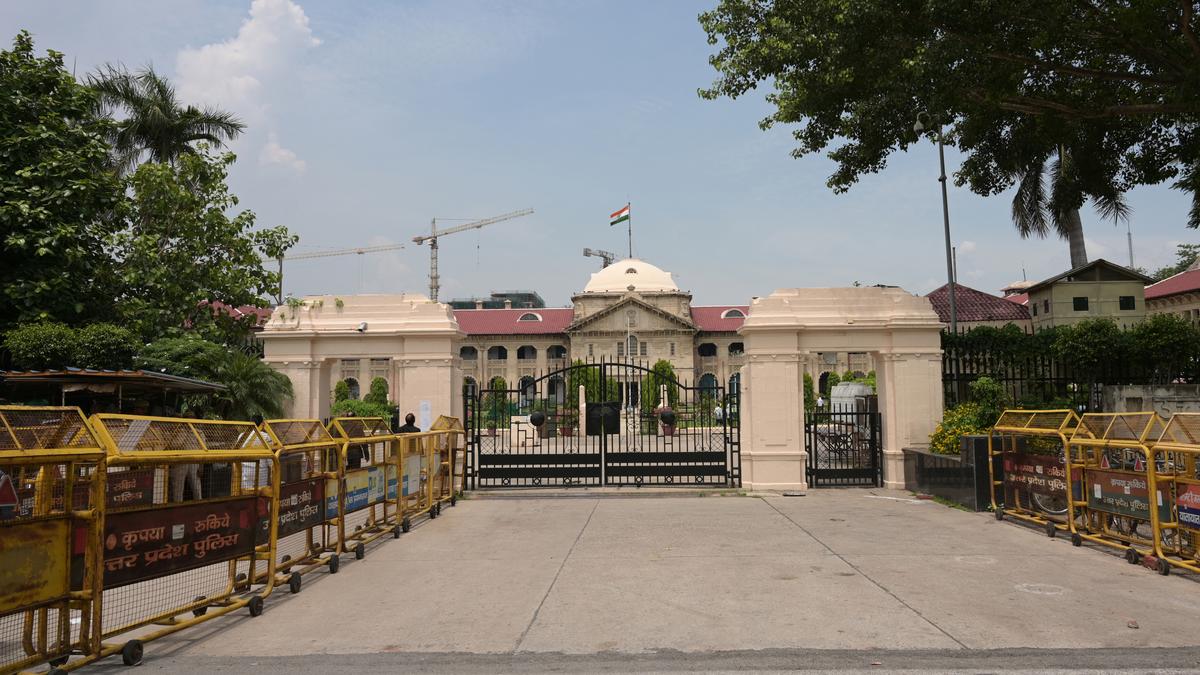
Earlier, the Allahabad High Court dealing with two similar petitions, ruled that holding of prayers within private premises was allowed by law and there was no need for seeking prior permission of the authorities. File
| Photo Credit: Getty Images/iStockphoto
The Allahabad High Court verdict allowing prayers on private land without prior police permission has come as a shot in the arm for minorities bodies in the State. Both Christian and Muslim bodies have hailed the verdict, calling it a “light at the end of a tunnel” and “a warning against arbitrary police action”.
Earlier, the Allahabad High Court dealing with two similar petitions moved by Maranatha Full Gospel Ministries and Emmanuel Grace Charitable Trust, ruled that holding of prayers within private premises was allowed by law and there was no need for seeking prior permission of the authorities. A Division Bench comprising Justice Atul Sreedharan and Justice Siddharth Nandan ruled, “There is no need to take permission to hold a religious prayer meeting on private property.”
Noted Christian and human rights activist and All India Christian Council leader, John Dayal, called it “a slap on the government”.
“What you do inside your home, what you eat, how you dress is a personal matter. Why should any permission be needed? The fact that the Allahabad High Court had to step in to restore this basic freedom says a lot about where have we come as a nation,” he said.
Welcoming the verdict, Mr. Dayal called upon the authorities to paste the verdict at police stations across the State. “That will ensure the local police do not disturb any prayer services. Otherwise, all this is written in our Constitution,” Mr. Dayal said.
Meanwhile, Mahmood Madani, president of Jamiat Ulama-i-Hind, welcomed the verdict, describing it as “a clear and decisive reaffirmation of the constitutional right to religious freedom guaranteed under Article 25 of the Constitution of India”.
Reacting to the judgment, Mr. Madani said, “Over the past few years — particularly in Uttar Pradesh — there have been several instances where FIRs were registered, arrests were made, and police action was taken merely for offering prayers or holding religious gatherings. Peaceful worship was wrongly projected as a law-and-order issue, causing unnecessary fear and distress among law-abiding citizens. The High Court’s ruling has now provided much-needed constitutional clarity.”
In January this year, 11 Muslim men were arrested for offering prayers on private premises in Moradabad n western Uttar Pradesh. “The verdict sends a strong message that fundamental rights cannot be curtailed at the discretion of the administration. The Constitution guarantees citizens the right to worship, and this right can neither be suspended nor taken away arbitrarily by the State,” Mr. Madani said.
He also reminded that the month of Ramzan is approaching and called upon the administration to honour the spirit of the judgment. “People must be allowed to perform their religious obligations without fear or interference,” Mr. Madani said. Incidentally, since 2023, complaints have surfaced of arbitrary arrest and disruption of prayers in Ramzan.
Published – February 04, 2026 08:01 pm IST