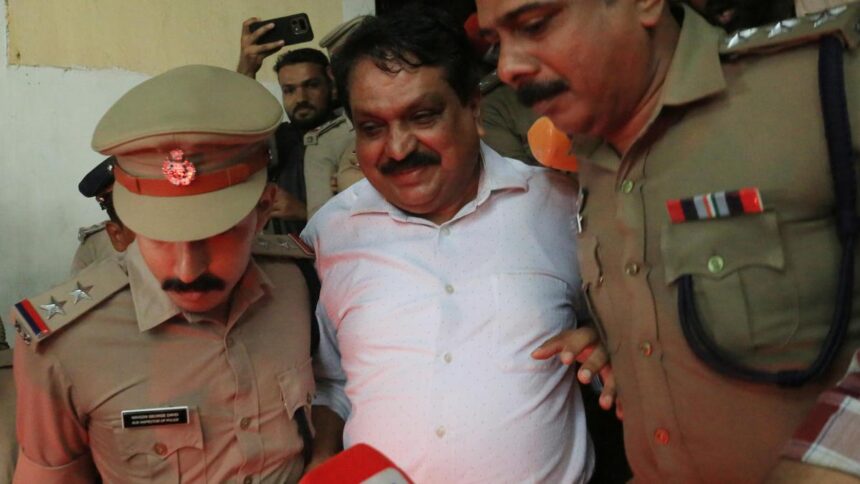



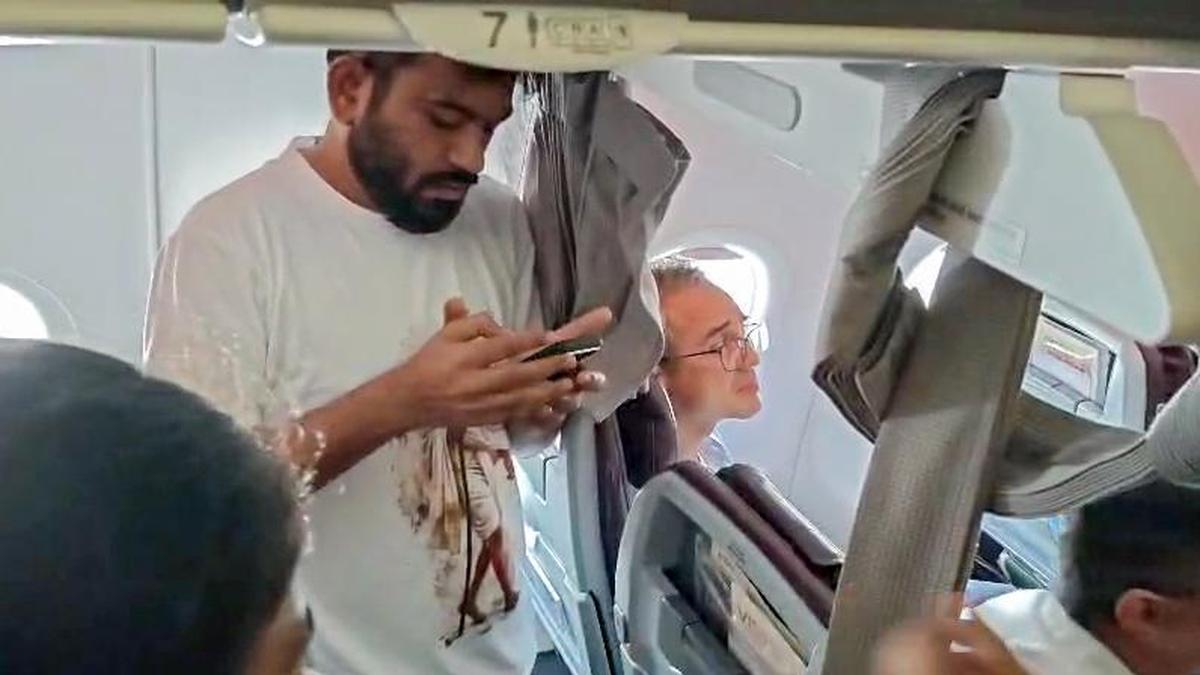


Cockroach Janta Party (CJP) Founder Abhijeet Dipke detained by the Police after the flight landed at IGI Airport, in New Delhi on Saturday, October 10, 2026.
| Photo Credit: ANI
Three Cockroach Janata Party activists Abhijeet Dipke, Saurav Das and Ashutosh Ranka were detained aboard Air India flight AI 2428, after it landed in Delhi on Saturday (October 10, 2026), ahead of the group’s proposed protest at Jantar Mantar, catching even the airline by surprise, it is reliably learnt.
In what airport security personnel described as an unusual move, Delhi Police personnel, accompanied by Central Industrial Security Force (CISF) officials, boarded the aircraft and took the activists into custody from their seats. The CISF is responsible for airport security and access control at most major airports in India.
The flight, which departed Mumbai at 8 a.m. and arrived in Delhi at 10.20 a.m., had its parking bay changed on the instructions of CISF before the aircraft landed. The move took the airline’s security team by surprise.
Air India has now written to the Bureau of Civil Aviation Security (BCAS), seeking clarity on the applicable guidelines in such situations, the circumstances under which police personnel were permitted to board the aircraft and the apparent lack of advance coordination with the airline. According to Aircraft (Security) Rules, 2023, airlines control access to aircraft.

The detentions took place shortly after the aircraft arrived in Delhi, with police informing the activists that permission for their proposed protest had been denied.
As the aircraft taxied in, Delhi Police and CISF officials were already preparing to board the aircraft, with a ramp positioned to facilitate access.
Before boarding, the officials were frisked by Air India security personnel for weapons.
However, the procedure and applicable guidelines governing the entry of police personnel into an aircraft as part of such an operation remain unclear.
Once the aircraft reached the designated parking bay and the ramp was positioned against it, the cabin crew was informed of the security personnel’s presence. The crew, in turn, alerted the commander.
The pilot then asked the passengers occupying seats 7A, 7B and 7C to identify themselves and prepare to disembark. However, security personnel had already reached their seats by then. Multiple security sources said the CISF has access to passenger manifests maintained by airlines.
The sequence of events raises questions about what protocols govern such access, and who is responsible for ensuring coordination between law-enforcement agencies, airport security and the airline?
Air India and Ministry of Civil Aviation have not responded to questions at the time of publication.
Published – October 10, 2026 05:21 pm IST