







In 1984, C.L. Narayana Pillai relocated to Neelankarai from Besant Nagar, leaving behind the familiarity of a house they owned and inhabited for years.
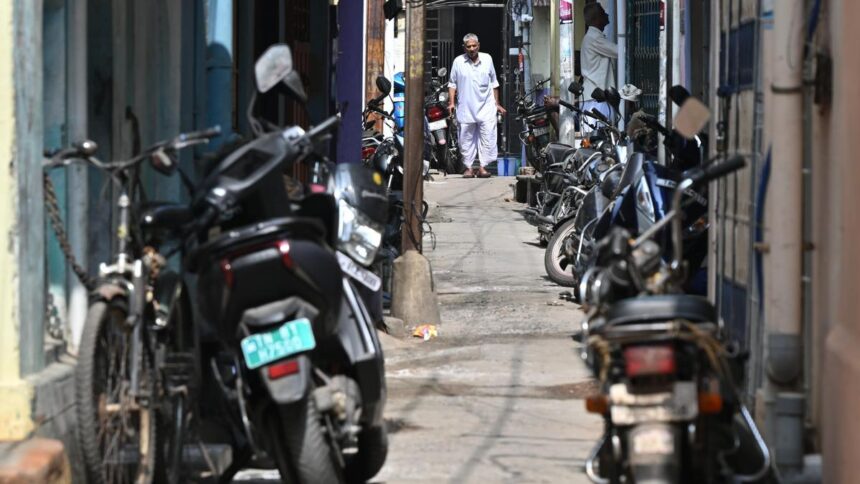
There was a striking starkness to Neelankarai of the 1980s. What passed off as roads were hardly roads. Connectivity by Pallavan Transport Corporation (as MTC was known then) was abysmally poor. Neelankarai lay much beyond the last outpost of Madras, which was Thiruvanmiyur in those days.
Why would Narayana do the unthinkable?
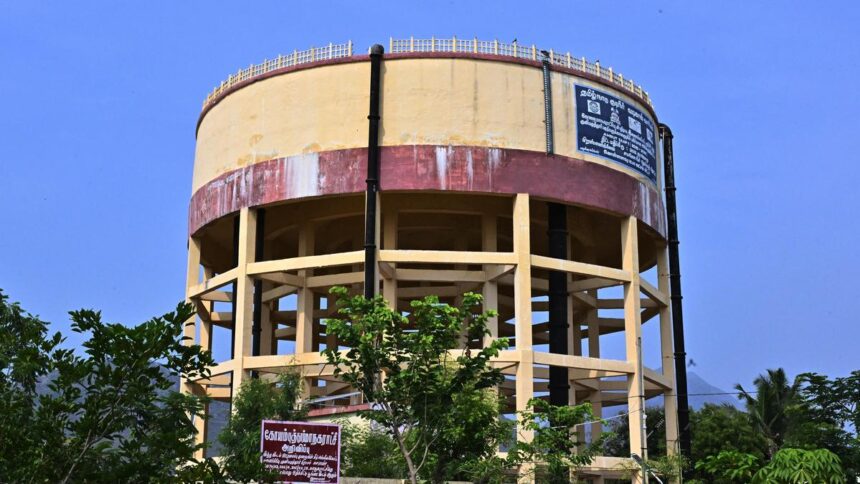
“Although we had our own house in Besant Nagar with sufficient civic facilities to buffer the challenges of everyday living, the high TDS in the groundwater was bothering us. In the three to four visits I made to Neelankarai, I noticed water from the area being transported in lorries to parts lying within Corporation of Madras. I was convinced that the aquifer was good with water being available 10 feet from ground level,” says the engineer who runs his own business at age 72.

During the Republic Day celebration at the Nagar.
Narayana had bought land in an approved layout called Sri Kapaleeswarar Nagar in Neelankarai.
As Sri Kapaleeswarar Nagar in Neelankarai celebrates 50 years of its establishment, long-time residents of the locality cannot but look back on the collective effort that turned the locality into a model colony in Chennai.
The layout had been approved as early as 1975 when the Director of Town and Country Planning Development marked 500-plus plots for sale. Besides its proximity to the beach, there was nothing really striking about investing in this part of the city. Rows of lily ponds, paddy fields and sandy tracks largely defined East Coast Road, even the section close to Madras.
Pocket-friendly plot prices and a gut feeling that this section of the city would develop in the future were a few reasons why a small community of people started building houses in Sri Kapaleeswarar Nagar.
“The layout of the colony showed that the main roads were 40 feet wide and interior streets ranged between 23 and 30 feet in width, which sounded very attractive for the ₹40,000 per ground that I purchased,” says Narayana.

The arch was erected on January 26, 2001 with Sri Kapaleeswarar Nagar Residents Welfare Association funding it.
Karpagam Vasudevan, who came to Sri Kapaleeswarar Nagar as a pre-schooler on a bullock cart, remembers her mother coming to pick them from school in Adyar. “Bus number 19 and 19 Cut were the only two routes then and would be packed. If you miss them, you cannot get back home by bus,” says Karpagam. She also shares memories of residents going on night rounds around the neighbourhood to keep an eye out for burglars.
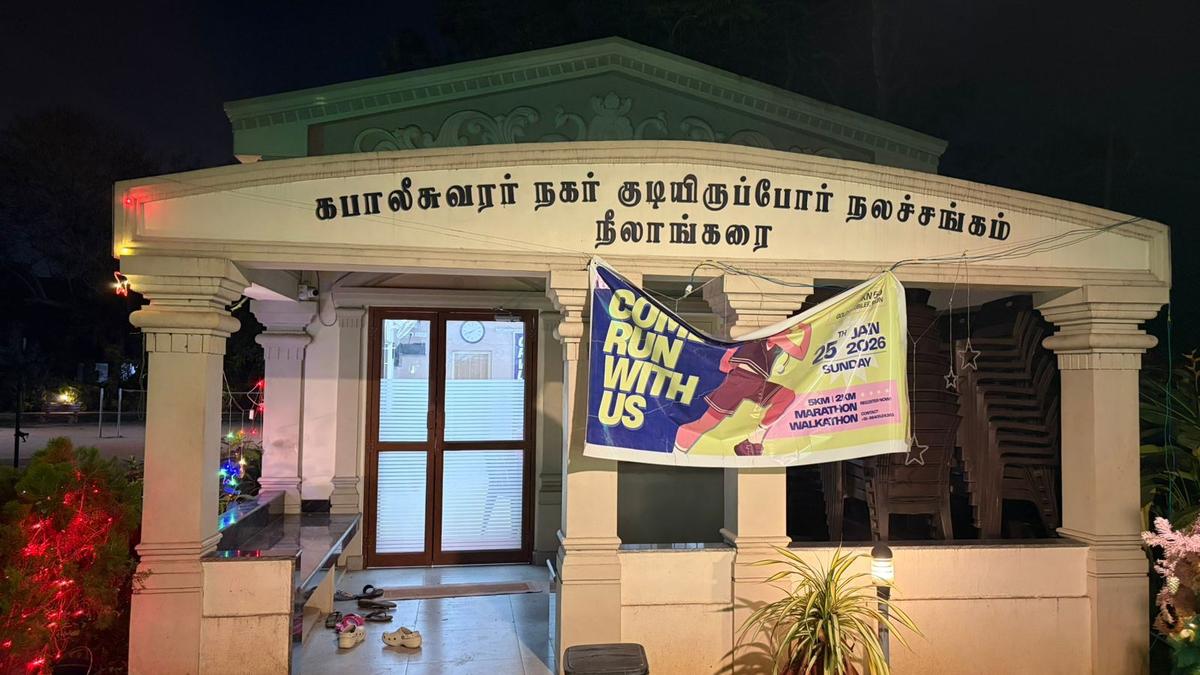
On July 12, 1981, residents came together to form Sri Kapaleeswarar Nagar Residents Welfare Association and registered it under the TN Societies Registration Act 1975. Since then they started to rally together to get basic amenities in the Nagar.
“The Association started with just 12 members,” says Narayana, who served as president of the Association for four terms and is currently its advisor.
Women power

Sowbhagya Ladies Association played an active force for the development of Sri Kapaleeswarar Nagar.
A big rallying point for the RWA was the support they received from Sowbhagya Ladies Association, formed in 1885. From a ‘walking club’, it expanded to take up social and cultural activities that helped improve the Nagar at multiple levels.
Jayalakshmi Rajagopala, 82, who moved to the Nagar in 1982 when her husband, then working with Southern Petrochemical Industries Corporation Limited, and a group of other employees from the company bought plots in this suburb, says that when they started out, they were collecting a monthly subscription of ₹3 from ladies to run a variety of programmes.
Along with Rotary Inner Wheel Club, they improved the Panchayat Union Middle School in the neighbourhood that was running on empty, with insufficient staff strength, so they hired two teachers and paid salaries for them for close to seven years.
Later they expanded to form the Sowbhagya Educational Trust in 1992 where meritorious students from the Panchayat School were given scholarships for higher education.
“Krishnakumari Mallikarjuna Rao and I were invited to join the RWA and for six years we played an active role in the committee,” says Jayalakshmi, adding that the ladies wing ran for close to two decades.
How easy or difficult was it to increase membership those days?
Seventy eight-year-old R. Chandiraseharan, who bought a plot in 1979, says as there were not many houses until the mid-80s people wanted to know each other and do things to make life easy for all.
“As there were no telephone lines, we used to send handwritten circulars informing people about Association meetings. In the early years, as we did not have a community hall, executive committee members would take turns to host the meeting in their house. The AGM was generally held in a school and we had 40-50 people in attendance then,” says the septuagenarian who retired from Ennore Power Plant and served as secretary between 1987 and 1989. He recalls a souvenir brought out during those years that narrated the various challenges residents faced then.
Wagging battles
Starting from getting a pucca road to street lights, the RWA rallied around seeking provision of civic amenities by government line agencies.
In 2019, the RWA along with other associations on ECR fought a bitter battle to oppose stormwater drain project in the area as they felt the permeable sandy soil does not need such a facility.
Residents were successful in getting the burial ground shifted and raising the height of the compound wall around it. Regulating withdrawal of water from the Nagar was another fight residents showed unity. The RWAs efforts to revive ponds in Neelankarai was also highlighted in these pages. Association spearheaded many drives to make the beach stretch clean.

The RWA’s new team took over in August 2025
A model neighbourhood
In 2021, the RWA received the Green Champion Award from the Department of Environment and Forest, Tamil Nadu Government, for its tree-planting exercise that had covered much ground.
With the blessings of the senior residents, the current team has launched a new pickle ball court, tennis court and tennikoit court. Since a majority of residents are senior citizens, meet-ups are held and a newspaper and magazine section has been provided. Many initiatives are being planned to celebrate the golden jubilee year.
Published – January 23, 2026 08:22 pm IST