



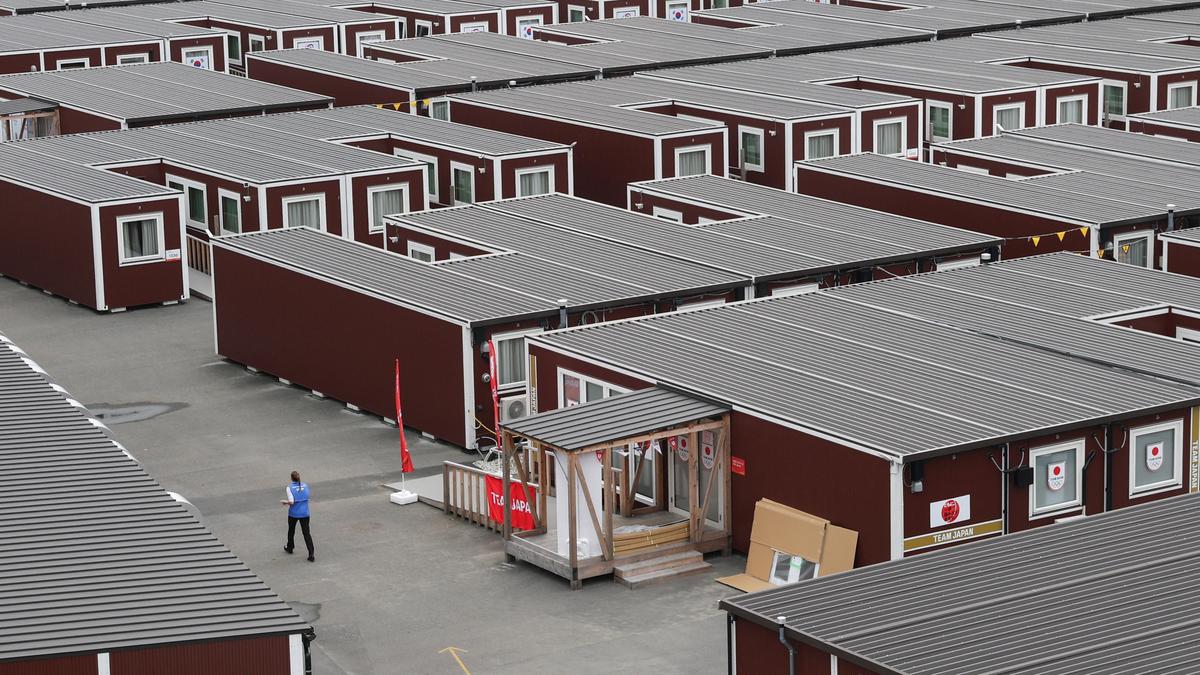


A staff member walks near wooden container units built to house athletes ahead of the Aichi-Nagoya 2026 Asian Games, in Nagoya, Japan, September 15, 2026.
| Photo Credit: Reuters
Don’t litter. Carry your trash until you find a bin. Cover visible tattoos. Queue properly. Use earphones, avoid loud music in public, and do not hug or touch strangers.
As India’s athletes arrive in Nagoya for the Asian Games, they have been briefed on Japanese etiquette. “You are not just travelling to Japan as an athlete; you are representing India. Respect the rules, respect the people, respect the culture,” says a Sports Authority of India video shared with participants.
Deputy Chef de Mission and table tennis great Achanta Sharath Kamal says greater emphasis has been placed on cultural sensitivity this time.
“Japan is very, very strict in terms of how you behave, how you dress and how you manage your waste. There are very few dustbins, but you can’t litter anywhere. You need to carry the trash back to where the dustbin is,” Sharath told Sportstar.
Athletes have also been sensitised about sexual harassment and abuse. “There’s no excuse for it. You can’t touch anybody for any reason,” he said.
Preparation has extended to accommodation. Some athletes will stay in shipping containers and cruise ships, with prototypes set up at national training centres in Bengaluru, Patiala and elsewhere so athletes could experience the limited space beforehand.
Sharath, who has travelled three times to Nagoya in the build-up, says conditions have changed sharply since his first visit last year. “Last year it was 40 degrees and clear skies. This year there have been typhoons… there was flooding a few days back.”
The Games will also be logistically challenging. Unlike Hangzhou, where events were largely centralised, Nagoya’s venues and accommodation are spread across a wide area. Hockey, for instance, will be based near its venue, around 90 minutes from the repurposed Games village.
India has consequently decentralised medical support, with doctors and physiotherapists across locations. It has also pushed for consistent food options, including halal meals and comfort food such as plain daal, and mapped Indian restaurants near athletes’ hotels.
The organisers initially planned four athletes per 12-by-18-foot container but reduced that to two after objections from India and other countries. Boxing weigh-ins have also been moved to the team hotel.
Published – September 16, 2026 06:09 pm IST