



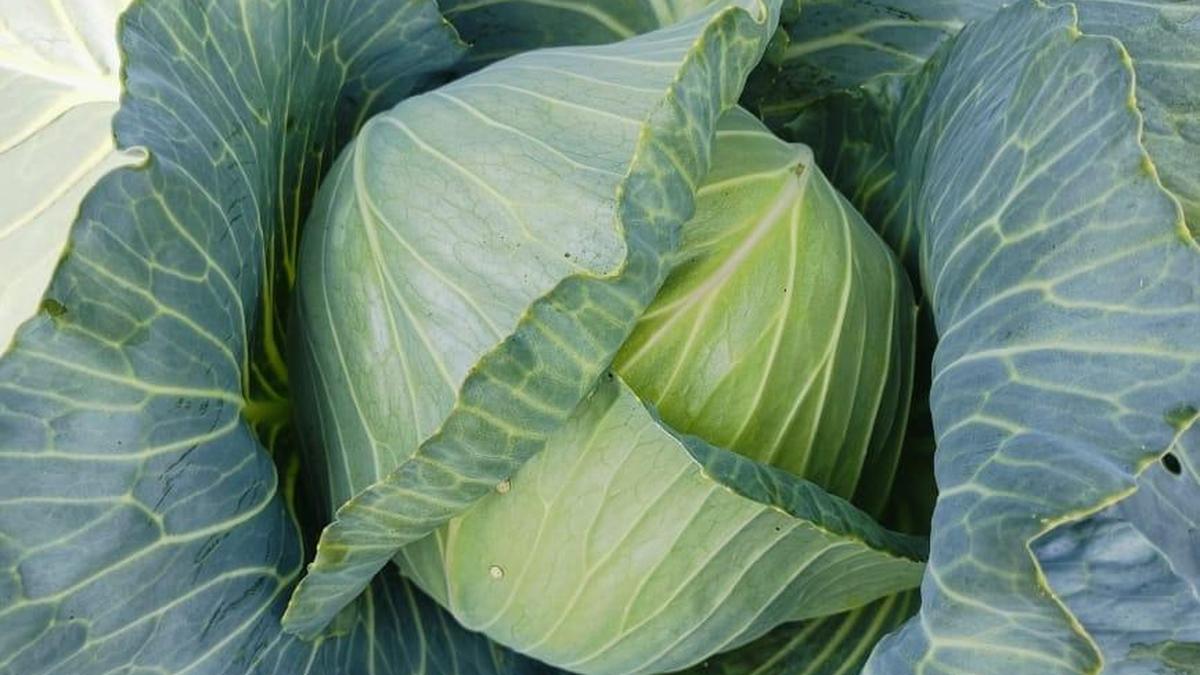

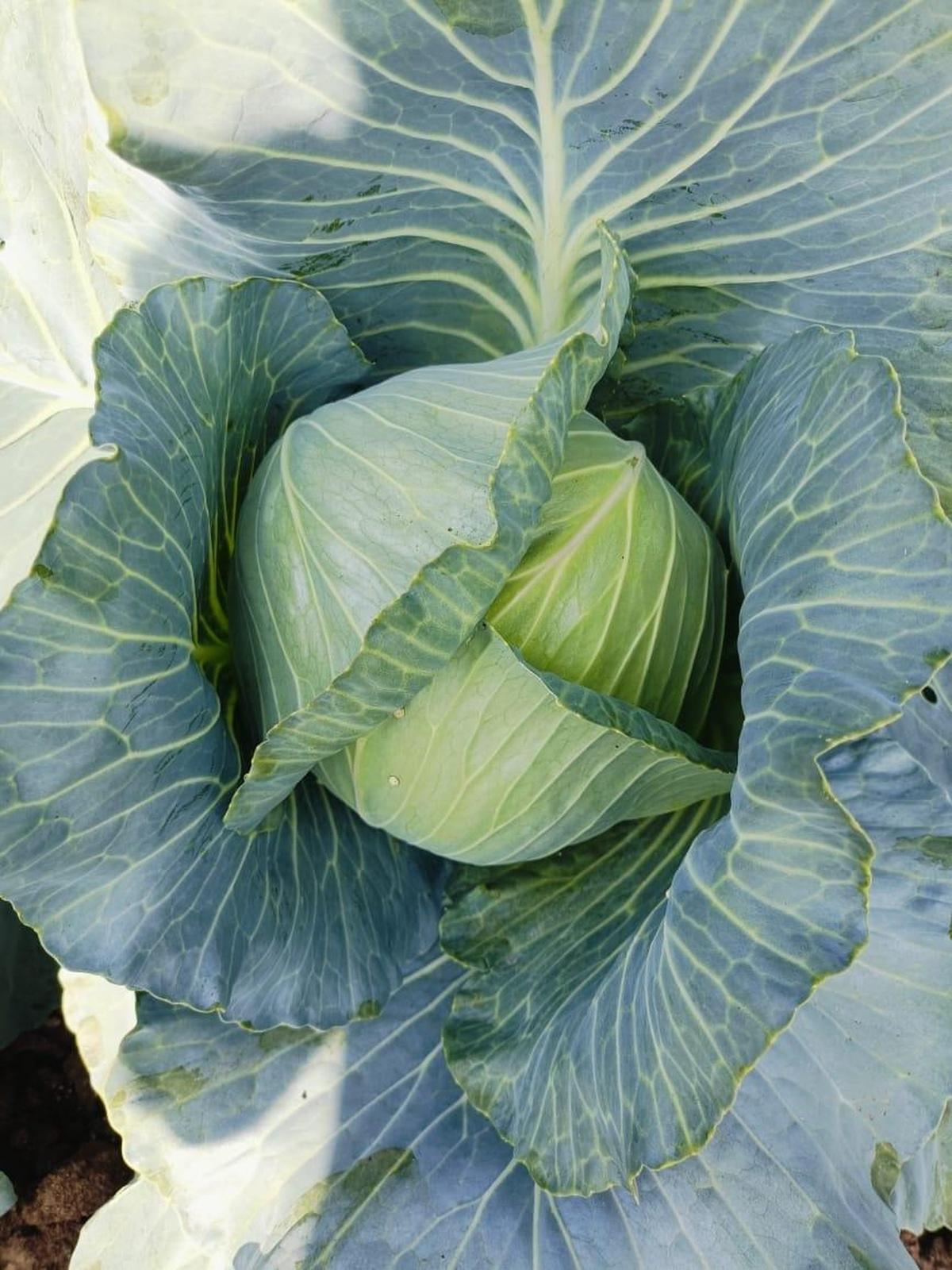
A cabbage crop ready for harvest, but farmers are deeply worried as they are not getting the right price for their produce, in the Thalavadi Hills of Erode district in Tamil Nadu.
| Photo Credit: Special Arrangement.
In an instance underscoring the persistent difficulty faced by farmers in securing remunerative prices for their produce, P. Nandagopal (46), a farmer from Diginarai village in the Thalavadi Hills, was left with just ₹140 as the final payout after selling 5.94 tonnes of cabbage at ₹3 a kg through a commission mandi in Mettupalayam, even as the vegetable is sold at ₹30 to ₹40 a kg in retail markets. Farmers expressed deep concern over the stark disparity between farm-gate and retail prices.
The 90-day crop is extensively cultivated in the hill region, particularly between October and May, when favourable climatic conditions prevail. Traders procure cabbage from cultivators at prices ranging from ₹1 to ₹20 a kg, depending on seasonal availability and market demand, and sell it in markets across Erode, Mettupalayam, and parts of Kerala.
Data from the Department of Horticulture and Plantation Crops show that the area under cabbage cultivation in the hills rose sharply from 78 hectares in 2018–19 to 427 hectares in 2022–23, before declining to 298 hectares in 2023–24, 406 hectares in 2024-25 and 480 hectares in 2025-26 (till January 2026). Despite the expansion in cultivation, most farmers say their financial losses have been mounting each year. Pest infestation, particularly by the diamondback moth, disease incidence, and low prices continue to be major issues. Farmers estimate the cost of cultivation at around ₹80,000 per acre, with pesticide application alone accounting for more than half the expenditure.
On February 1, 2026, Mr. Nandagopal sold 5,940 kg of cabbage, earning ₹17,820. From this amount, he incurred expenses of ₹1,782 towards commission, ₹2,400 for labour, and ₹13,500 for transportation. “After all deductions, the mandi owner transferred only ₹140 to me,” he said.
He explained that yields per acre vary with the season, averaging 10 to 15 tonnes during summer and reaching up to 25 tonnes in winter. “However, citing excess supply and weak demand, farmers are often offered as little as ₹1 to ₹3 per kg,” he said. With about 22,000 plants grown per acre and crops raised on a rotational basis, farmers say input costs continue to rise even as returns remain uncertain.
Farmers alleged that mandi operators and intermediaries make profits throughout the year, while cultivators bear losses of 30% to 50% each season. Shifting to other crops such as maize or sugarcane has also become increasingly unviable due to depleting groundwater levels, labour shortages, and damage caused by wild animals, said a farmer from Doddagajanur. Cultivators spend close to ₹45,000 per acre on pesticide spraying, carried out nine times during the crop cycle, significantly adding to production costs.
S. Kannaiyan, president of the Thalavadi Farmers’ Association, told The Hindu that the growing prevalence of bacterial diseases has compelled farmers to use more pesticides. “There is an urgent need to bring down cultivation costs, and a dedicated vegetable research station should be established in the hill region,” he said. He added that crop diversification was the most viable long-term solution and called for amendments to the Tamil Nadu Hill Areas (Preservation of Trees) Act, 1955, to allow farmers to cultivate timber species.
Published – February 04, 2026 06:47 pm IST