






Coming at a time when society is increasingly seduced by the idea of instant, extra-judicial justice, Meghna Gulzar’s Daayra takes a diagnostic look at the rot within the body politic where ‘encounters’ are routinely packaged and sold as desperate acts of self-defence, and a frustrated public gleefully buys it for the wheel of justice is excruciatingly slow.
Heavily informed by the details and fallout of the 2019 Hyderabad case, the film takes away the sensationalised, high-octane tropes synonymous with Bollywood police procedurals that have long normalised law enforcement officers becoming a law unto themselves.

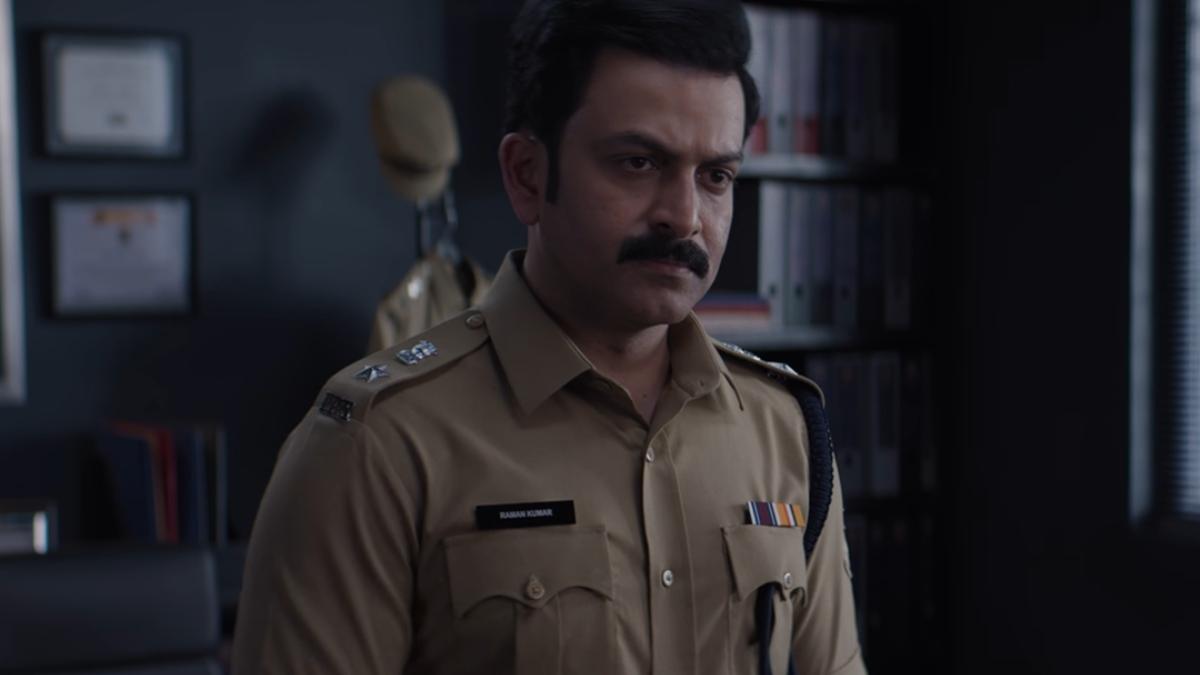
Following the brutal assault on a young girl, DCP Raman Kumar (Prithviraj Sukumaran) delivers immediate, lethal retribution to the suspects under the guise of an ‘encounter’, igniting public euphoria. However, when the Human Rights Commission takes note, the State launches an internal investigation led by the DCP Ajooni Kohli (Kareena Kapoor Khan).

Kareena Kapoor Khan in ‘Daayra’
| Photo Credit:
Pen Movies/YouTube
The setup frames the central moral conundrum between the slow wheels of institutional justice and the immediate catharsis of uniformed vigilantism. By juxtaposing the efficiency of Raman’s methods against Ajooni’s allegiance to the book, Meghna refuses easy moral absolutes, instead probing the terrifying grey area where the line between justice and vengeance blurs.
Daayra (Hindi)
Director: Meghna Gulzar
Duration: 143 minutes
Cast: Prithviraj Sukumaran, Kareena Kapoor Khan, Jitendra Joshi, Kshitee Jog, Kanwaljeet Singh
Synopsis: When a controversial police encounter eliminates four heinous crime suspects, a strict vigilance officer is tasked with probing the incident.
Structurally, Meghna, who knows how to walk the Talvar’s edge between objective reportage and cinematic drama, adopts the clinical neutrality of a news report, meticulously presenting competing viewpoints with near-journalistic detachment.
Early in the narrative, she systematically details the flaws within the machinery of justice, pointing out how privileged lawbreakers receive premium treatment while safely behind bars. Though the narrative eventually stays on the surface of the guilt of the accused youngsters, the writers(Meghna along with Sima Agarwal and Yash Keswani) use the scene where a police officer serves avocado toast to an inmate having spa treatment in a cell to draw a link with a deeply disturbing truth where the public and the police are far quicker to demand and execute instant justice when the accused lack social capital, wealth, or legal resources. She methodically checks how petty jurisdictional disputes and stereotypes about young working women lead to deliberate delays in police response and how the expansion of isolated expressways with moody CCTV networks has left vulnerable scooterists exposed to roadside crime.
Most critically, drawing links with the juvenile offender in the Nirbhaya case, she confronts the fault lines in the juvenile justice system at a time when minors are increasingly found complicit in heinous crimes.

Biswapati Sarkar and Prithviraj Sukumaran in ‘Daayra’
| Photo Credit:
Pen Movies/YouTube
Yet, despite this guise of a balanced, objective lens, the narrative subtly tips toward Raman, giving the impression that it is soft-pedaling the biases it sets out to critique. By granting Raman’s deep frustration the heavier share of dramatic momentum and affective resonance, the film quietly validates the fury behind his lawless crusade, even as it pretends to document it merely. Meghna hints at the mental instability of the main accused but then skims it, inadvertently creating a blind spot in its own debate.
As for the craft, the tight first hour moves with the clinical efficiency to build an airtight case for its ideological conflict. However, the editorial pacing stumbles in the second half, making the climax feel more like an over-deliberated deposition.
The screenplay’sgrounded realism suffers when the writing loses faith in its own imagery, and the characters begin clumsily spelling out the subtext. Kareena’s unusually relaxed, detached demeanour comes across as less like a calculated character choice and more like a narrative void. At one point, it seems Geet joined the vigilance department after Jab We Met. In an attempt to subvert the aggressive, loud Bollywood lady-cop stereotype, the screenplay swings too far in the opposite direction, stripping Ajooni of clear internal conflict and urgency.
It is telling that Prithviraj and Jitendra Joshi get the meat of the dialogues, leaving Kareena with little room to push back structurally.By arming Raman and his allies with the film’s most eloquent, emotionally charged rhetoric, the screenplay inadvertently stacked the deck. While Prithviraj delivers his lines with a terrifying, low-register conviction, Kareena is left defensively quoting protocol. Ultimately, Daayra may not completely redraw the circle of public conscience, but it possesses more than enough friction to nudge a broken system and a reactionary public to stop, look within, and take note.
Daayra is currently running in theatres.
Published – September 18, 2026 06:27 pm IST