








Delhi is rolling out a strategy to tackle winter air pollution weeks before the onset of seasonal smog, with measures including curbs on construction and work-from-home arrangements, as the city shifts from sudden emergency shutdowns to planned restrictions.
The measures, which will take effect from November 1, 2026, include a ban on dust-generating construction, a 50% work-from-home arrangement and restrictions on older, more polluting vehicles registered outside Delhi. The city will also double parking charges and step up enforcement against vehicles without valid pollution certificates. The measures will remain in force until January 31, 2027.
Delhi’s winter action plan
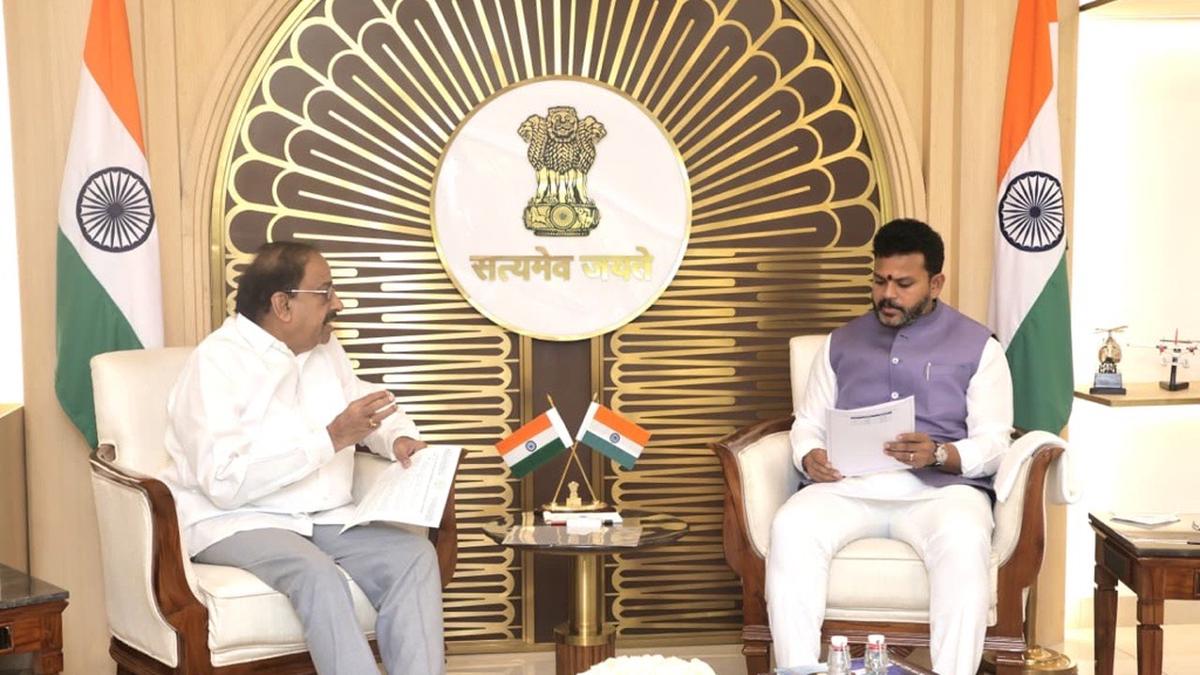
Union Environment Minister Bhupender Yadav and Delhi Chief Minister Rekha Gupta met on Monday (September 28, 2026) to review preparations and finalise measures under the city’s permanent Winter Pollution Master Plan, according to a government statement. The restrictions will remain in force from November 1, 2026, to January 31, 2027.
The fixed calendar aims to give residents and businesses more notice than the existing Graded Response Action Plan, which imposes restrictions as pollution levels worsen. The earlier approach to tackling toxic air often resulted in sudden construction halts, traffic restrictions and operational changes for businesses with little advance notice.
The meeting also called for coordinated action with neighbouring States to curb crop-residue burning, a major contributor to Delhi’s winter smog. Authorities across the National Capital Region have been asked to finalise their plans by October 10, 2026.
Every winter, falling temperatures trap vehicle exhaust, industrial emissions and smoke from crop-residue burning over the National Capital Region, worsening Delhi’s air quality. The World Bank has warned that severe air pollution can deter foreign investment and skilled workers.
Vehicle entry restrictions in Delhi
Officials announced that Delhi will restrict the entry of vehicles registered outside the national capital that do not meet BS-VI emission standards from November 1, 2026. CNG and electric vehicles will be exempted.
The Delhi Chief Minister’s Office said that vehicles that have completed their prescribed lifespan, 15 years for petrol vehicles and 10 years for diesel vehicles, will not be provided fuel at filling stations.
“From October 1, a special awareness and enforcement campaign will begin at all 500 petrol pumps in Delhi equipped with Automatic Number Plate Recognition systems. Vehicles without a valid Pollution Under Control Certificate (PUCC) and those that have completed their prescribed lifespan will not be provided fuel,” the CMO statement said.

‘No PUCC, No Fuel’ drive
The government is also stepping up enforcement against vehicular pollution. The ‘No PUCC, No Fuel’ drive will cover all 500 fuel stations in Delhi equipped with Automatic Number Plate Recognition (ANPR) systems, with action planned against stations that violate the requirement.
Enforcement against end-of-life vehicles will also be strengthened through ANPR-based systems, while the functioning of ANPR cameras will be checked.
Around 2.5 lakh vehicles will undergo fitness checks at three automated testing stations, which currently have a combined capacity to test 2.44 lakh commercial vehicles annually.
Work-from-home plan
As part of efforts to ease peak-hour traffic, staggered office timings and a 50% WFH arrangement have been planned during the winter pollution period. Government and private offices can allow up to 50% of their employees to work from home during the winter season.
Municipal Corporation of Delhi offices will function from 8.30 a.m. to 5 p.m., while Delhi government offices will operate from 10 a.m. to 6.30 p.m., according to the press briefing.

Essential services, including healthcare, emergency services, public transport, power, water and sanitation, will remain exempt.
Parking charges at authorised parking sites will be doubled, except at facilities owned and managed by the Delhi Metro Rail Corporation. Office timings will also be staggered to reduce traffic congestion.
Ban on construction activity
The plan provides for a complete ban on construction and demolition activity from December 10, 2026, to January 20, 2027, while dust-generating demolition and outdoor civil construction will be prohibited from November 1, 2026, to January 31, 2027.
Cement-concrete works are targeted for completion by October 31, 2026, and bitumen works by November 15, 2026.
Construction sites will be monitored through the Delhi government’s Dust Portal, including through cameras and sensors. Anti-smog guns and mist-suppression systems will also be required at major construction sites.
Dust mitigation, redeveloping roads
As part of dust-mitigation measures, the government plans end-to-end paving of footpaths, with a focus on walkability, while accelerating road redevelopment.
The government had set a target of redeveloping 3,065 km of roads in 2026, of which 1,193 km has been completed.
Delhi Environment Minister Manjinder Singh Sirsa said tackling the capital’s air pollution would require coordinated action across the NCR, as pollution does not remain confined to administrative boundaries.
Public transport
On public transport, Mr. Sirsa said Delhi currently has 5,088 electric buses and another 150 will be added to the fleet. Delhi’s total bus fleet has reached 6,840, while last-mile connectivity is available at all 228 Metro stations.

The government has set a target of increasing average daily Metro ridership from 65 lakh to 72 lakh and Delhi Transport Corporation ridership from 37 lakh to 42 lakh.
Mr. Sirsa also urged residents to use public transport, keep their PUCCs valid, avoid open burning and report pollution-related violations through the 311 helpline or the Green Delhi app.
Action against polluting industries
Industrial enforcement will be strengthened through an AI-enabled command-and-control centre, according to an official announcement.
The government is also stepping up action against polluting industries, particularly units involved in tyre and e-waste burning. Mr. Sirsa said action was being taken against industries violating pollution-control norms and that buildings found to be involved in polluting activities could be sealed.

Between December 1, 2025, and September 26, 2026, action was taken against around 1.15 lakh units, of which 2,283 were sealed, Mr. Sirsa said.
Pollution hotspots
The government will install 60 continuous air quality monitoring stations, up from 47, and deploy 334 enforcement teams. Between December 2025 and September 26, 2026, 11,271 industrial units were surveyed, with 2,283 polluting units closed or sealed.
The government is also focusing on areas with high Air Quality Index (AQI) levels and traffic-congestion hotspots. The plan provides for weekly inspections of hotspots, citizen reporting of local pollution problems, a new portal for public suggestions, daily evening AQI bulletins and coordinated action with NCR cities under an airshed approach.
Under the plan, public representatives will regularly visit Delhi’s traffic hotspots along with officials, Residents’ Welfare Associations, traders and traffic police personnel.
So far, 42 hotspots have been rectified, with eight more targeted for October. In consultation with the Delhi Traffic Police, one-way traffic and decongestion trials will also be undertaken at identified hotspots.
Technology-led monitoring will be strengthened through an AI-enabled command-and-control centre for integrated monitoring. The government will deploy 334 enforcement teams, comprising 256 ward-level teams and 78 Delhi Pollution Control Committee teams, supported by pan-tilt-zoom (PTZ) cameras and geo-tagged, time-stamped monitoring.