





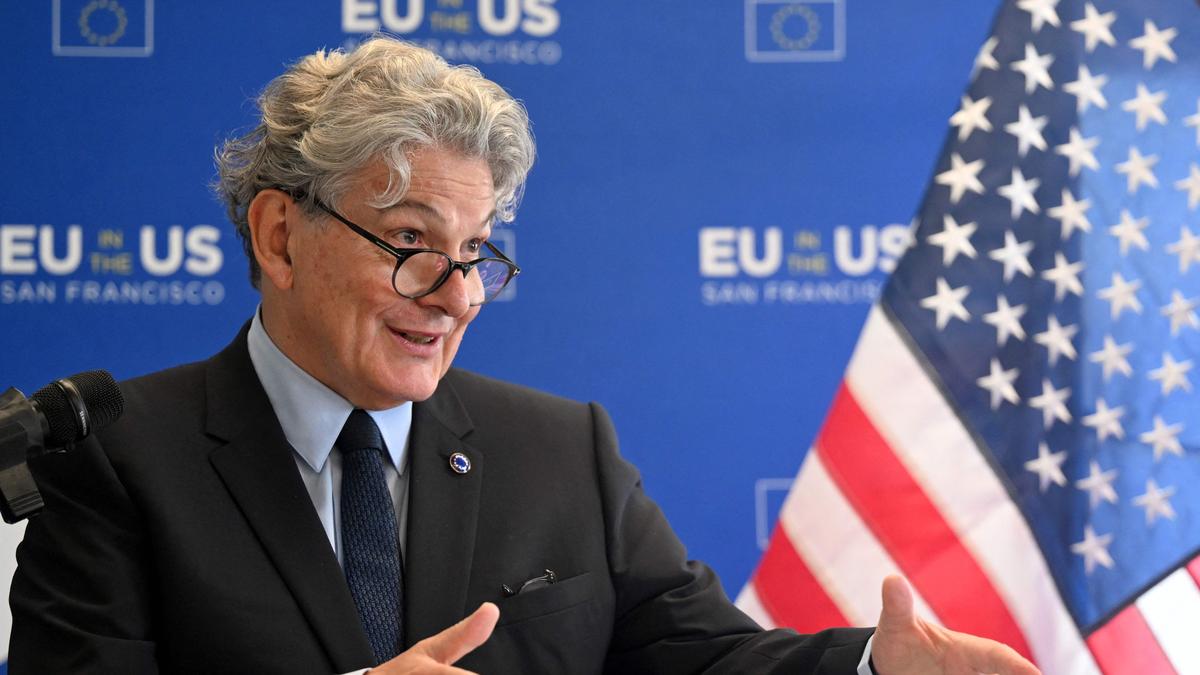

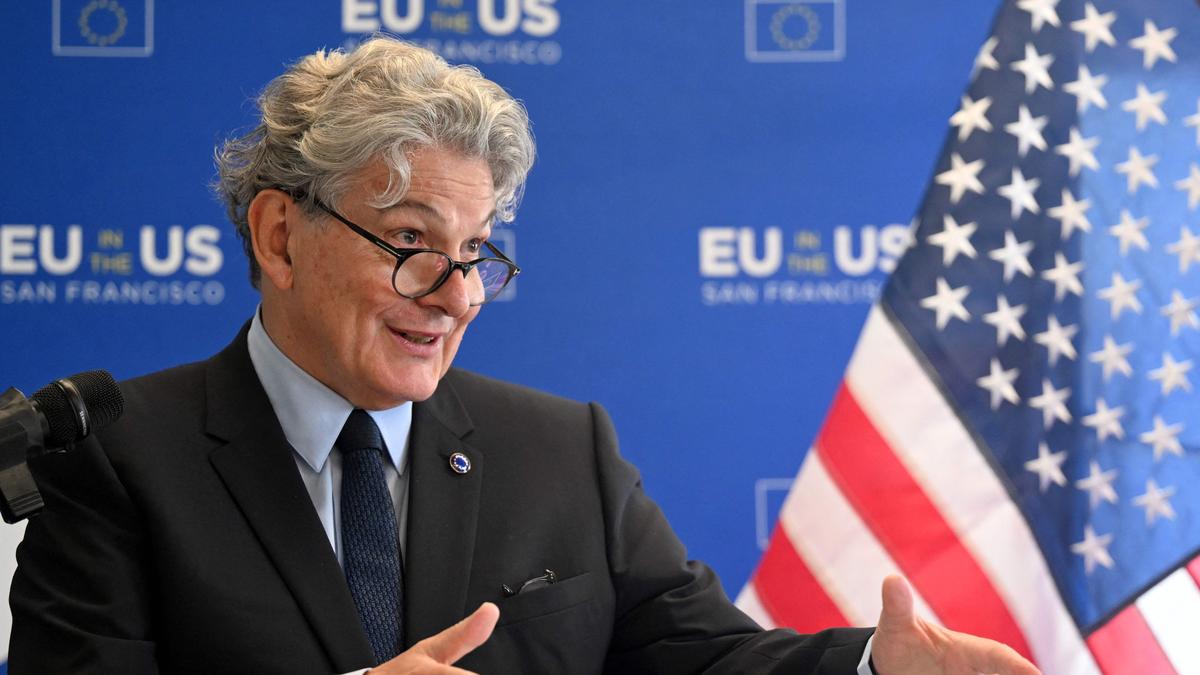
European Commissioner for Internal Market Thierry Breton. File
| Photo Credit: AFP
The European Union and some member States reacted sharply Wednesday (December 24, 2025) to U.S. sanctions imposed on five European figures involved in regulating tech companies, including former European commissioner Thierry Breton.
They were responding after the U.S. state department announced Tuesday (December 23) it would deny visas to the five, accusing them of seeking to “coerce” American social media platforms into censoring viewpoints they oppose.
France, Germany and Spain also condemned the news from Washington.
A statement from the Commission said: “We have requested clarifications from the U.S. authorities and remain engaged. If needed, we will respond swiftly and decisively to defend our regulatory autonomy against unjustified measures.
“Our digital rules ensure a safe, fair, and level playing field for all companies, applied fairly and without discrimination.”
Mr. Breton, the former top tech regulator at the European Commission, often clashed with tycoons including Elon Musk over their obligations to follow E.U. rules.
The state department has described him as the “mastermind” of the European Union’s Digital Services Act (DSA), which imposes content moderation and other standards on major social media platforms operating in Europe.
The DSA stipulates that major platforms must explain content-moderation decisions, provide transparency for users and ensure researchers can carry out essential work, such as understanding how much children are exposed to dangerous content.
But the act has become a bitter rallying point for U.S. conservatives who see it as a weapon of censorship against right-wing thought in Europe and beyond, an accusation the E.U. furiously denies.
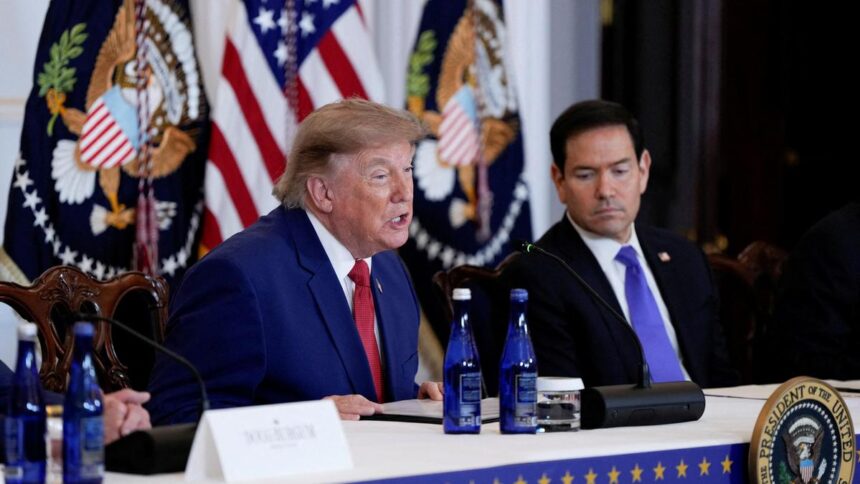
“The Trump Administration will no longer tolerate these egregious acts of extraterritorial censorship,” U.S. Secretary of State Marco Rubio said in a post on X Tuesday (December 23).
‘Intimidation and coercion’
French President Emmanuel Macron said on X: “France condemns the visa restriction measures taken by the United States against Thierry Breton and four other European figures.”
“These measures amount to intimidation and coercion aimed at undermining European digital sovereignty,” he added, saying Europe would defend its “regulatory autonomy”.
German Foreign Minister Johann Wadephul wrote in a post on X Wednesday (December 24): “The DSA was democratically adopted by the EU for the EU — it does not have extraterritorial effect.
The visa bans, he added, “are not acceptable”.
Spain’s foreign ministry also condemned the U.S. measures, saying in a statement: “A safe digital space, free from illegal content and disinformation, is a fundamental value for democracy in Europe and a responsibility for everyone.”
Mr. Breton himself described the latest measures as a political “witch hunt” in a post on X: “To our American friends: ‘Censorship isn’t where you think it is’.”
Mr. Breton left the commission in 2024 and Stephane Sejourne, his successor in charge of the E.U.’s internal market, said on X that “no sanction will silence the sovereignty of the European peoples”.
The visa ban also targeted Imran Ahmed of the Center for Countering Digital Hate, a nonprofit that fights online misinformation; and Anna-Lena von Hodenberg and Josephine Ballon of HateAid, a German organisation that the state department said functions as a trusted flagger for enforcing the DSA.
Clare Melford, who leads the UK-based Global Disinformation Index (GDI), was also on the list.
A statement from HateAid called the U.S. government decision an “act of repression by an administration that increasingly disregards the rule of law and tries to silence its critics with all its might”.
A GDI spokesperson said the measures were “an egregious act of government censorship” as well as “immoral, unlawful, and un-American”.
Published – December 24, 2025 10:25 pm IST