





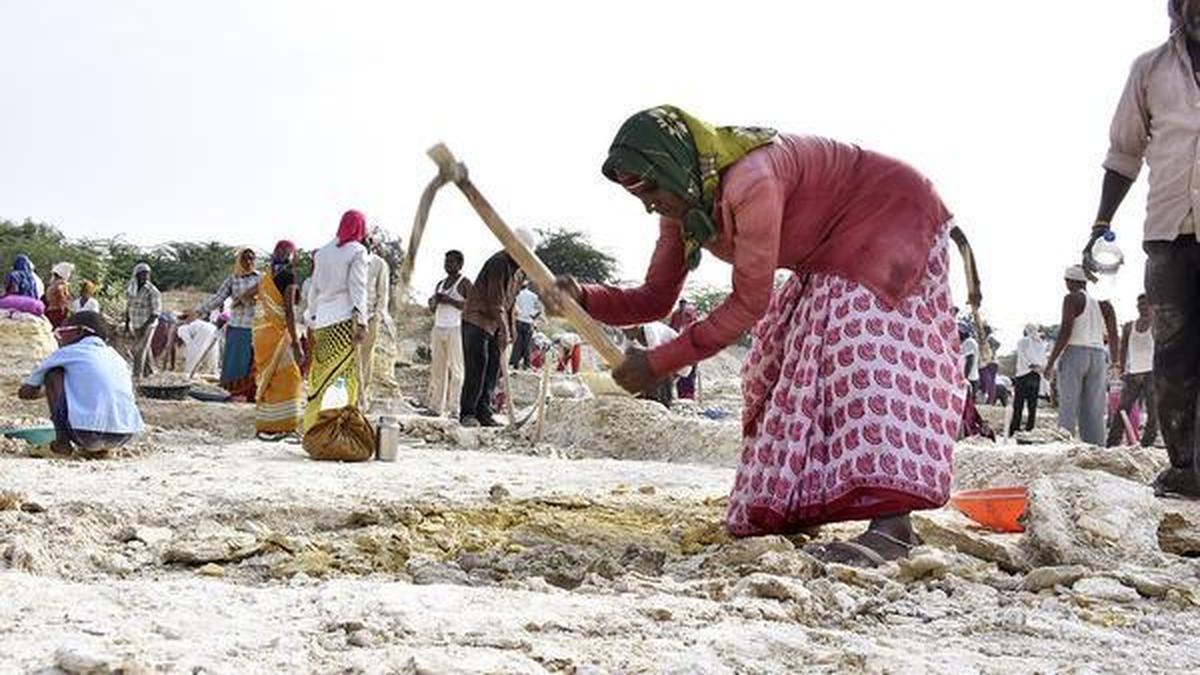


VB-G RAM G (Viksit Bharat – Guarantee for Rozgar and Ajeevika Mission) is India’s rural employment framework, Replacing the older MGNREGA model, which provides a statutory guarantee of 125 days of wage employment per rural household. File
| Photo Credit: ARUN KULKARNI
Uncertainty continues for Adivasi households holding Forest Rights Act (FRA) titles, who were entitled under the Mahatma Gandhi National Rural Employment Guarantee Act (MGNREGA) to an additional 50 days of work over and above the 100-day annual guarantee under the UPA-era law. The new rural employment programme, the Viksit Bharat-Guarantee for Rozgar and Ajeevika Mission (Gramin) Act (VB-G RAM G), which was rolled out on July 1, is yet to issue a notification clarifying the status of this entitlement.
In a reply dated October 6 to an application under the Right to Information Act filed by Chakkradhar Buddha of the National Campaign for People’s Right to Information (NCPRI), the Rural Development Ministry said that “no separate order, circular or guideline prescribing any additional wage employment entitlement for FRA title holders under VB-G RAM G has been issued as on date”.

The VB-G RAM G Act, 2025, guarantees 125 days of wage employment per rural household in a financial year. It has no separate tier for FRA title holders. Section 5(4) states that the Centre or a State government may provide work beyond the guaranteed days within the limits of its economic capacity. The provision is discretionary and names no specific group. Section 7 allows the Centre, on a State’s recommendation, to grant relaxations during natural calamities, including enhanced wage-employment provisioning.
In the absence of such a notification, uncertainty continues over whether Adivasi households holding FRA titles will receive only 125 days of guaranteed employment, on a par with other beneficiaries across the country, or 175 days, including the additional 50 days of employment available to them under MGNREGA.
Sources in the Ministry said the government would shortly be issuing a notification approving an additional 50 days of work.
“As there are six more months still available in the financial year, FRA beneficiaries can easily avail of the additional 50 days anytime during this period after completing 125 days,” a senior Ministry official said.

Under MGNREGA, the additional entitlement began only in January 2014. An additional 50 days of guaranteed work had first been introduced for drought-prone areas in 2012. Even during the UPA regime, it took at least two years of deliberations within the government before the additional guaranteed work was approved.
The implementation of this additional entitlement has also remained patchy. Even in States with a high number of FRA title holders, such as Chhattisgarh, not all eligible beneficiaries receive the entitlement. Andhra Pradesh is the only State that has performed relatively well compared with other States.

Data available with the Union Rural Development Ministry for 2025-26 reveal that under MGNREGA, only 15% of the 14 lakh households eligible for 150 days of work availed themselves of the benefit. Odisha had the highest number of registered households at 3,72,089, of which 71,696 availed themselves of the additional days.
Chhattisgarh had 3,20,651 registered households and 36,716 beneficiaries; Madhya Pradesh had 2,21,674 registered households and 29,065 beneficiaries; Andhra Pradesh had 1,70,851 registered households and 36,008 beneficiaries; Tripura had 1,08,532 registered households and 22,251 beneficiaries; and Maharashtra had 96,559 registered households and 8,063 beneficiaries. These six States account for 12.9 lakh of the registered households.

Mr. Buddha said the delay was deeply concerning. “Thousands of households have already exhausted their employment quota. These households include some of the most vulnerable communities, with limited access to secure livelihoods and employment. Ensuring the additional 50 days would help translate this priority into meaningful support for developing their land for agriculture and strengthening their livelihood security,” he said.
Published – October 14, 2026 08:15 pm IST