







India always looks at the Ganga treaty as a bilateral treaty but in the lean months it receives a lot of snowmelt from Nepal’s Ghaghara, Gandaki, and Koshi rivers; they also need to be monitored if we have to care for the Ganga,” Mr. Chowdhury said. Image for representation only
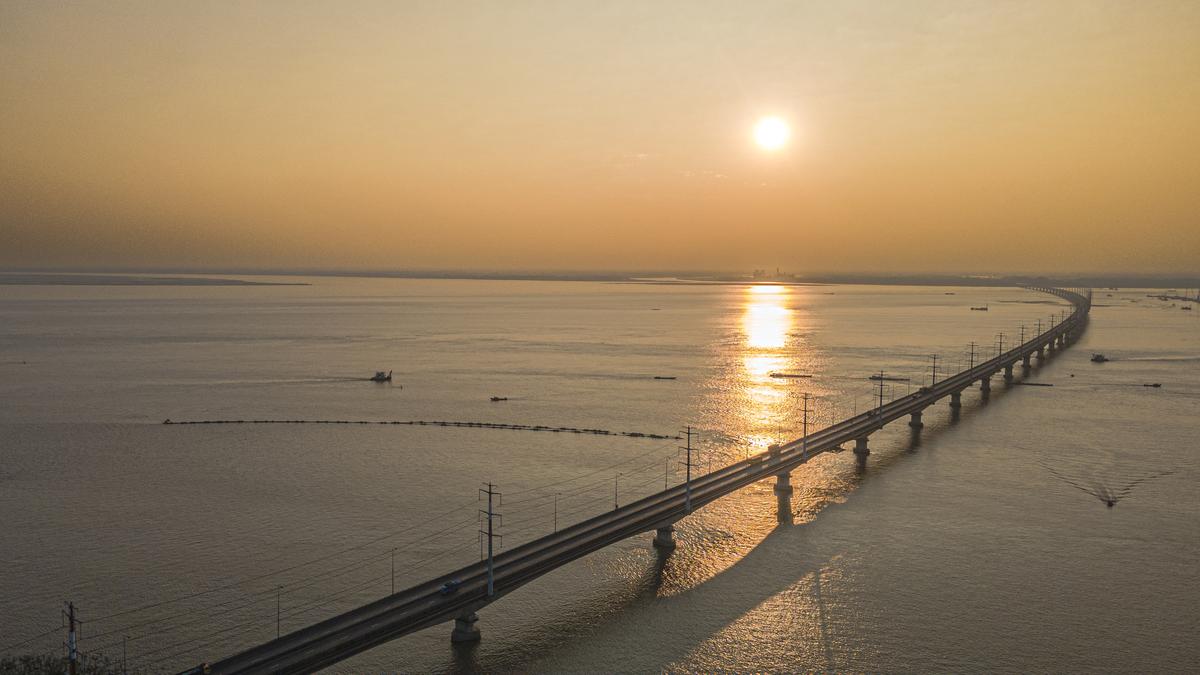
| Photo Credit: Getty Images/iStockphoto
DHAKA
The 1996 India-Bangladesh Ganga Water Treaty is “flawed” as it lacks a guarantee clause and does not account for factors like climate change impact, a leading Bangladesh river water expert has said. Speaking to The Hindu on Tuesday (October 6, 2026), Manjur A. Chowdhury, former Chairman of the National River Conservation Commission (NRCC) of Bangladesh said the Treaty will expire in December and should be replaced by a short-term treaty of three years. This should be followed by a better researched trilateral treaty that also brings in Nepal since that nation’s rivers carry Himalayan snowmelt to the Ganga.
“The Ganga Water Treaty is three decades old and flawed as it does not include a guarantee clause. It also does not have ecological flow and environmental flow considerations. In addition, the treaty does not include factors that are related to climate change. It simply divides the water of the river. That is not a right approach,” said Mr. Chowdhury who believes that the Ganga Water Treaty should include Nepal. A good treaty, he added, should take into account the “health of the river” so that the Ganga is not overexploited.
“Before the treaty’s expiry in December this year, ideally, we should opt for a short-term treaty of three years during which time we will conduct further research and negotiations to draft a new and lasting Ganga Water Treaty that will incorporate technological and environmental developments,” said Mr. Chowdhury, speaking exclusively to The Hindu.
Treaty expires in December
“India always looks at the Ganga treaty as a bilateral treaty but in the lean months it receives a lot of snowmelt from Nepal’s Ghaghara, Gandaki, and Koshi rivers; they also need to be monitored if we have to care for the Ganga,” Mr. Chowdhury said. He argued that the Ganga water treaty requires a fresh approach as environmental factors of the twenty-first century will have to be considered while drafting the text of the treaty. His comments came a day after he made similar remarks at a conclave in Dhaka calling for a fresh treaty. The Ganga Water Treaty will expire in December this year unless the two sides agree to renew the treaty for another three decades.
Earlier, former Foreign Secretary Farooq Sobhan, who had negotiated the treaty during the first prime ministerial tenure of Sheikh Hasina in 1996 said that the absence of an arbitration clause is a problem for the treaty. Speaking with The Hindu, Mr. Sobhan further said that there are unfulfilled Indian promises related to the Ganga Water Treaty that will have to be revisited. “India had promised to build a barrage for Padma (Ganga) in Bangladeshi territory at that time, but it was not followed up. That was the quid pro quo for not including the arbitration clause. But that barrage was not built,” said Mr. Sobhan. He added that Bangladesh carried out surveys in the 1990s regarding the building of a barrage but did not receive the help it needed. Discussions on the renewal of the Ganga Water Treaty have been ongoing in both India and Bangladesh though important technical consultations are yet to be held ahead of the expiry in December this year. Earlier JD(U) MP Sanjay Jha had called on the Government of India not to renew the Ganga Water Treaty saying that the treaty with Bangladesh had “negatively impacted” Bihar.
Subsequently, External Affairs Minister S. Jaishankar had written to Mr. Jha on August 28, “We fully understand your concerns regarding the Ganga Water Treaty. I would like to bring to your attention that under the leadership of the Jal Shakti Ministry, inter-ministerial consultation involving relevant stakeholders have taken place to ensure broad-based consultation on the future of the treaty.”
(The Correspondent was in Dhaka as the guest of Centre for Governance Studies (CGS) to participate in the Bay of Bengal Conversation.)
Published – October 06, 2026 10:49 pm IST