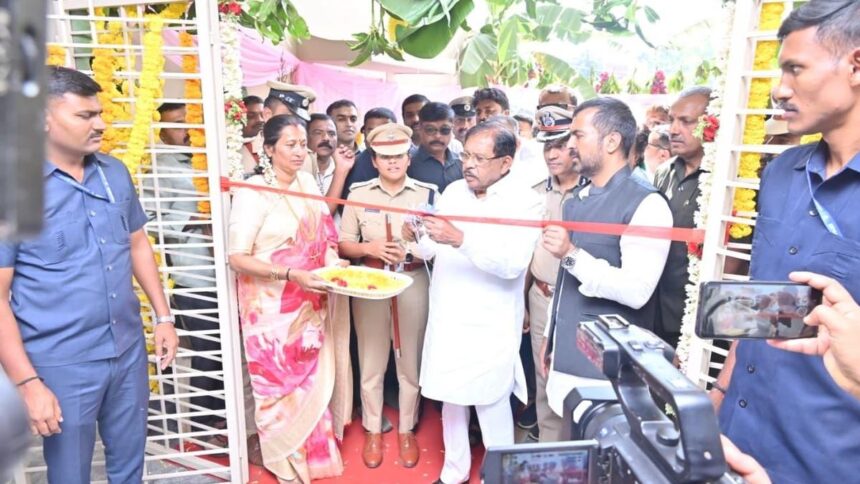





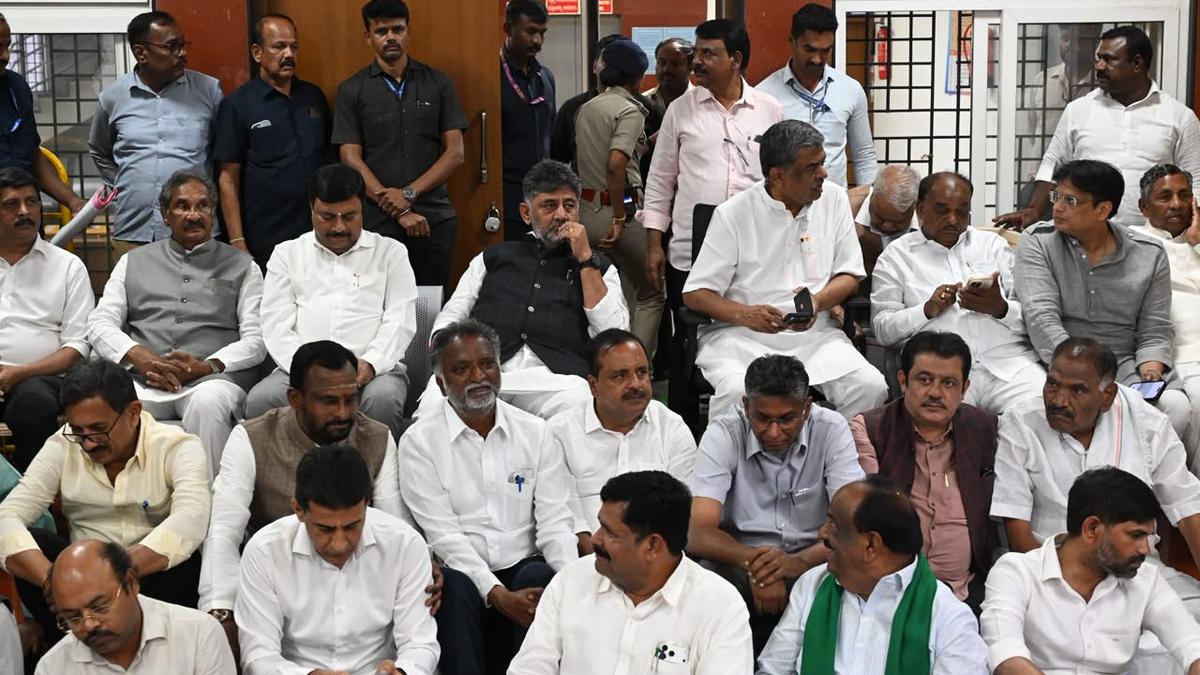


CM D.K. Shivakumar, along with his entire cabinet of ministers, stages a protest outside the office of the Karnataka Chief Electoral Officer in Bengaluru, against bulk filing of Form-7s seeking deletion of Muslim voters from the draft rolls during SIR.
| Photo Credit: Allen Egenuse J.
1. Three FIRs over bulk Form-7s in Karnataka, CM demands ECI probe; BJP responds
Karnataka’s Chief Minister D.K. Shivakumar has demanded a ‘thorough inquiry’ by the Election Commission of India (ECI) into what he alleged was ‘BJP workers’ filing Form-7s in bulk seeking deletion of names of people who have made it to the draft voter rolls during the ongoing Special Intensive Revision (SIR).
The Karnataka Police have filed three FIRs — two in Belagavi and one in Bhalki — over submission of Form-7s in bulk. Sources said that more FIRs are likely to be filed.
Following a press conference, the CM later led a delegation comprising his entire Cabinet of Ministers to the office of the Karnataka Chief Electoral Officer (CEO) in Bengaluru to lodge a complaint. The protesting leaders said they would not leave the premises till a probe is ordered.
2. Massive markup on high-cost drugs: Raids to continue, Karnataka writes to Centre
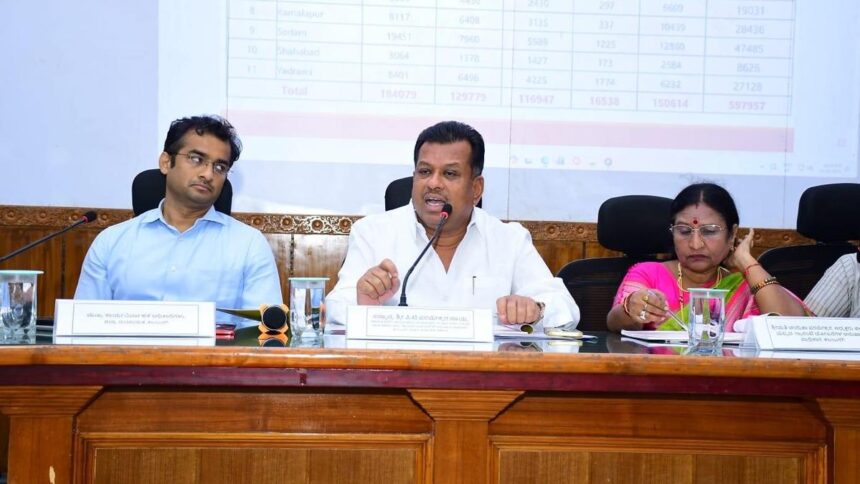
The Karnataka government has flagged the disparity between the institutional landing costs and the Maximum Retail Prices (MRP) of high-value medicines, cancer drugs, antibiotics and hospital consumables supplied to hospitals across the State. The department has raised the issue with the Union Ministry of Health and Family Welfare and the National Pharmaceutical Pricing Authority. Health and Family Welfare Minister U.T. Khader, in a letter dated September 23, wrote to the Union Health Minister seeking action.
Recent investigations by the Karnataka Food Safety and Drug Administration (FSDA) have revealed that pharma companies are supplying medicines to hospitals at heavily discounted institutional (landing) prices, while patients are being billed at or near the printed MRP, resulting in markups ranging from 10 times to over 52 times the actual procurement cost. During inspections, the FSDA found extreme pricing anomalies in 253 drugs.
3. Mangaluru fire mishap: MRPL offers ₹ 1.2 crore compensation to family of contract employee who died
The Mangalore Refinery and Petrochemicals Limited, on October 1, announced compensation of ₹1.2 crore to the family of 30-year-old contract employee Manish Karkada, who died in a fire in the unit on September 30, while a group of contract employees carried out a protest in front of the company’s gate demanding adequate compensation to the deceased and injured persons.
A two-member committee comprising Joint Director and Deputy Director of Department of Factories and Boilers visited the site of the accident on October 1 as part of the statutory inquiry. During the visit of Minister U.T. Khader to the mortuary in Wenlock Hospital to console the family members of Mr. Karkada, several contract workers accused MRPL of negligence.
4. Prolonged dry spell, brown disease hit cotton yield in Yadgir district of Karnataka
A prolonged dry spell and severe moisture deficiency have dealt a heavy blow to cotton cultivation across Yadgir district this kharif season. According to data provided by the Agriculture Department of Karnataka, the district set a target of 2.02 lakh hectares for cotton cultivation this season. However, farmers covered 2.20 lakh hectares across both rainfed and irrigated lands, achieving 108% of the target, after initial showers.
The initial enthusiasm, however, turned to dismay as rainfall deficit severely crippled crop development. It impacted cotton crop across 1.55 lakh hectares (70% of the total sown area). Between June and the end of September, Yadgir received just 377.2 mm of rainfall against an average normal of 584.9 mm (35.5% precipitation deficit). Unfavourable weather conditions and soil moisture stress attracted brown disease and led to pest infestation across both dry and irrigated land.
Published – October 01, 2026 08:00 pm IST