






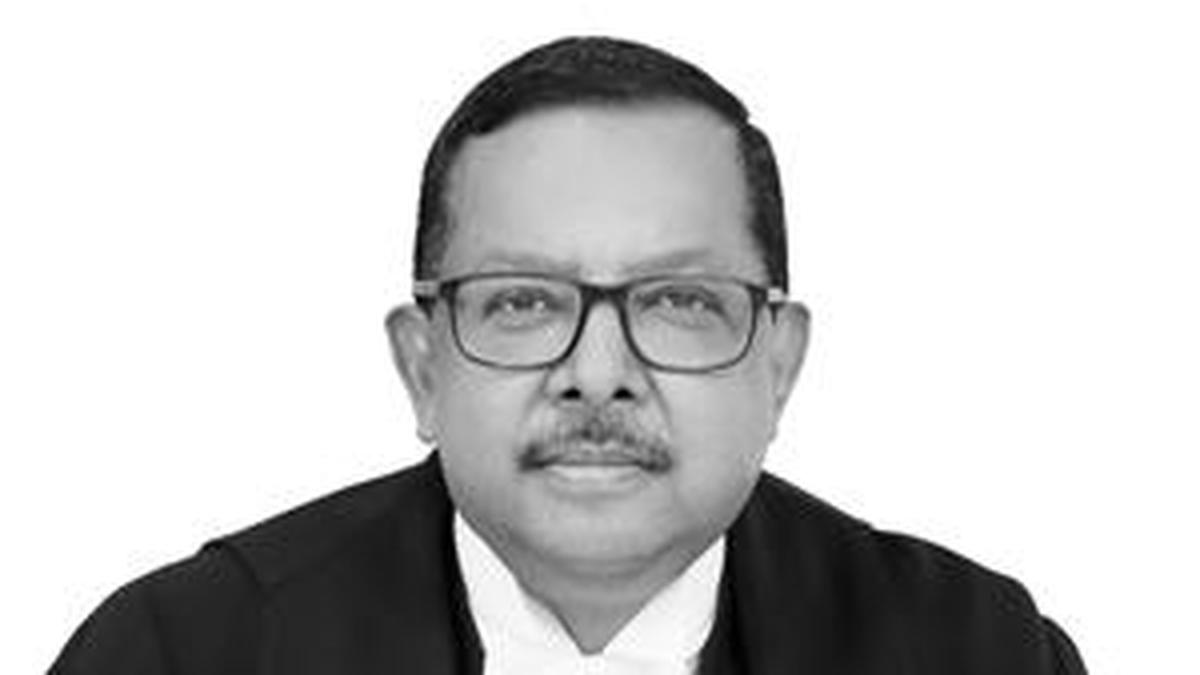


Supreme Court judge, Justice Ujjal Bhuyan. File
| Photo Credit: The Hindu
Supreme Court judge, Justice Ujjal Bhuyan, on Saturday (January 24, 2026) said judges should not be seen or perceived as bending over backwards to justify denial of liberty or human rights, warning that “if we lose our credibility, nothing will be left of the judiciary”.
Also Read | Independence of judiciary depends on the freedom of every judge to decide without pressure or bias: CJI
“Independence of the judiciary is a basic feature of our Constitution. It is non-negotiable. It is for the judiciary, or rather the members of the judiciary, to see to it that its independence is maintained at all costs in order to ensure its continued relevance and legitimacy. If we lose our credibility, nothing will be left of the judiciary. It will be there, judges will be there, courts will be there, it will adjudicate, but its heart and soul will have evaporated,” Justice Bhuyan said.
The judge obliquely referred to the Supreme Court Collegium’s decision on October 14, 2025, to recommend the transfer of then Madhya Pradesh High Court judge, Justice Atul Sreedharan, to the Allahabad High Court instead of the Chhattisgarh High Court on the request of the government.
The October 14 resolution of the apex court Collegium, headed by then Chief Justice of India B.R. Gavai, said the change of mind was triggered by a “reconsideration sought by the government”.
“When the Collegium itself records in its minutes that the transfer of a High Court judge is being made at the behest of the Central government, it reveals a striking intrusion of executive influence into what is Constitutionally supposed to be an independent process created to ensure that appointments/transfers are immune from executive interference… It reflects a clear admission of the executive influencing Collegium decision — the very thing it (the Collegium system) sought to prevent. That is very unfortunate,” Justice Bhuyan said in his address during the Pandit G.V. Pandit Memorial Lecture at the ILS Law College, Pune..
He quoted Caroline Kennedy’s “we need judges who stand erect against the political whims of the time” to the students, faculty, and dignitaries in the hall.
Justice Bhuyan explained that judicial transfers were strictly an internal matter of the judiciary. “By the very nature of things, the Centre can have no say in the transfer and posting of judges. It cannot say that such and such a judge should not or should be transferred, or if transferred, to such and such a High Court,” Justice Bhuyan underscored.
The judge further said it would be a “sad day for the judiciary, and by extension, our democracy, if the decision in a case becomes a foregone conclusion the moment a case is listed before a particular judge or a Bench”’.
The apex court judge said courts did not require a “platoon of the CRPF (Central Reserve Police Force)” to protect it. Judges were enough to stand guard against intrusions into judicial independence. But if public faith in the judiciary, which has neither the strength of the sword nor the purse, is breached, “nothing will be left for the judiciary”.
The Supreme Court judge said judges should not let their political and ideological leanings cloud decisions on the Bench.
The judge said Constitutional morality was the soul of governance, keeping democratic institutions in check from bulldozing liberty and justice on the strength of numbers, authority, and power.
Justice Bhuyan recalled the first Chief Justice of India, Harilal J. Kania, exhorting at the inaugural session of the Supreme Court that the court must “stand aloof and firm from party politics. It is unconcerned by the changes in the government. It has goodwill and sympathy for all, but is allied to none”.
Published – January 24, 2026 06:06 pm IST